A shop vac will pull water out of a carpet. It will not put cleaning solution in, it will not agitate the pile, and those two omissions are the whole job.
Everyone in this category says they tested twenty vacuums. We have not tested any, and we say so. What we do instead is read the manuals, compile the published specifications, and work out what each machine costs to run for three years — the method is written out in full.
We earn a commission if you buy through the links on this page, at no extra cost to you. It never changes what we recommend or the order we recommend it in. Full disclosure.
The verdict: they are not substitutes, and the wet/dry vac is the wrong machine for cleaning carpet. An extractor does three things in one pass — sprays solution, agitates the pile with a driven brush, and vacuums the dirty liquid back out. A wet/dry vac does exactly one of those: the last one. It has no solution tank, no pump and no brush. Where it genuinely wins is the job an extractor is not built for at all: standing water, a flooded floor, and wet debris no household vacuum is rated to touch.
What each machine actually publishes
Every figure is the manufacturer's own published number for that model.
Published figure
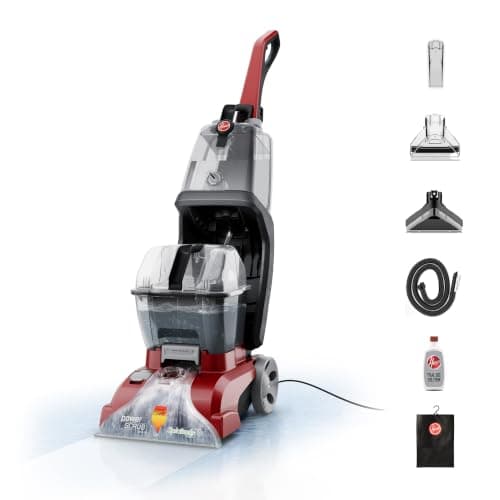
Hoover PowerScrub Deluxe
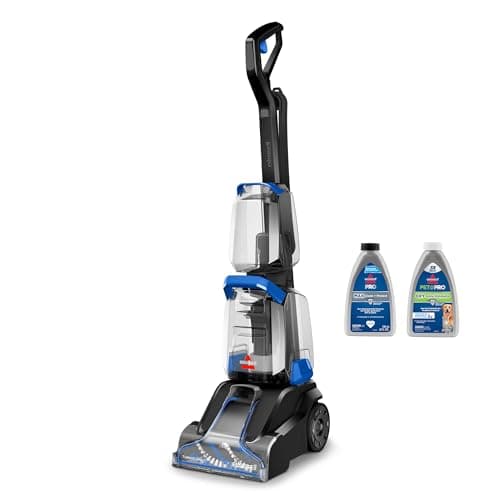
Bissell TurboClean 3952
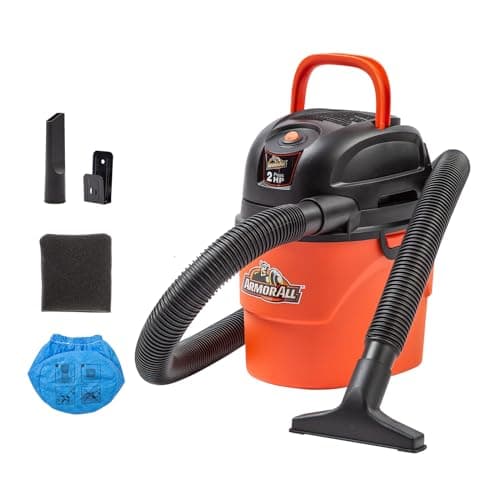
Armor All AA155 wet/dry
Type
Carpet extractor, upright
Carpet extractor, upright
Wet/dry utility vacuum
Solution tank
3.8 L dual clean and dirty
1 gallon
None — there is no solution system
Agitation
5 counter-rotating SpinScrub brushes
4-Row DeepReach PowerBrush
None — no brush of any kind
Wet pickup
Yes, as recovered solution
Yes, as recovered solution
Yes, published — 1.5 gal tank
Motor
Not published in watts
Not published in watts
600 W, 2 peak horsepower
Weight
18.5 lb
16.3 lb
4.6 lb
Drying aid
HeatForce
Not published
Blower conversion
Filtration
Not published as a class
Not published as a class
Cloth filter. No HEPA claim
The Armor All is listed on this site as a car vacuum. It appears here because "can I just use a shop vac" is the question this page exists to answer.
The three things an extractor does, and which one a shop vac skips
One: it puts cleaning solution into the pile under pressure. Both extractors here publish a dual-tank system with a dedicated clean-solution tank, and the Hoover publishes Auto Mix to meter the ratio. A wet/dry vac has no solution tank, no pump and no spray. You can pour solution on a carpet by hand, and people do, but you have then lost all control of how much went where — which is how a sticky over-concentrated patch happens.
Two: it agitates the pile with a driven brush. Hoover publishes five counter-rotating SpinScrub brushes; Bissell publishes a 4-Row DeepReach PowerBrush. This is the step that gets solution down to where the soil actually is. A wet/dry vac has no brush at all, so the solution sits on top of the pile and the soil below it stays put. This is the same physics that makes a canister vacuum the wrong tool for carpet — suction alone does not agitate.
Three: it vacuums the dirty liquid back out. This is the one a wet/dry vac does, and it does it well — the Armor All publishes a 1.5-gallon tank against the extractors' 1 gallon and 3.8 liters, plus 600 watts and 2 peak horsepower on household mains, which is more published power than either extractor states at all.
Do the arithmetic on that and the conclusion is narrow and clear: a shop vac is one third of a carpet cleaner, and it is the third that does not remove soil.
Where the wet/dry vac is genuinely the right machine
Standing water. A burst pipe, an overflowed washer, a flooded basement. No carpet extractor is designed for volume water recovery, and running one on a flood will fill its recovery tank in seconds. This is the wet/dry vac's actual job and it is very good at it.
Wet debris no vacuum should touch. Sodden leaves in a doorway, wet plaster dust, a spilled bag of something in the garage.
Extracting rinse water after somebody else's extractor. A legitimate hybrid: clean with an extractor, then pull the remaining moisture with a shop vac to shorten drying time. It works because it is using the machine for the one function it has.
Cars. The Armor All here is a car machine, published with a blower conversion and wet pickup, and that is where it belongs — the case the car vacuum roundup makes at length.
#
Product
Best for
Score
Price
01
Hoover PowerScrub Deluxe Carpet CleanerFive counter-rotating brushes, dual tanks, an 8-foot hose and a two-year warranty — the most complete kit at this price.
Armor All 1.5-Gallon 2 Peak HP Wet/Dry Vacuum (AA155)The only machine here that publishes household mains power and a wet pickup rating, which is the difference between cleaning up a spilled drink and blotting it.
Bissell TurboClean Upright Carpet Cleaner (3952)A 1-gallon tank and a 4-row brush at 16.3 lb — the cheapest full-size extractor that is not a compromise on the part that matters.
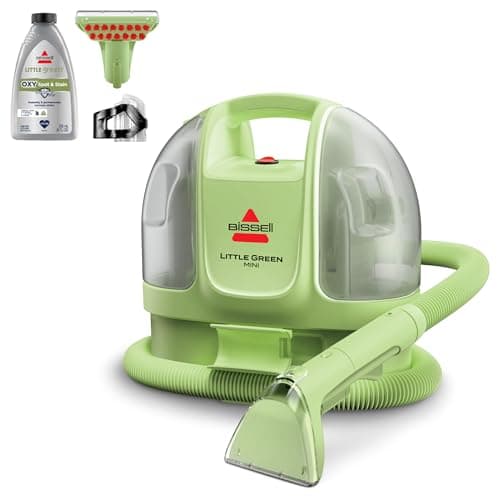
Bissell Little Green Mini Portable Carpet Cleaner (4075)7 lb, 16 ounces, and a self-cleaning hose tool — the machine most people should buy before a full-size extractor.
Scores are ours, from the published rubric on the How We Pick page. They are editorial judgments about published specifications — not test results. We have not handled these machines.
01 · Most brushes for the money
Hoover PowerScrub Deluxe Carpet Cleaner
Five counter-rotating brushes, dual tanks, an 8-foot hose and a two-year warranty — the most complete kit at this price.
8 feet, with upholstery, pet and crevice tools and a storage bag
Mixing
Auto Mix — meters the water-to-solution ratio automatically
Warranty
2-year limited
Every figure above is the manufacturer's own published number. Where a manufacturer publishes nothing, the row says "Not published" rather than an estimate.
What the numbers say
+Five brushes attack pile from multiple angles rather than one
+Auto Mix removes the guesswork that wastes formula and leaves residue
+8-foot hose with three tools and a bag to keep them in
+2-year warranty
Where it stops
−18.5 lb and a wide 21.9-inch body — awkward on stairs and in a closet
−Five brushes means five things to clear hair out of
−Hoover formula is a permanent consumable, same as Bissell's
Who it is for
Whole-house carpet plus stairs and upholstery, where one machine has to do everything.
Skip it if
You want the lightest thing that works. This is the most machine on the page and the weight is the price of that.
Our score: 7.8 out of 10
Tank capacity8.5
Brush system9.5
Tools and reach9.0
Weight and handling5.0
Running cost7.0
Scored against the published rubric on How We Pick. These are judgments about spec sheets, not measurements.
02 · Best for wet messes
Armor All 1.5-Gallon 2 Peak HP Wet/Dry Vacuum (AA155)
The only machine here that publishes household mains power and a wet pickup rating, which is the difference between cleaning up a spilled drink and blotting it.
Converts to a blower; wall mountable; on-board accessory storage
Rated runtime
Unlimited. No battery
Every figure above is the manufacturer's own published number. Where a manufacturer publishes nothing, the row says "Not published" rather than an estimate.
What the numbers say
+1.5 gallons is roughly eight times the biggest hand-vac bin on this page, so a whole car is one emptying
+Wet pickup is published, which no hand vac here is rated for
+The blower conversion clears leaves and grit out of door sills and seat rails without touching them
Where it stops
−A 4-foot hose on a 6-foot cord means the car has to be parked within about ten feet of a live outlet
−600 watts of mains power is real, but the cloth filter carries no HEPA claim and no named standard
−It is a small shop vacuum, not a car tool: nothing about it fits in a door pocket
Who it is for
A driveway or a garage with power, and a car that sees wet boots, spilled drinks, beach sand or a dog that swims.
Skip it if
You park on the street, or in a garage with no outlet. Every advantage this machine has is downstream of being plugged into a wall.
Our score: 7.5 out of 10
Published power8.5
Runtime10.0
Bin and filtration8.0
In-car handling3.0
Running cost8.0
Scored against the published rubric on How We Pick. These are judgments about spec sheets, not measurements.
03 · Best under $150
Bissell TurboClean Upright Carpet Cleaner (3952)
A 1-gallon tank and a 4-row brush at 16.3 lb — the cheapest full-size extractor that is not a compromise on the part that matters.
Designed around Bissell Pro Max Clean + Protect with StainProtect — an ongoing consumable
Above-floor tools
Not included on this model
Cleaning path width
Not published
Every figure above is the manufacturer's own published number. Where a manufacturer publishes nothing, the row says "Not published" rather than an estimate.
What the numbers say
+1-gallon tank at the bottom of the price band, which is what saves the sink trips
+4-row brush is the same agitation as the dearer TurboClean models
+16.3 lb is manageable up a flight of stairs, unlike the 23 lb XL
+Bissell formula is stocked in ordinary supermarkets, not just online
Where it stops
−No hose and no above-floor tools — carpet and rugs only
−No heater, so it relies on the temperature of the water you pour in
−The formula is a permanent running cost
Who it is for
Flat carpet and area rugs in a small-to-mid home, on the lowest sensible budget.
Skip it if
You need to clean stairs or upholstery. There is no hose on this model; the 3948 PET adds one and that is the whole reason it exists.
Our score: 6.9 out of 10
Tank capacity8.5
Brush system7.5
Tools and reach3.0
Weight and handling7.0
Running cost7.0
Scored against the published rubric on How We Pick. These are judgments about spec sheets, not measurements.
04 · Best spot cleaner
Bissell Little Green Mini Portable Carpet Cleaner (4075)
7 lb, 16 ounces, and a self-cleaning hose tool — the machine most people should buy before a full-size extractor.
4" tough stain tool with a removable lens, plus the HydroRinse self-cleaning hose tool
Formula
8 oz Bissell Little Green formula included
Power
Corded electric
Every figure above is the manufacturer's own published number. Where a manufacturer publishes nothing, the row says "Not published" rather than an estimate.
What the numbers say
+7 lb and stores in a cupboard, so it comes out for a single spill instead of waiting for a deep-clean day
+HydroRinse flushes the hose, which is the thing that makes portable extractors smell
+Handles car interiors, pet beds and upholstery as well as carpet
Where it stops
−16 ounces is a few spots, not a room
−No powered brush — you provide the scrubbing
−It is not a substitute for a full-size machine and does not claim to be
Who it is for
Almost everyone. Most carpet problems are spots, and most people buy a 20-pound machine to deal with them.
Skip it if
You want to deep clean a whole carpeted house. This is a spot machine; use it alongside a rental, not instead of one.
Our score: 6.6 out of 10
Tank capacity3.0
Brush system4.0
Tools and reach8.5
Weight and handling9.5
Running cost8.0
Scored against the published rubric on How We Pick. These are judgments about spec sheets, not measurements.
The mistake this page exists to prevent
It is this: spraying carpet cleaner on a floor and then sucking it up with a shop vac, and expecting the result an extractor gives. It leaves detergent in the pile because nothing metered how much went down, it never agitated the fibers so the embedded soil is untouched, and residue attracts soil — which is why a carpet treated this way often looks worse in a fortnight than it did before. If you own a wet/dry vac and no extractor, renting an extractor for a day is the better answer, and rent versus buy prices that out.
The reverse mistake is smaller but real: using a carpet extractor on standing water. It will move some of it and its recovery tank will be full almost immediately, and dirty water in a machine designed for metered recovery is how you get a smell that never quite leaves.
What we cannot tell you
How much soil either machine lifts from a specific carpet. Neither extractor here publishes a cleaning figure with a named test standard behind it — one machine on this site does, and it is the Shark CarpetXpert citing ASTM F2828. We have not used any of these machines, and no shared standard exists to compare them on. Our method sets out where that leaves us.
Common questions
Can I use a wet/dry vac as a carpet cleaner?+−
Not as a substitute. A carpet extractor sprays solution, agitates the pile with a driven brush, and vacuums the dirty liquid back out. A wet/dry vac only does the last step — no solution tank, no pump, no brush. It removes liquid from a carpet; it does not clean one.
What is a wet/dry vac actually good for?+−
Volume water recovery and wet debris — a burst pipe, an overflowed appliance, sodden leaves, a flooded garage. The Armor All AA155 publishes 600 watts, 2 peak horsepower and a 1.5-gallon wet-or-dry tank, which is more published power and more capacity than either carpet extractor on this page states.
Can I spray carpet cleaner and vacuum it up with a shop vac?+−
You can, and it usually makes things worse. Nothing meters how much solution goes down, nothing agitates the pile so the embedded soil is untouched, and the detergent left in the fibers attracts soil — which is why carpet treated this way often looks worse a couple of weeks later than before it was cleaned.
Which has more suction, a carpet cleaner or a shop vac?+−
Neither publishes a comparable suction figure, so the honest answer is that it cannot be compared. What is published is motor power: 600 watts and 2 peak horsepower on the Armor All wet/dry vac, and nothing at all in watts on either carpet extractor here.
Can I use a shop vac to speed up carpet drying?+−
Yes, and this is the legitimate hybrid. Clean with an extractor first so the solution is metered and the pile is agitated, then use the wet/dry vac to pull remaining moisture and shorten drying time. That uses the machine for the one function it actually has.
Will a carpet cleaner handle a flood?+−
No. Carpet extractors are built for metered recovery of the solution they just sprayed, so a recovery tank of 1 gallon or 3.8 liters fills almost immediately on standing water. That is the wet/dry vac's job, and using the wrong machine risks a smell in the extractor that never quite leaves.
Sources
Manufacturer-published specifications — Every runtime, wattage, capacity, weight, filtration and warranty figure quoted on this page is the manufacturer's own published number for that model, retrieved September 1, 2026. Where a manufacturer publishes no figure, the page says 'Not published' rather than estimating one.
Sweep & Suction — How We Pick — Our published method, including the scoring rubric, the three-year running-cost formula and an explicit statement of what published specifications cannot tell you.