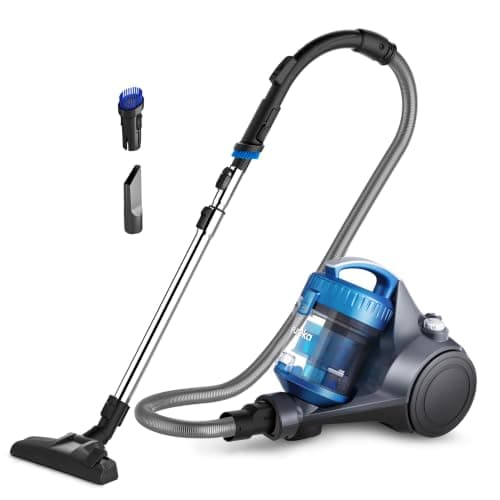
Best under $100
The best vacuums under $100
Corded uprights, canisters and sticks that genuinely fall under $100, with what the ceiling costs you.
Top pick: Eureka Whirlwind Bagless Canister (NEN110A)

Category
Every other site in this category navigates by brand and starts its price tiers at $300. This one starts where most people actually shop, and states what each ceiling gives up.
Best under $100
960 W, a 2.5-liter bin, automatic cord rewind and washable filters — the canister case, made cheaply and made honestly.
We earn a commission if you buy through the links on this page, at no extra cost to you. It never changes what we recommend or the order we recommend it in. Full disclosure.
Search for a vacuum recommendation and you will find rankings, test labs, suction measurements and pages of specification tables. What you will not find, anywhere, is a straight answer to the only question a value buyer is actually asking: if the flagship is $749 and this one is $180, what is the $569 buying?
We answer it by subtraction. Take the flagship's published specifications, take the budget machine's published specifications, put them side by side, and state the difference in plain arithmetic. Not "the Dyson is better" — it usually is — but *how much better, on which published number, and whether that difference does anything in your house*.
By what you can spend, because that is how the decision is actually made. The three price-ceiling pages — under $100, under $200 and robots under $300 — each list only machines that genuinely fall under that number, and each carries a section stating what you give up relative to the tier above.
Those ceilings are hard. A pick on the under-$200 page that rises to $215 is removed, not rationalized. Because prices move and this site refreshes them daily, each ceiling page checks its own picks against its own headline and flags any that have crossed it, rather than leaving the title quietly wrong.
| Ceiling | What is genuinely available | What you give up |
|---|---|---|
| Under $100 | A corded upright or canister with 720-960 W, a 1.7-2.5 L bin, washable filters | Cordless freedom, HEPA sealing, anti-tangle brushrolls, low noise |
| Under $200 | A cordless stick with a driven brushroll, HEPA, 40 minutes rated, an anti-tangle head | A published suction figure, a removable battery on most models, build quality |
| Under $300 | A LiDAR-mapped robot with no-go zones, or a very good corded upright | A self-emptying dock, published air watts, a 2-year warranty |
| $300-$800 | Self-emptying docks, published air watts, laser heads, 2-year warranties | Roughly $500, for improvements that are real but rarely proportional |
Compiled from the published specifications of every machine on this site. Prices move; the tiers describe what the category offers at each level rather than any single machine's current price.
We are not going to pretend the budget pick wins on specification. It usually does not, and a site that claimed otherwise would be worth nothing to you. Three places the flagship is genuinely, measurably ahead:
And one place the budget machine quietly wins: bin size. The Tikom V500's 1.3-liter cup, the Levoit's 0.75 liters and the Shark IZ376H's 0.79 quarts are all larger than the Dyson V8's 0.14 gallons. The cheap machines are not smaller. They are, in the way you notice most often, roomier.
Dyson alternatives is the full arithmetic, machine by machine, against the flagship's own published figures. What you give up is the honest inventory of everything the budget tier costs you. Best vacuums under $300 is the ceiling where a named filtration standard and a self-cleaning brushroll both become affordable. Are premium vacuums worth it takes the question seriously rather than assuming the answer. And the most reliable vacuum brands counts what every manufacturer here is actually willing to put in writing — 15 machines out of 64 publish a warranty length at all. Two more pages sit here: best vacuums under $150, the ceiling where a mapping robot and a sealed-HEPA corded stick both become possible, and the Dyson V8 review, which reads the entry flagship off its own specification sheet. If you would rather not start from a budget at all, the best vacuums of 2026 picks one machine per job — corded upright, cordless stick, robot, steam mop, carpet cleaner, canister and hand vac — and sets the whole shelf against the flagship tier's own published figures. And if you have not got as far as a budget either, how to choose a vacuum is the page before all of these: five questions in order, each one ending in a named machine, and the two specifications worth ignoring entirely.
12 pages. Roundups carry a live price and a buy link for the top pick, so you can act from here without digging.
Best under $100
Corded uprights, canisters and sticks that genuinely fall under $100, with what the ceiling costs you.
Top pick: Eureka Whirlwind Bagless Canister (NEN110A)
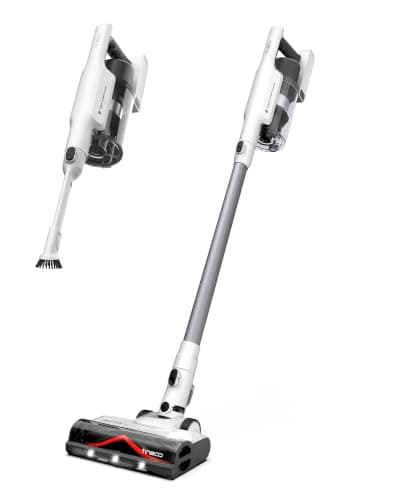
Best under $200
The mainstream ceiling: cordless sticks with anti-tangle brushrolls and sealed HEPA, plus the corded machines that still beat them on power.
Top pick: Tineco A30S Cordless Vacuum
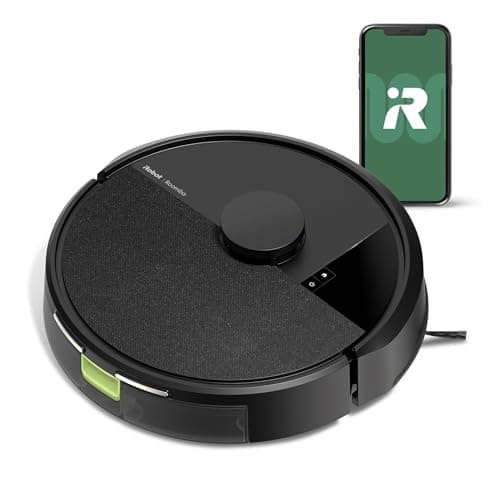
Best robot under $300
Robots genuinely under $300, where mapping arrives and the self-emptying dock does not.
Top pick: iRobot Roomba 105 Vac
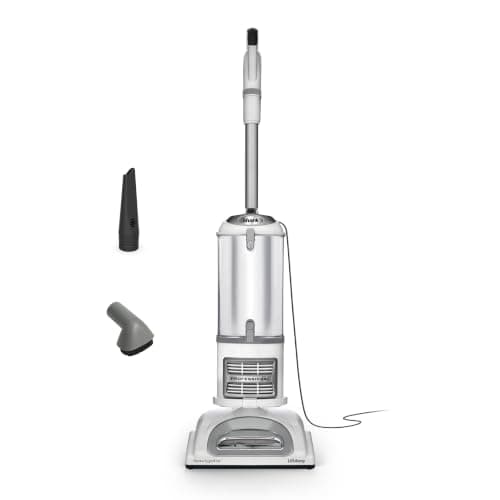
Best under $300
Eight machines genuinely under $300, ranked on published power, filtration and capacity — and what the tier above still buys you.
Top pick: Shark Navigator Lift-Away (NV356E)
#ad Price as of October 17, 2026. How we are funded
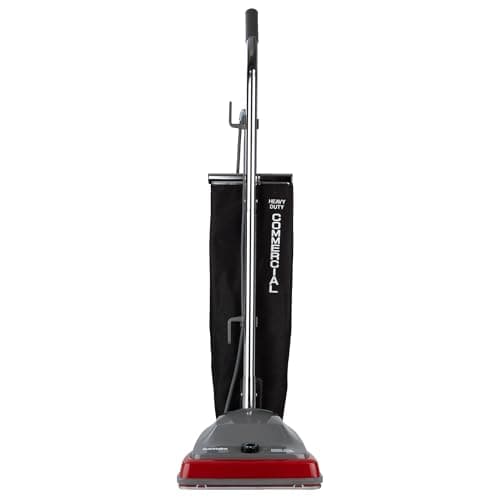
Best under $150
Eight machines under $150 across five different shapes, ranked on our published rubric and checked against the live price of every pick.
Top pick: Sanitaire Tradition Upright Commercial Bagged Vacuum (SC679K)
#ad Price as of October 17, 2026. How we are funded
Best of 2026
One pick per job for 2026 — corded upright, cordless stick, robot, steam mop, carpet cleaner, canister and hand vac — each ranked on our published rubric against a live price.
Top pick: Shark Navigator Lift-Away (NV356E)
#ad Price as of October 17, 2026. How we are funded
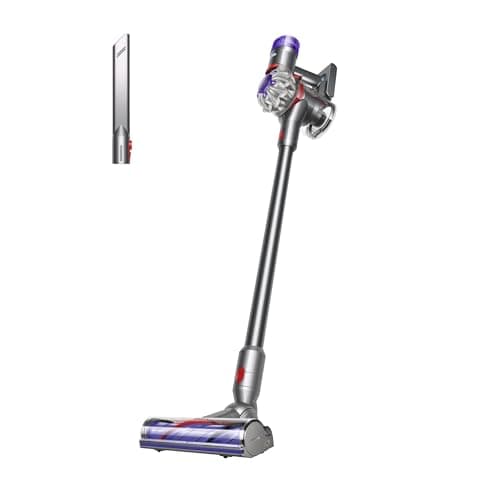
The arithmetic
The flagship's published figures against the budget field's, with the delta stated plainly in both directions.
Top pick: Dyson V8 Cordless Vacuum
#ad Price as of October 17, 2026. How we are funded
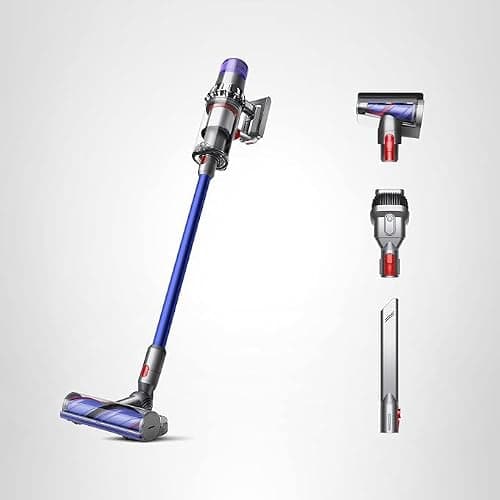
The arithmetic
The honest inventory of what the budget tier costs you, across every category on this site.
Top pick: Dyson V11 Origin Cordless Vacuum
#ad Price as of October 17, 2026. How we are funded
The arithmetic
No manufacturer publishes a lifespan or a cycle rating. What they do publish — warranty length, named test standards, consumables — is checkable, and it says more than any brand ranking.
Top pick: Dyson V11 Origin Cordless Vacuum
#ad Price as of October 17, 2026. How we are funded
The arithmetic
What the Dyson V8's published specifications actually support, where cheaper machines match it on paper, and the two figures Dyson publishes that almost nobody else does.
Top pick: Dyson V8 Cordless Vacuum
#ad Price as of October 17, 2026. How we are funded
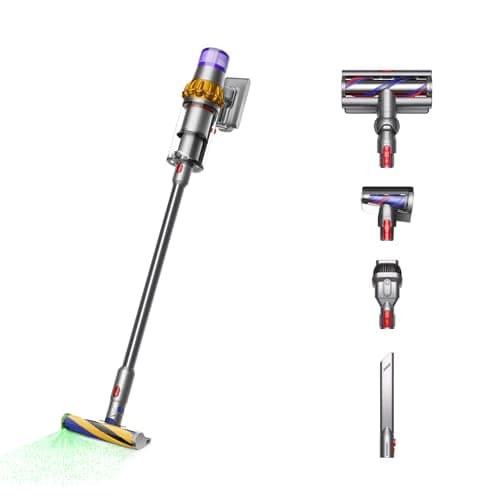
Guide
The case for spending more, taken seriously — and the one question that settles it either way.
Top pick: Dyson V15 Detect Cordless Vacuum
#ad Price as of October 17, 2026. How we are funded
Guide
Five questions in order — floors, power, body, filtration, cost to keep — each ending in a named machine, plus the two specifications to ignore entirely.
Top pick: Shark Navigator Lift-Away (NV356E)
#ad Price as of October 17, 2026. How we are funded
Sometimes, and the failure mode is specific: a sealed battery with no published cycle rating, on a brand with no parts supply. Buy a removable battery, or buy corded, and the false-economy argument mostly evaporates. Buy the cheapest sealed-battery machine from a brand you have never heard of and it does not.
On published specifications, a corded upright in the $60-$90 range — the Bissell CleanView Compact 3508 or the Eureka AirSpeed — because there is no battery to degrade and the filters are washable. The running cost over five years is close to nothing.
Not always, and the good ones publish more detail than the expensive ones. The Shark NV356E names its filtration test standard (ASTM F1977-22) and the laboratory that ran it. Levoit names ASTM F1977-22 too. That is more specificity than most flagship listings offer.
Hard. A machine that costs more than the page's headline is removed, not explained away. Because prices move daily, each ceiling page checks its own picks against its own number and flags anything that has crossed it.
No — commission scales with price, so recommending cheaper machines earns us less. That is the honest shape of the conflict here, and it is why the editorial policy states plainly that commission never affects ranking order.