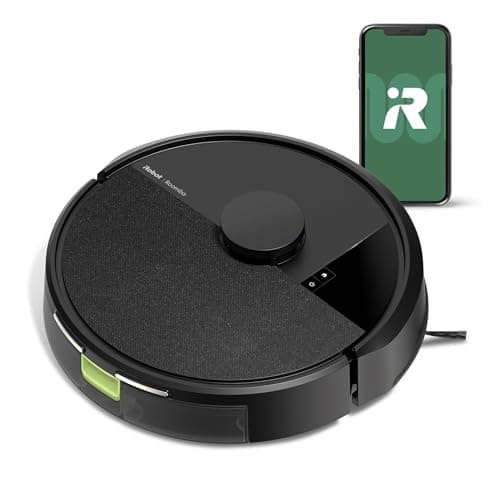
Best budget robot
The best budget robot vacuums
Seven robots from about $100 to $400, ranked on whether they map, what the dock costs to run, and how big the bin really is.
Top pick: iRobot Roomba 105 Vac
Category
Two robots at the same price can differ by everything that matters: whether one has a map. Here is what each feature is worth, and where the pascal numbers stop meaning anything.
Best budget robot
LiDAR mapping, keep-out zones and a 200-minute rating from the brand that will still be supporting the app in five years.
We earn a commission if you buy through the links on this page, at no extra cost to you. It never changes what we recommend or the order we recommend it in. Full disclosure.
Every other difference between budget robots is a matter of degree. Mapping is a difference in kind. A robot with LiDAR builds a floor plan, cleans in efficient rows, remembers where it has been, and can be told to stay out of the dog's water bowl. A robot without one bounces off obstacles in a semi-random pattern until the battery runs down. On 400 square feet the difference is coverage time. On 1,200 square feet the difference is whether the far bedroom ever gets cleaned.
The good news for a value buyer is that LiDAR has fallen into the budget tier. The Roomba 105 Vac, the Roborock Q7 L5, the Lefant M2 Plus and the ILIFE A30 Pro all publish full mapping with no-go zones. The Lefant M210 and the Tikom G8000 Max do not — and they are cheaper for exactly that reason.
Bump-and-run robots (Lefant M210, Tikom G8000 Max) are cheap, quiet and simple. Their published noise figures are the lowest anywhere on this site — the Tikom is rated at 45 dB, the Lefant at 52 — and their bins are often larger than the mapped machines' because there is no dock to empty into.
Mapped robots without a dock (Roomba 105 Vac, Roborock Q7 L5) add navigation, room targeting and scheduling. You still empty the on-board bin, and on the Q7 L5 that bin is 270 ml — barely half the Lefant M210's 500 ml. That is the trade nobody mentions: the smarter robot often has the smaller bin.
Self-emptying robots (Roomba 105 with AutoEmpty, Roborock Q7 M5+, Lefant M2 Plus, ILIFE A30 Pro, Shark AV2501AE) put a bag or a bin in the dock and stretch the interval between interactions to 60-75 days, or in ILIFE's case a claimed 280 days across five bags. This is the single biggest quality-of-life feature in the category and it is also the one with an ongoing cost.
| Price step | What you gain | What it costs you later |
|---|---|---|
| Under $150 | A quiet robot with a big on-board bin | No map, no zones, no room targeting |
| $150-$280 | LiDAR mapping, no-go zones, scheduling, app control | Often a smaller bin than the cheap machines |
| $280-$400 | A self-emptying dock rated 60-75 days | Dock bags, forever — unless the dock is bagless |
| $400+ | Higher published Pa, mop plumbing, obstacle cameras | More parts, more app, more to fail |
Compiled from the published specifications of every robot reviewed on this site.
The dock-bag cost is worth arithmetic rather than a shrug. At the manufacturers' own stated intervals — 75 days for iRobot and Lefant, 7 to 9 weeks for Roborock — a self-emptying robot goes through roughly five to seven bags a year. Over three years that is a real number, and it is why the Shark AV2501AE matters more than its spec sheet suggests: its dock is bagless with a true HEPA filter, so the consumable cost is zero. The trade is that emptying a bagless dock puts you back in contact with the dust, which is precisely what an allergy buyer is paying to avoid.
They compare pascals. Pa figures are not comparable across brands — they are measured at different points, by different methods, and no manufacturer publishes theirs. A Roborock claiming 10,000 Pa and an ILIFE claiming 10,000 Pa are not making the same measurement, and neither is making a measurement you can check. Treat the number as a rough tier indicator within one brand's own range and nothing more.
The second mistake is buying a mopping combo for a carpeted house. Every combo on this page either avoids carpet while mopping — which iRobot's Roomba 105 Combo does automatically, and it is the best implementation here — or drags a wet pad across it. And no robot mop scrubs; a flat pad pushed across a floor is a wipe, not a scrub, whatever the listing says.
The budget robot roundup is the ranked shortlist with live prices. If you are still deciding whether one is worth owning at all, are robot vacuums worth it works through the case honestly and is a Roomba worth it asks the same question of the brand premium specifically, and do budget robot vacuums work on carpet answers the question the spec sheets dodge. If your floors are bare wood, the hardwood robot roundup ranks on brush design and mopping rather than suction, and past about a thousand square feet the large-home roundup leads on runtime and dock interval instead. Roomba versus Roborock settles the head-to-head buyers actually run. Shedding households should start at the best robot vacuums for pet hair, where the dock interval and the brush design matter more than the suction claim, and robot versus stick vacuum settles which machine to buy first. If the dock is what you are weighing, is self-emptying worth it prices it out. And if you have decided mapping is the feature that matters, the mapping roundup ranks the LiDAR machines on what each brand actually publishes. And if the shortlist has come down to two brands, Dreame versus Roborock compares them on dock size and runtime rather than on pascal claims neither company explains, and Shark versus Roomba settles the two biggest American brands on the one published difference that costs money forever - a bagless dock against a bagged one. If you have decided against iRobot, Roomba alternatives sets out what each rival publishes that iRobot does not, and the Roborock Q7 review is a close read of the cheapest machine here with multi-floor maps. And if you have not narrowed it to models yet, the best robot vacuum brands takes all seven brands on this site one at a time - what each publishes, which house each suits, and the brand-level reason to skip it. If you have narrowed it to iRobot, the Roomba 105 review separates the three configurations iRobot sells under that one name, two of which are the identical robot. If you are at the start of this rather than the end, how to choose a robot vacuum puts the six decisions in the order they actually matter, and do robot vacuums need Wi-Fi covers the machines that run on a physical remote with no app and no account at all.
22 pages. Roundups carry a live price and a buy link for the top pick, so you can act from here without digging.
Best budget robot
Seven robots from about $100 to $400, ranked on whether they map, what the dock costs to run, and how big the bin really is.
Top pick: iRobot Roomba 105 Vac
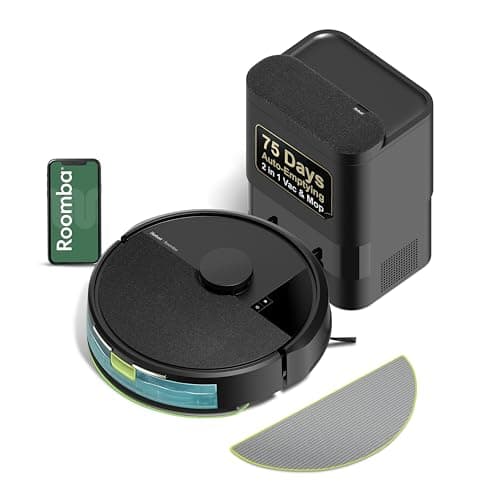
Best mop combo
Robot vacuum-mop combos ranked on published carpet detection, water tank size and the runtime cost of mopping.
Top pick: iRobot Roomba 105 Combo with AutoEmpty Dock
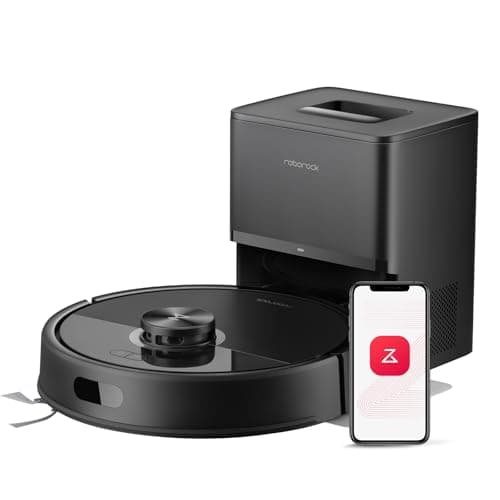
Best robot for pet hair
Eight robots ranked for a shedding household on published brush design, on-board bin size, dock interval and dock filtration rather than on pascal claims.
Top pick: Roborock Q7 M5+ Robot Vacuum and Mop
Best robot for hardwood
Eight robots ranked for bare floors on brush design, published mopping capability, height and noise rather than on pascal claims that do not compare.
Top pick: Roborock Q7 M5+ Robot Vacuum and Mop
Best robot for big homes
Seven robots ranked for square footage: published runtime, recharge-and-resume, multi-floor maps and how long the dock goes before you touch it.
Top pick: Roborock Q7 M5+ Robot Vacuum and Mop
Best robot mapping
Five LiDAR robots ranked on published mapping capability — multi-floor maps, no-go zones and virtual walls — rather than on pascal figures nobody can compare.
Top pick: Roborock Q7 M5+ Robot Vacuum and Mop
The arithmetic
iRobot's premium measured against the cheaper mapped robots on published figures — runtime, dock filtration, weight and the suction number iRobot declines to print.
Top pick: Roborock Q7 M5+ Robot Vacuum and Mop
The arithmetic
Five Roomba alternatives across four brands, compared with the Roomba 105 on published suction, dock type, mapping detail and what each brand refuses to state.
Top pick: Roborock Q7 M5+ Robot Vacuum and Mop
The arithmetic
What the Roborock Q7 L5 and Q7 M5+ publish, the dock and suction figures that separate them, and whether the more expensive one earns the gap.
Top pick: Roborock Q7 M5+ Robot Vacuum and Mop
The arithmetic
Seven robot brands judged on the three things that are checkable at brand level: whether they print a suction figure, what the dock needs buying forever, and what the listing refuses to say.
Top pick: Roborock Q7 M5+ Robot Vacuum and Mop
The arithmetic
What iRobot publishes for the Roomba 105, how the Vac, the AutoEmpty and the Combo actually differ, the suction figure iRobot declines to state, and when the cheaper Roborock is the better buy.
Top pick: iRobot Roomba 105 Vac
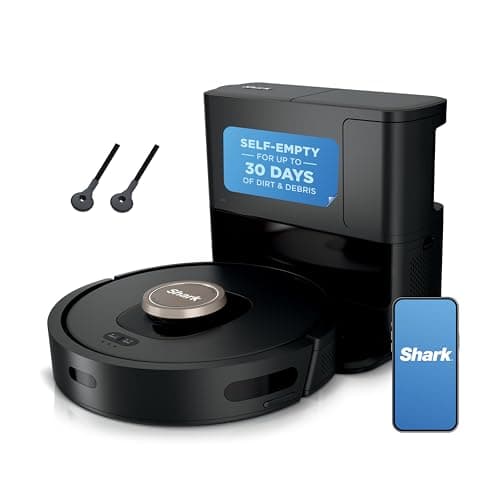
Head to head
Docked against dockless, with the bag cost counted — and the bagless dock that changes the arithmetic.
Top pick: Shark AI Robot with XL HEPA Self-Empty Base (AV2501AE)
Head to head
What LiDAR, infrared and PSD sensors are each published to do, and which one your floor actually needs.
Top pick: iRobot Roomba 105 Vac
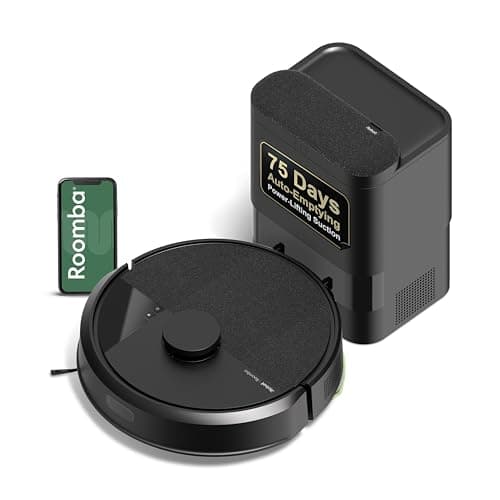
Head to head
The honest comparison between a robot and a cordless stick on published runtime, capacity and reach — including the jobs each one physically cannot do.
Top pick: iRobot Roomba 105 Vac with AutoEmpty Dock
Head to head
The two biggest names in robot vacuums, compared on published figures only — where each genuinely wins, and which one your household should buy.
Top pick: Roborock Q7 M5+ Robot Vacuum and Mop
Head to head
Two Dreames against two Roborocks on published suction, dock capacity, runtime, mapping and disclosure — with the pascal comparison taken apart rather than repeated.
Top pick: Roborock Q7 M5+ Robot Vacuum and Mop
Head to head
Three Sharks against three Roombas on dock type, dock filtration, runtime and mapping — decided on the bagless-versus-bagged difference rather than on suction claims neither brand publishes.
Top pick: iRobot Roomba 105 Vac with AutoEmpty Dock
Guide
What a robot vacuum genuinely replaces, what it cannot do, and the household types where it earns its price.
Top pick: iRobot Roomba 105 Vac
Guide
What robot vacuums genuinely do on low, medium and deep pile — and the one design that cannot clean carpet by construction.
Top pick: Roborock Q7 M5+ Robot Vacuum and Mop
Guide
Dock bags, filters, brushes, pads and the app risk — everything you buy after the machine.
Top pick: Shark AI Robot with XL HEPA Self-Empty Base (AV2501AE)
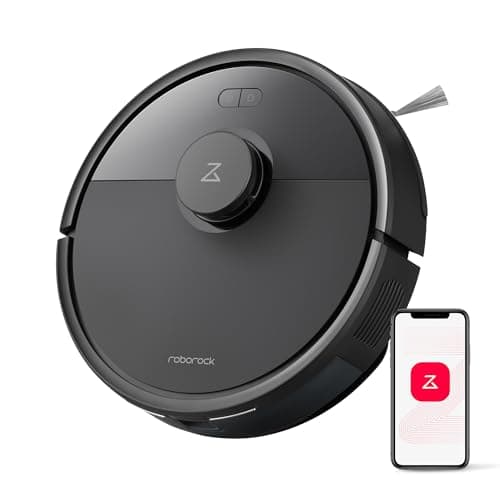
Guide
The six specifications that decide a robot vacuum purchase, in order, each ending in the machine it points to — and the two numbers to ignore.
Top pick: Roborock Q7 L5 Robot Vacuum and Mop
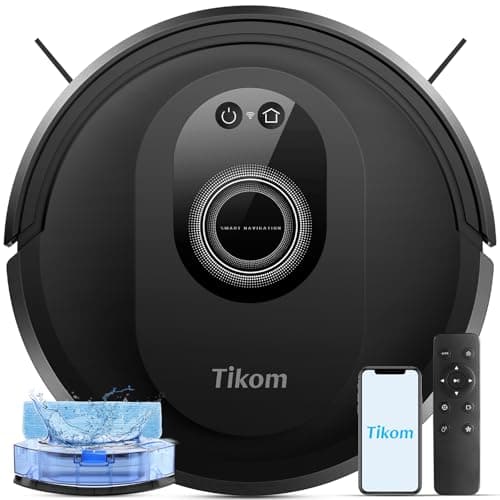
Guide
Which robots require Wi-Fi, what you lose offline, and the machines with a physical remote for households that will not use an app.
Top pick: Tikom G8000 Max Robot Vacuum and Mop
On anything larger than about 800 square feet, yes — it is the difference between planned coverage and a random walk. Below that, a bump-and-run robot with a bigger bin and a lower noise rating is a defensible buy, and it is cheaper.
At the manufacturers' own stated intervals — 75 days for iRobot and Lefant, 7-9 weeks for Roborock — a self-emptying robot uses roughly five to seven bags a year. That is the running cost the sticker price hides. The Shark AV2501AE's dock is bagless, which removes it entirely.
It can lift surface debris from low and medium pile. Embedded grit in deep pile needs agitation and airflow that no robot on this page publishes the figures to support. Brushless designs like the Lefant M210 are the weakest here by construction — there is nothing to agitate with.
Not comparably. Pa is measured differently by every brand and none publish their method. Use it to rank models within one manufacturer's own range and ignore it across brands.
The mapped ones do — the map, zones and scheduling all live in the app, and most require a 2.4 GHz network. The one machine here that published no Wi-Fi and no app at all, the eufy 11S MAX, is no longer buyable, so there is currently no app-free option on this site.