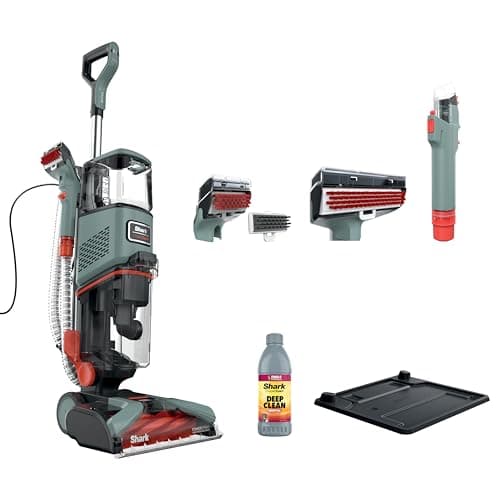
An ordinary vacuum pushes dirty air through a motor. Put water into that path and you have a different, more expensive problem than the puddle. Here is the machine that is rated for it, by the kind of water you are dealing with.
Everyone in this category says they tested twenty vacuums. We have not tested any, and we say so. What we do instead is read the manuals, compile the published specifications, and work out what each machine costs to run for three years — the method is written out in full.
We earn a commission if you buy through the links on this page, at no extra cost to you. It never changes what we recommend or the order we recommend it in. Full disclosure.
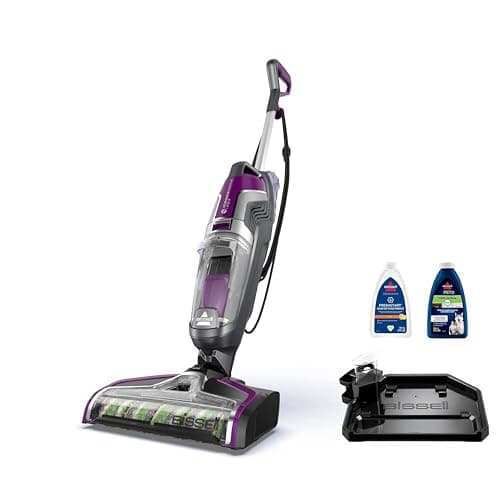
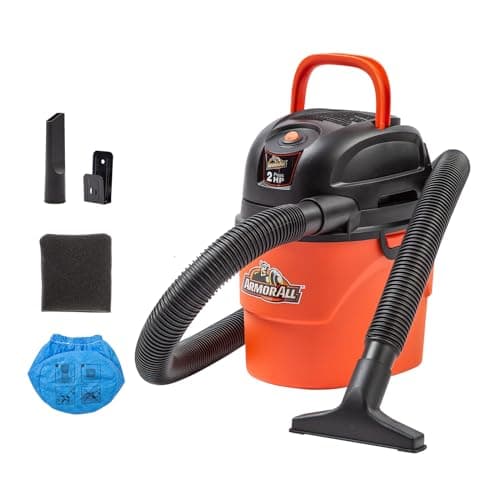
No — not with an ordinary vacuum, and the damage is usually permanent. A dry vacuum is a motor that draws dirty air through a filter; water collapses the filter, shorts the motor, and leaves a bin that grows mold. What you need is a machine with a published wet pickup rating, and the one on this site is the Armor All AA155 wet/dry vacuum, with a 1.5-gallon tank rated wet or dry on 600 watts of mains power. For everyday damp messes on a hard floor rather than a real spill, a floor washer like the Bissell CrossWave Pet Pro washes and recovers the water in one pass. For water in carpet, you need an extractor.
What actually happens if you vacuum water with a dry vacuum
It is worth knowing precisely, because the usual warning — "it will break" — undersells how it breaks and makes people risk it on a small puddle.
The filter stops working immediately. Every dry vacuum on this site pulls air through a foam, pleated or HEPA element. Wet that element and it stops passing air, so suction collapses within seconds and the machine starts straining against a blockage you cannot see.
The motor is in the air path, and it is not sealed against liquid. On a bagless vacuum the airflow goes bin, filter, motor, exhaust. Liquid that gets past a saturated filter reaches windings and bearings that were never designed to be wet. On a cordless machine it reaches a lithium cell as well.
The bin becomes a culture. Even if the machine survives, a bin holding damp dust and hair grows mold in days, and the smell transfers to every room you vacuum afterward. This is the outcome people actually get from a small spill, far more often than a dead motor.
The warranty will not cover it, where one exists at all. Wet pickup on a dry-rated machine is the clearest possible case of use outside the rating. Most machines on this site publish no warranty term anyway, which makes the point academic and the risk worse.
Which machine, by what kind of water
"Can I vacuum water" turns out to be three different questions with three different answers, and most of the frustration in this category comes from buying the machine for one of them and hitting another.
The three wet situations and the machine class rated for each.
The situation
Machine class
Why that one
On this site
A real spill or a flooded floor — standing water
Wet/dry vacuum (shop vac)
A tank, not a filter bag, in the liquid path. Suction straight into a sealed drum
Armor All AA155
Everyday damp messes on a sealed hard floor
Floor washer / wet-dry vacuum mop
Washes and recovers in one pass, so the floor is near-dry behind you
CrossWave Pet Pro, Dreame H12 Pro, Shark HydroVac
Water or a liquid spill in carpet or upholstery
Carpet extractor
High recovery suction through pile, which a floor washer's roller cannot do
Little Green Max Pet, Shark CarpetXpert
Anything still wet, with a normal vacuum
None
Filter collapse, motor in the air path, mold in the bin
Do not
Machine classes, not individual recommendations. The cards below give each machine's own published figures.
Standing water — the wet/dry vacuum is the only real answer
For an actual puddle — a knocked-over bucket, a leaking appliance, water across a garage floor — you want a shop vacuum. The design difference is structural rather than a feature: a wet/dry vac draws air into a sealed drum and the liquid simply collects in the bottom of it, with the filter removed or lifted clear of the water line. There is no paper element in the liquid's path and no motor downstream of it.
The Armor All AA155 is the one on this site, and the specification that matters is the one most listings in this category bury: it publishes 1.5 gallons, wet or dry, on 600 watts of mains power. The limits are published too and they are real — a 4-foot hose on a 6-foot cord means you work within about ten feet of an outlet, and the cloth filter carries no HEPA claim. For a wet job neither limit matters much. For a flood larger than its tank, you are emptying it repeatedly, and that is the honest ceiling of a 1.5-gallon machine.
Damp messes on hard floors — a floor washer, not a vacuum
Most people asking this question do not have a flood. They have a kitchen floor with a spilled drink, a dog's water bowl knocked over, or muddy boot prints — a mess that is wet and dirty at the same time, which is exactly the thing a dry vacuum and a mop each do half of. A floor washer is built for it: it sprays solution onto a spinning roller, scrubs, and sucks the dirty water straight back into a separate tank.
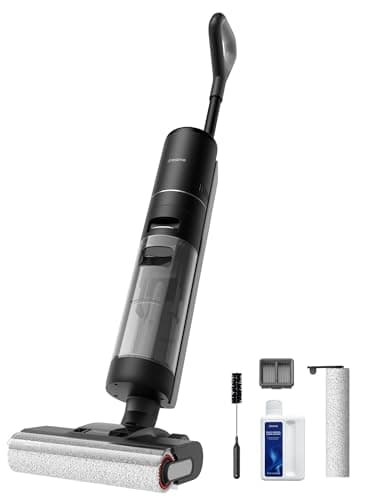
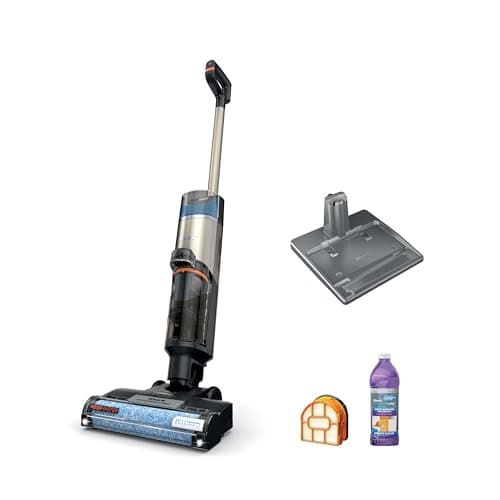
Three sit on this page. The Bissell CrossWave Pet Pro is corded with no runtime to plan around and publishes a 3-year limited warranty, the longest in its category here. The Dreame H12 Pro publishes the biggest listed tank of the three floor washers here at 900 ml, plus 35 minutes, 68 dB and a hot-air roller dry. The Shark HydroVac MessMaster publishes a dock rinse cycle that flushes the whole system after each clean, and 23 minutes, the shortest rating of any of them. The full ranking of this shelf is here, and the Shark-versus-Bissell head-to-head is here.
Water in carpet — an extractor, and speed matters
Carpet is the hardest of the three, because the water is not on a surface you can squeegee — it is held in pile and padding, and anything that does not come out within a day or so becomes a smell and then a mold problem. A floor washer cannot do this: its roller works a surface, and two of the Bissells in the floor-washer category publish a rating for area rugs only, meaning refreshing the surface of a rug rather than pulling water out of one.
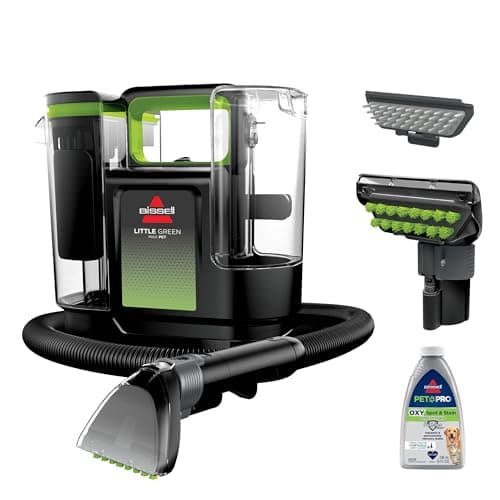
What pulls liquid out of pile is a carpet extractor, which is a different machine with much higher recovery suction and a hand tool you can press into the carpet. The Bissell Little Green Max Pet is the portable version at 8.2 lb with a two-tank system, and the Shark CarpetXpert is the full-size one at 17 lb with a 30.4 fl oz dual tank. Either will pull a surprising amount of water back out of a soaked patch, and both are the same machines you would use for a pet accident, for the same reason.
Two honest caveats. A domestic extractor is for a spill, not for a flood — if water is across a whole room and up the walls, that is a restoration job with commercial equipment, and nothing on this site is the right tool. And running water alone through an extractor rather than formula is not something any manufacturer here publishes guidance for, so check your own manual before assuming it is approved.
#
Product
Best for
Score
Price
01
Armor All 1.5-Gallon 2 Peak HP Wet/Dry Vacuum (AA155)The only machine here that publishes household mains power and a wet pickup rating, which is the difference between cleaning up a spilled drink and blotting it.
Bissell CrossWave Pet Pro Wet Dry Vacuum Mop (2306A)The only corded machine here: no battery to fade, no runtime to plan around, the widest path and the longest warranty on the page, and it is rated for area rugs too.
Dreame H12 Pro Wet Dry Vacuum (HHR25A)The biggest listed tank here, the lowest noise rating, 35 minutes of runtime and hot-air drying for the roller, at a price well below the flagships it outscores on paper.
Shark HydroVac MessMaster Cordless Wet Dry Vacuum (WD261)Shark publishes a noise rating and a dock rinse cycle that flushes the brushroll after every clean — and then publishes 23 minutes of runtime, the shortest on this site.
Bissell Little Green Max Pet Portable Carpet Cleaner (3860)The self-cleaning stain tool is the feature that decides whether a portable gets used twice, and this is the cheapest machine here that publishes one alongside a pet hair tool.
Shark CarpetXpert with Built-in Stain Cleaner (EX151)The only extractor here whose deep-clean claim names its test standard — ASTM F2828 — which is exactly the kind of specificity we reward.
Three different machines for three different kinds of water. Picked on whether the manufacturer publishes a wet rating, not on whether the machine could physically be pointed at a puddle.
01 · Best for wet messes
Armor All 1.5-Gallon 2 Peak HP Wet/Dry Vacuum (AA155)
The only machine here that publishes household mains power and a wet pickup rating, which is the difference between cleaning up a spilled drink and blotting it.
Converts to a blower; wall mountable; on-board accessory storage
Rated runtime
Unlimited. No battery
Every figure above is the manufacturer's own published number. Where a manufacturer publishes nothing, the row says "Not published" rather than an estimate.
What the numbers say
+1.5 gallons is roughly eight times the biggest hand-vac bin on this page, so a whole car is one emptying
+Wet pickup is published, which no hand vac here is rated for
+The blower conversion clears leaves and grit out of door sills and seat rails without touching them
Where it stops
−A 4-foot hose on a 6-foot cord means the car has to be parked within about ten feet of a live outlet
−600 watts of mains power is real, but the cloth filter carries no HEPA claim and no named standard
−It is a small shop vacuum, not a car tool: nothing about it fits in a door pocket
Who it is for
A driveway or a garage with power, and a car that sees wet boots, spilled drinks, beach sand or a dog that swims.
Skip it if
You park on the street, or in a garage with no outlet. Every advantage this machine has is downstream of being plugged into a wall.
Our score: 7.5 out of 10
Published power8.5
Runtime10.0
Bin and filtration8.0
In-car handling3.0
Running cost8.0
Scored against the published rubric on How We Pick. These are judgments about spec sheets, not measurements.
02 · Best corded wet/dry vac
Bissell CrossWave Pet Pro Wet Dry Vacuum Mop (2306A)
The only corded machine here: no battery to fade, no runtime to plan around, the widest path and the longest warranty on the page, and it is rated for area rugs too.
4.4 amps. The listing prints 528 "watt-hours" in its wattage field; 4.4 A at 120 V is 528 watts, so the unit is simply mislabeled
Listed tank capacity
14.5 fluid ounces
Cleaning path
12 inches
Weight
11 lb as listed
Surfaces
Tile, wood, laminate, vinyl and linoleum, plus area rugs and mats
Brush
Tangle-free brush roll, with a hair guard against clogs
Tanks
Separate clean and dirty water tanks
In the box
Brush roll, two 8 oz bottles of pet solution, self-cleaning tray
Warranty
3 year limited
Rated noise
Not published
Every figure above is the manufacturer's own published number. Where a manufacturer publishes nothing, the row says "Not published" rather than an estimate.
What the numbers say
+No battery at all, so there is no runtime limit and no expensive cell to replace in a few years
+A 3-year limited warranty is the longest published on this page; most of the others publish none
+12 inches is the widest cleaning path published here, and it is rated for area rugs as well as hard floors
Where it stops
−You work around a cord, which is the whole reason the rest of this category exists
−14.5 fluid ounces is one of the smallest listed tanks here
−11 lb before you add the cord, and the listing mislabels its own power figure
Who it is for
A pet household with mixed hard floors and rugs, where one machine that never runs out is worth more than cordless freedom.
Skip it if
The cord is the thing you are trying to get away from. Every other machine on this page is cordless, and that convenience is most of what you are paying for in this category.
Our score: 7.6 out of 10
Published power7.5
Runtime10.0
Bin and filtration6.0
Weight and handling5.5
Running cost9.0
Scored against the published rubric on How We Pick. These are judgments about spec sheets, not measurements.
03 · Best overall wet/dry vac
Dreame H12 Pro Wet Dry Vacuum (HHR25A)
The biggest listed tank here, the lowest noise rating, 35 minutes of runtime and hot-air drying for the roller, at a price well below the flagships it outscores on paper.
The listing's wattage field prints 1,400 watts, which is not a credible figure for a battery machine rated at 35 minutes
Warranty
Not published on the listing
Every figure above is the manufacturer's own published number. Where a manufacturer publishes nothing, the row says "Not published" rather than an estimate.
What the numbers say
+900 ml is the largest listed tank of any machine on this page
+68 dB is the lowest noise rating here, 7 decibels under the next quietest
+A spare brush roller and a replacement filter ship in the box, which covers the two parts that wear first
Where it stops
−Its suction figure is in pascals with no method, and its wattage field prints a number no battery machine this size could draw
−No warranty term is published on the listing
−Dreame's parts and service network in the U.S. is thinner than Bissell's
Who it is for
A hard-floor home with kids or pets, where the job is sticky spills and tracked-in dirt every day and a bigger tank means fewer trips to the sink.
Skip it if
You want to buy a replacement roller at a big-box store in three years. Bissell's consumables are on store shelves; Dreame's mostly are not.
Our score: 8.0 out of 10
Published power7.0
Runtime8.5
Bin and filtration9.0
Weight and handling7.5
Running cost8.0
Scored against the published rubric on How We Pick. These are judgments about spec sheets, not measurements.
Shark publishes a noise rating and a dock rinse cycle that flushes the brushroll after every clean — and then publishes 23 minutes of runtime, the shortest on this site.
0.38 quarts. The listing does not say whether that is the clean or the dirty tank
Weight
8.5 lb as listed
Rated noise
80 dB
Power levels
Two, plus a Stain Boost mode Shark states delivers twice the solution of normal mode
Self-cleaning
Full Rinse Cycle run from the dock, which Shark states flushes the brushroll and the system after every clean
Brush
Self-cleaning brushroll that Shark states clears itself of debris continuously as it rotates
Tanks
Separate clean and dirty water tanks, with debris filtration in the dirty tank to separate solids from liquids
Surfaces
All sealed hard floors — hardwood, tile, marble, laminate — plus surface dirt and odors on area rugs
Display
LED display showing mode, real-time battery level and tank levels; LED headlights
Suction in air watts or Pa
Not published
Warranty
Not published on the listing
Every figure above is the manufacturer's own published number. Where a manufacturer publishes nothing, the row says "Not published" rather than an estimate.
What the numbers say
+The dock rinse cycle is the only published self-clean on this site that Shark describes as flushing the whole system rather than just the roller
+80 dB is a published noise rating, which the Bissell CrossWave Pet Pro does not publish at all
+An LED display that shows tank levels, on a machine whose whole failure mode is a full dirty tank
Where it stops
−23 minutes is the shortest rated runtime of any cordless floor washer on this site
−0.38 quarts is about 12 fluid ounces, and Shark does not say which tank it describes
−No warranty term and no suction figure published anywhere on the listing
Who it is for
A small hard-floor home or a kitchen-and-bathroom job, where the appeal is a machine that cleans itself afterward rather than one that covers a whole house.
Skip it if
You have more than a few hundred square feet of hard floor. Twenty-three minutes is the rating, not the worst case, and a 12-ounce tank will stop you before the battery does.
Our score: 6.3 out of 10
Published power6.0
Runtime4.5
Bin and filtration6.5
Weight and handling7.5
Running cost7.0
Scored against the published rubric on How We Pick. These are judgments about spec sheets, not measurements.
05 · Most tools in the box
Bissell Little Green Max Pet Portable Carpet Cleaner (3860)
The self-cleaning stain tool is the feature that decides whether a portable gets used twice, and this is the cheapest machine here that publishes one alongside a pet hair tool.
Two-tank, clean and dirty separated. Capacity not published in ounces or liters
Suction claim
30% more powerful than "the competitive portable deep cleaner" — the machine it is compared against is not named
Self-cleaning
One-touch hose and tool cleanout on the Tough Stain Tool
Tools
Self-cleaning Tough Stain Tool and a specialized pet hair removal tool
Formula
8 oz trial of PET PRO OXY with urine eliminator; ongoing purchase required
Hose and cord
Published as longer than the brand's smaller models; no length stated in feet
Warranty
Not published on the listing
Every figure above is the manufacturer's own published number. Where a manufacturer publishes nothing, the row says "Not published" rather than an estimate.
What the numbers say
+A self-cleaning hose and tool rinse, published — the single feature that stops a portable turning into a smelly cupboard ornament
+A dedicated pet hair removal tool in the box, which the cheaper Little Green Mini does not include
+Two-tank separation is published, so dirty water never goes back down the hose
Where it stops
−Bissell publishes no tank capacity in any unit, so it cannot be compared with the Hoover's stated 1.18 liters
−The 30% suction claim names no competitor and no test method, which makes it unverifiable
−No warranty length published on the listing
Who it is for
Pet households that want the rinse-out tooling without stepping up to the larger Pet Pro, and are willing to accept an unpublished tank size.
Skip it if
You need to know how many trips to the sink a job will take. With no published tank figure, the one number that decides how a portable feels to use is missing.
Our score: 6.5 out of 10
Tank capacity5.0
Brush system4.0
Tools and reach9.0
Weight and handling8.0
Running cost6.5
Scored against the published rubric on How We Pick. These are judgments about spec sheets, not measurements.
06 · Most checkable claim
Shark CarpetXpert with Built-in Stain Cleaner (EX151)
The only extractor here whose deep-clean claim names its test standard — ASTM F2828 — which is exactly the kind of specificity we reward.
Built-in handheld spot and stain unit that extends from the machine
Formula
12 oz Deep Clean Essential formula included; ongoing purchase required
Every figure above is the manufacturer's own published number. Where a manufacturer publishes nothing, the row says "Not published" rather than an estimate.
What the numbers say
+Names ASTM F2828 as its test method — the only carpet cleaner here that does
+Built-in handheld spot cleaner means one machine instead of an upright plus a Little Green
+Three tools and a dual-tank system
+PowerSpray is designed not to oversoak, which is the usual cause of slow drying
Where it stops
−30.4 fl oz is well under a gallon, so a big room means refills
−Shark's formula is the least widely stocked of the three brands here
−17 lb plus a tall body
Who it is for
One-machine households that want both the deep clean and the spot tool without buying two.
Skip it if
You already own a portable spot cleaner. The built-in stain unit is the headline feature and you would be paying for it twice.
Our score: 7.2 out of 10
Tank capacity5.5
Brush system9.0
Tools and reach9.5
Weight and handling5.5
Running cost6.5
Scored against the published rubric on How We Pick. These are judgments about spec sheets, not measurements.
What about a shop vac for water in the carpet?
It is the most common workaround and it half works, which is why it keeps getting recommended. A shop vac will pull standing water off the top of a carpet, and for the first minutes of a spill that is genuinely worth doing. What it will not do is get water out of the padding underneath, because it has no way to press into the pile and no spray to flush what is left — and the padding is where the smell comes from. Use a shop vac first if that is what you own, then an extractor on the same patch.
Which one to buy
A garage, a basement or an appliance that might leak — the Armor All AA155. A published wet rating, a 1.5-gallon tank and 600 watts of mains power, in the smallest body that does the job.
A kitchen with kids or a dog, hard floors throughout — a floor washer. The CrossWave Pet Pro if you want no battery and the longest published warranty; the Dreame H12 Pro if you want the biggest tank and the quietest rating.
Carpet, and a household that produces spills — the Little Green Max Pet. It is the portable most people actually need, and it doubles as the pet-accident machine.
Carpet over a large area, cleaned regularly — the Shark CarpetXpert, whose cleaning claim at least names a test standard (ASTM F2828) rather than a competitor.
Only a dry vacuum, and a spill right now — towels. It is not a joke answer: blotting with weight on it recovers more water from carpet than any dry vacuum will, and costs nothing to find out.
What we cannot tell you
We have not used these machines on a flooded floor. No manufacturer on this page publishes a recovery percentage, a drying time or a maximum depth, so nothing here states how much water any of them will actually retrieve — only which ones are rated for liquid at all and what each one publishes. Our method page sets out where specification-based evidence stops. If water has reached walls, subfloor or electrics, this is not a shopping question.
Common questions
Can you vacuum up water with a regular vacuum?+−
No. A dry vacuum draws air through a filter and then past a motor that is not sealed against liquid. Water saturates the filter so suction collapses within seconds, can reach motor windings and, on a cordless machine, a lithium cell — and even when the machine survives, a bin holding damp dust grows mold within days and the smell transfers to every room afterward. Use a machine with a published wet rating.
What kind of vacuum picks up water?+−
A wet/dry vacuum, usually called a shop vac. Instead of pulling air through a filter element in the liquid's path, it draws into a sealed drum where the water simply collects, with the filter removed or above the water line. The one on this site is the Armor All AA155, which publishes 1.5 gallons wet or dry on 600 watts.
Can a shop vac get water out of carpet?+−
Partly. It will lift standing water off the top of the carpet, which is worth doing in the first minutes of a spill. What it cannot do is pull water out of the padding underneath, because it has no way to press into the pile and no spray to flush what remains — and the padding is where the smell starts. Follow a shop vac with a carpet extractor on the same patch.
Can a wet/dry vacuum mop pick up a spill?+−
A small one, yes — that is what a floor washer is for. It sprays, scrubs and sucks the dirty water back into a separate tank in one pass. But its tanks are measured in hundreds of millilitres and its recovery is tuned for a film of water on a hard floor. Pointed at standing water it fills the dirty tank in a few feet. For a puddle you can see the shape of, use a shop vac.
What happens if you accidentally vacuum water?+−
Unplug it or take the battery out before anything else, then empty the bin, remove the filter and let every part dry completely before even considering running it again — a damp filter will not pass air and running the motor against that blockage is what finishes the machine. A small amount in a bagless bin is often survivable if it is dried fully and promptly. A bagged machine with a wet bag should have the bag thrown away immediately.
Is a wet/dry vacuum the same as a wet/dry vacuum mop?+−
No, and the shared name causes most of the confusion here. A wet/dry vacuum is a shop vac: a sealed drum that sucks up liquid or debris but has no roller and cannot wash a floor. A wet/dry vacuum mop, also called a floor washer, sprays solution onto a spinning roller, scrubs the floor and recovers the dirty water. One is for spills, the other is for cleaning.
Sources
Manufacturer-published specifications — Every runtime, wattage, capacity, weight, filtration and warranty figure quoted on this page is the manufacturer's own published number for that model, retrieved September 1, 2026. Where a manufacturer publishes no figure, the page says 'Not published' rather than estimating one.
Sweep & Suction — How We Pick — Our published method, including the scoring rubric, the three-year running-cost formula and an explicit statement of what published specifications cannot tell you.