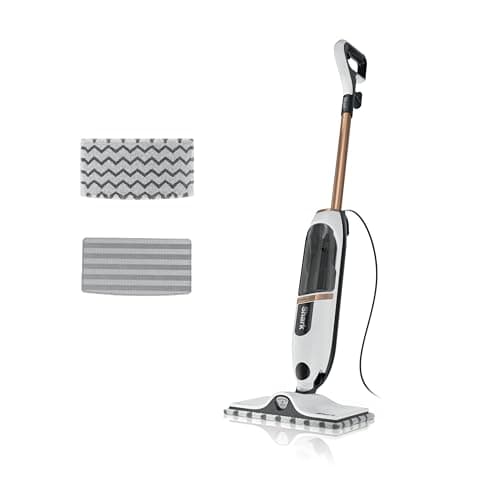
Best budget steam mop
The best budget steam mops
Eight steam mops from about $50 to $180, ranked on published tank capacity, steam control and what the pads cost over three years.
Top pick: Shark SteamSpot with Steam Blaster (S2001)
Category
Wattage tells you how fast it heats. Tank size tells you how long you clean. Pad type tells you what it costs to keep cleaning. Only one of those is on the front of the box.
Best budget steam mop
A 500 ml tank and three steam modes at under 5 lb — the most usable combination of numbers on this page.
We earn a commission if you buy through the links on this page, at no extra cost to you. It never changes what we recommend or the order we recommend it in. Full disclosure.
This is not a caution we are adding. It is what the manufacturers themselves publish. Shark rates the S1000, S3501, S8001, S8201 and S2001 for sealed hard floors — hardwood, marble, tile, stone, laminate, vinyl. Bissell rates the PowerFresh 1940A for sealed hardwood, tile and ceramic, granite and marble. Swiffer, whose PowerMop is not a steam mop at all, goes further and states explicitly: do not use on unfinished, oiled or waxed wooden boards, non-sealed tile, or carpet.
If you do not know whether your floor is sealed, that is the question to answer before you buy anything on this page. It is also the question your flooring's own warranty documentation answers, and that document — not a vacuum site — is the authority for your specific floor.
Flat-pad mops (Shark S1000, S3501, S3601) are the basic form: heat, a pad, and your arm. They are light — every one is under 5 lb — and cheap, and for routine maintenance cleaning on a floor that is already in reasonable condition they are all you need.
Variable-steam mops with a scrubber (Bissell PowerFresh 1940A, Shark SteamSpot S2001) add steam settings and either a flip-down grout scrubber or a targeted steam burst. This is the tier where a mop stops being one-speed and starts matching the mess.
Rotating-pad scrubbers (Shark S8001, S8201) do the mechanical work for you at a published 150+ scrubs per minute. Shark's claim for the S8001 — up to 2x better stuck-on stain removal — names its test standard (IEC/TC SC 59F, mustard) and the model it was tested against (the S1000). That specificity is rare enough in this category that we reward it.
| Machine | Tank | Weight | Steam modes |
|---|---|---|---|
| Shark S1000 | 12.68 fl oz | 4.6 lb | One |
| Shark S3501 | 15.2 fl oz | 4.9 lb | One |
| Bissell PowerFresh 1940A | 16 fl oz | 6.2 lb | Three, plus a grout scrubber |
| Shark S3601 | 16.9 fl oz | 4.9 lb | Intelligent Steam Control |
| Shark S8001 / S8201 | 11.83 fl oz | 6.9 / 8.9 lb | Three, plus rotating pads |
| Shark S2001 SteamSpot | 500 ml | 4.8 lb | Three, plus a steam blaster |
All figures manufacturer-published. Note that the two scrubbing machines have the SMALLEST tanks while using water fastest — which is the trade nobody puts on the box.
The running cost is almost entirely pads, and it splits the category cleanly. Every machine on this page except the Swiffer PowerMop uses washable microfiber pads — buy once, launder forever, running cost effectively zero. The Swiffer uses disposable pads and a proprietary solution, both bought perpetually. That is why it sits on this site as the comparison rather than the recommendation, and why steam mop versus Swiffer works the crossover out in dollars.
Electricity is the smaller number, and it is worth stating so nobody over-thinks it. At the U.S. average residential price of 18.34 cents per kWh, a 1,050 W steam mop run for 30 minutes a week costs about $15 over three years. A 1,500 W machine on the same schedule costs about $21. The difference between the two, over three years, is six dollars — which is less than one pack of disposable pads.
They buy the scrubber when they needed the tank. The Shark S8001 is a better machine than the S3601 in every way except the one that governs how a whole-floor clean actually feels: it holds 11.83 fl oz against the S3601's 16.9, and it uses that water faster because the pads are spinning. On a large floor you will refill it twice. The S2001 SteamSpot is the outlier worth knowing about — 500 ml of tank at under 5 lb, which no other machine here manages.
The budget steam mop roundup ranks the picks with live prices. If your floors are wood, the hardwood roundup is more specific and covers the sealed-floor question properly. If your floors are laminate, vinyl or LVP, that roundup quotes each manufacturer's own surface rating, because on those floors not every mop names your surface. If you are weighing whether to buy one at all, are steam mops worth it makes the case both ways with the running-cost arithmetic attached. If you are not sure a steam mop is right at all, steam mop versus a regular mop is the honest comparison, and which floors are safe is the page to read before you buy. If you are trying to escape a refill bill rather than choose a mop, Swiffer alternatives covers the machines that run on tap water, and Shark S8201 versus S8001 separates the two scrubbing mops people get stuck between. One close read of a single machine sits here too: the Shark SteamSpot review, which takes apart the best-specified mop in the category and shows why its tank figure needs a unit conversion before it can be compared with Shark's own Pocket Mop.
14 pages. Roundups carry a live price and a buy link for the top pick, so you can act from here without digging.
Best budget steam mop
Eight steam mops from about $50 to $180, ranked on published tank capacity, steam control and what the pads cost over three years.
Top pick: Shark SteamSpot with Steam Blaster (S2001)
Best for hardwood
Steam mops for sealed wood, ranked on steam control and pad type rather than raw scrubbing power.
Top pick: Shark SteamSpot with Steam Blaster (S2001)
Best for tile & grout
Steam mops ranked for tile and grout on published scrubbing action and steam control, not on wattage.
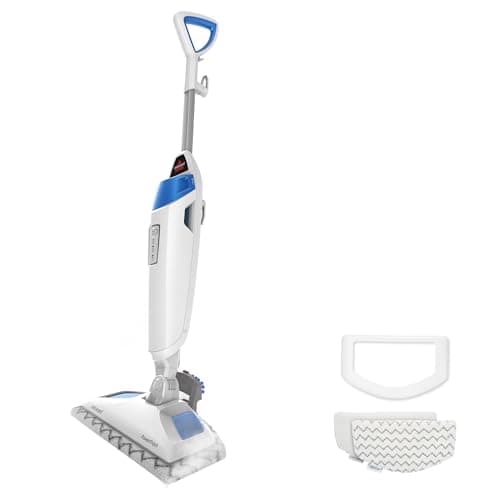
Top pick: Bissell PowerFresh Steam Mop (1940A)
#ad Price as of October 17, 2026. How we are funded
Best for laminate & vinyl
Eight machines ranked for laminate, vinyl and LVP on the one thing that matters here: which manufacturers name those surfaces in their own published rating.
Top pick: Shark SteamSpot with Steam Blaster (S2001)
The arithmetic
Five machines that do the Swiffer job without a disposable pad or a proprietary refill, compared on published surface ratings, tank size and what each costs to keep running.
Top pick: Shark SteamSpot with Steam Blaster (S2001)
The arithmetic
What the Shark SteamSpot S2001 actually publishes, why its tank figure needs a unit conversion before it means anything, the three specifications it omits, and how it sits against the rest of Shark's steam line.
Top pick: Shark SteamSpot with Steam Blaster (S2001)
Head to head
Disposable pads and proprietary solution against washable pads and tap water — with the crossover explained.
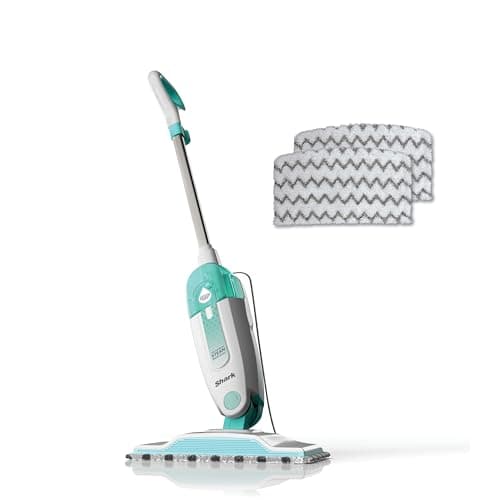
Top pick: Shark Steam Mop for Sealed Hard Floors (S1000)
Head to head
What each machine is actually designed to do, and why owning one does not remove the case for the other.
Top pick: Shark SteamSpot with Steam Blaster (S2001)
Head to head
Solution-and-pad mopping against steam, decided on published surface ratings, sanitization claims and what each system costs to keep running.
Top pick: Shark SteamSpot with Steam Blaster (S2001)
Head to head
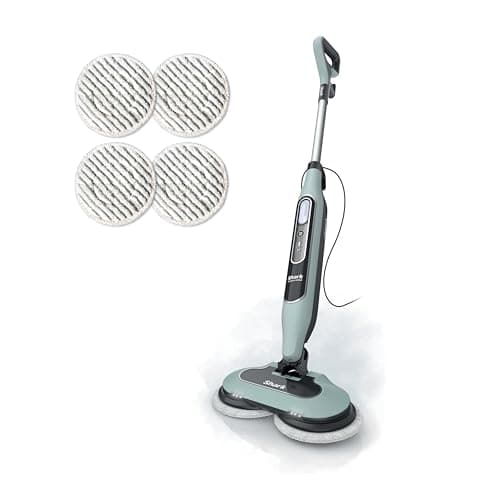
Shark's two Steam & Scrub models compared on the handful of published figures that differ — weight, the Steam Blaster, and which performance claim each listing makes.
Top pick: Shark Steam & Scrub All-in-One (S8001)
#ad Price as of October 17, 2026. How we are funded
Guide
What steam genuinely adds over a bucket and mop, and the households where the cheaper method still wins.
Top pick: Shark Steam Mop for Sealed Hard Floors (S1000)
Guide
Surface by surface, from each manufacturer's own published rating — including the floors they exclude by name.
Guide
Three-year electricity computed from published wattage, and why washable pads make this the cheapest machine in floor care to own.
Top pick: Shark Steam Mop for Sealed Hard Floors (S1000)
Guide
The honest case for and against a steam mop, with the running-cost arithmetic and the surface ratings that decide whether you can use one at all.
Top pick: Shark SteamSpot with Steam Blaster (S2001)
Only on SEALED hardwood, and only if your flooring's own warranty allows it. Shark and Bissell both restrict their machines to sealed hard floors in their published specifications. Unfinished, oiled and waxed boards are explicitly excluded by manufacturers in this category, and your floor's warranty document is the authority for your specific floor.
It heats faster and recovers steam faster between passes. It does not, on any published figure, remove more dirt. The mechanical difference — a flat pad versus rotating pads at 150+ scrubs a minute — is what changes stain removal, and Shark publishes the test standard behind that claim.
Electricity is trivial: at 18.34 cents per kWh, a 1,050 W mop run 30 minutes a week is about $15 over three years. Pads are the real cost, and every machine here except the Swiffer PowerMop uses washable ones, which makes the ongoing cost effectively nothing.
The manufacturers publish specific claims — Bissell states 99.9% of germs, bacteria and viruses when used as directed; Shark states 99.9% of common household bacteria using water alone. Both claims carry the 'used as directed' qualifier, which means following the dwell time in the manual rather than walking briskly across the floor.
Over any period longer than a few months, on cost, yes — washable pads against disposable pads and proprietary solution. A Swiffer is genuinely the better buy for a short tenancy or for someone who will not maintain a machine. We work the arithmetic through on the steam mop versus Swiffer page.