Everyone in this category says they tested twenty vacuums. We have not tested any, and we say so. What we do instead is read the manuals, compile the published specifications, and work out what each machine costs to run for three years — the method is written out in full.
We earn a commission if you buy through the links on this page, at no extra cost to you. It never changes what we recommend or the order we recommend it in. Full disclosure.
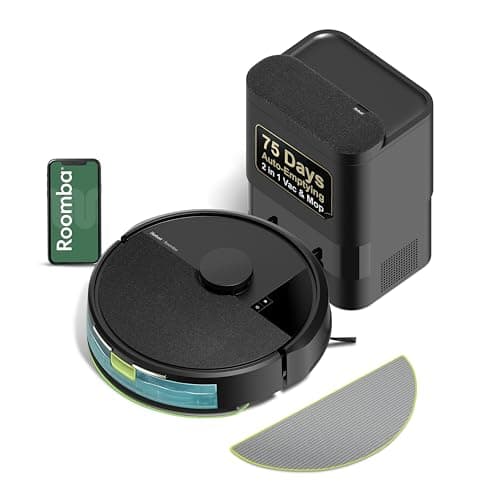
The short answer: the Roomba 105 Combo with AutoEmpty. iRobot publishes automatic carpet detection and avoidance while mopping, with no map editing required — the one capability that makes a combo usable in a home that has both rugs and hard floor. It also publishes a micro-pump that keeps the pad uniformly moist rather than soaking then drying out.
The carpet problem, and who actually solved it
A vacuum-mop combo has one hard problem: your home almost certainly has both surfaces. A robot dragging a wet pad onto a rug is worse than useless, and the published approaches divide sharply.
iRobot's Roomba 105 Combo detects and avoids carpet automatically, and states explicitly that no complex programming is required. Lefant's M2 Plus publishes carpet detection that avoids carpet when the mop holder is attached and boosts suction when it is removed. The rest rely on you drawing no-mop zones into the map by hand, or — on the unmapped Tikom G8000 Max — on closing a door.
Mopping costs you runtime, and the sheets show it
Compare iRobot's two published figures directly: the Roomba 105 Vac rates 200 minutes; the Roomba 105 Combo rates 100. Same platform, same navigation, half the runtime — because the mopping pump and the extra weight both draw from the same battery.
The water tanks are correspondingly small. Roborock's Q7 L5 publishes 270 ml. The Lefant M2 Plus publishes 300 ml. The Tikom G8000 Max publishes 300 ml. The ILIFE A30 Pro publishes a 2-in-1 tank of 200 ml dust plus 200 ml water. Those are enough for a light pass over a floor, and they are not enough for a whole house on one fill.
The published figures, side by side
Manufacturer-published figures. Note how mopping and runtime trade against each other.
Machine
Carpet handling
Water tank
Rated runtime
Dock
Roomba 105 Combo + AE
Detects and avoids automatically
Micro-pump fed, volume not published
100 min
Bagged, 75 days
Roborock Q7 M5+
Manual no-mop zones in the app
Not published separately
150 min
Bagged, 2.7 L, 7-9 weeks
Roborock Q7 L5
Manual no-mop zones in the app
270 ml
150 min
None
Lefant M2 Plus
Detects and avoids with the mop fitted
300 ml
140 min
Bagged, 2.5 L, 75 days
ILIFE A30 Pro
Manual no-go zones
200 ml (2-in-1 tank)
150 min, gentle mode
Bagged, 2.5 L, up to 280 days across 5 bags
Tikom G8000 Max
None — no map, so no zones
300 ml
150 min, quiet mode
None
#
Product
Best for
Score
Price
01
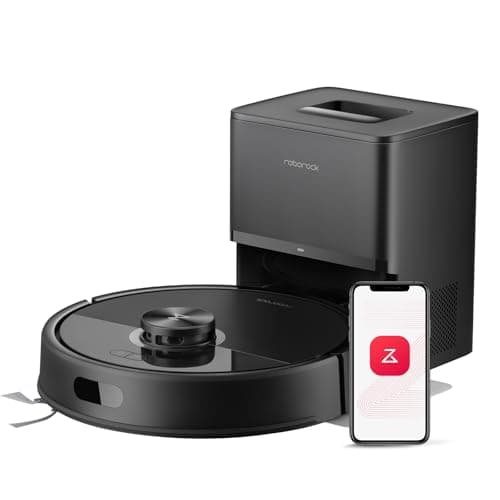
iRobot Roomba 105 Combo with AutoEmpty DockIt detects carpet and stops mopping over it without being told, which is the one thing budget combos routinely get wrong.
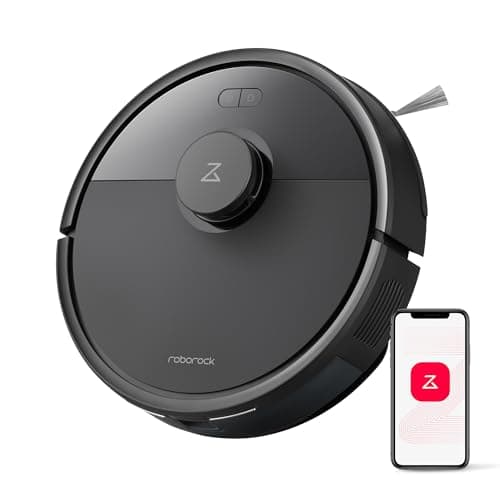
Roborock Q7 M5+ Robot Vacuum and Mop10,000 Pa published and a 2.7-liter sealed dock bag rated at seven to nine weeks: the pet-hair answer, at a real price.
Roborock Q7 L5 Robot Vacuum and Mop8,000 Pa, 360-degree LiDAR and dual anti-tangle brushes — the most specified sheet at this price, with a 270 ml tank that is the catch.
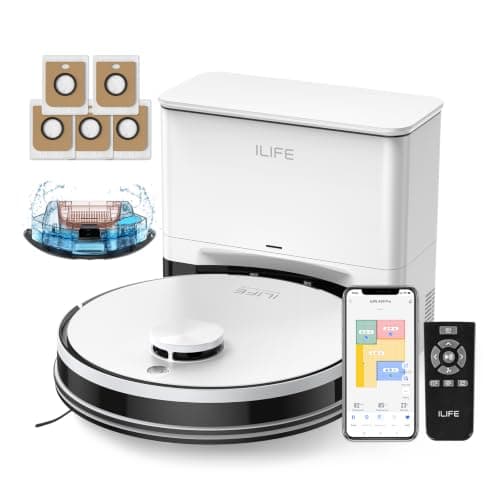
ILIFE A30 Pro Robot Vacuum and Mop10,000 Pa and a five-bag box that ILIFE rates at up to 280 days of hands-free running — the longest published interval on the site.
Scores are ours, from the published rubric on the How We Pick page. They are editorial judgments about published specifications — not test results. We have not handled these machines.
01 · Best vacuum-and-mop combo
iRobot Roomba 105 Combo with AutoEmpty Dock
It detects carpet and stops mopping over it without being told, which is the one thing budget combos routinely get wrong.
Automatically detects and avoids carpet while mopping — manufacturer states no programming required
Mopping
Micro-pump controls water flow to keep the pad uniformly moist
Modes
Vacuum only, mop only, combined
Navigation
ClearView LiDAR
Dock bag filtration
Traps 99% of allergens as small as 0.7 microns
Suction in Pa
Not published
Every figure above is the manufacturer's own published number. Where a manufacturer publishes nothing, the row says "Not published" rather than an estimate.
What the numbers say
+Automatic carpet avoidance while mopping, with no map editing required
+Micro-pump water control instead of a pad that soaks then dries out
+Three genuinely separate modes
+The 75-day dock applies to the combo too
Where it stops
−100 minutes is half the vacuum-only 105's rating — mopping costs you battery
−A flat pad drags dirt; it does not scrub, whatever any combo claims
−Mop pads are a consumable on top of dock bags
Who it is for
Hard-floor and rug homes that want a daily light mop rather than a deep clean.
Skip it if
Your floors are mostly carpet. You would be buying a mop that spends the whole run avoiding your floor.
Our score: 7.6 out of 10
Published suction6.5
Navigation9.0
Runtime6.5
Bin and dock9.5
Running cost5.5
Scored against the published rubric on How We Pick. These are judgments about spec sheets, not measurements.
02 · Best self-empty for pet hair
Roborock Q7 M5+ Robot Vacuum and Mop
10,000 Pa published and a 2.7-liter sealed dock bag rated at seven to nine weeks: the pet-hair answer, at a real price.
JawScrapers main brush plus zero-tangle side brush
Mopping
Three adjustable water levels, simultaneous with vacuuming
Rated noise
65 dB
Every figure above is the manufacturer's own published number. Where a manufacturer publishes nothing, the row says "Not published" rather than an estimate.
What the numbers say
+Highest published suction figure on the site, at 10,000 Pa
+2.7-liter dock bag is larger than the iRobot's and rated for a comparable interval
+Anti-tangle on both brushes, which is the pet-hair spec that matters
+150 minutes plus recharge-and-resume covers a large floor
Where it stops
−Dock bags are a permanent consumable
−The dock is large and 65 dB when emptying is genuinely startling the first time
−Pa figures remain incomparable between brands, however impressive 10,000 sounds
Who it is for
Pet households with real square footage, where the on-board bin is the daily annoyance.
Skip it if
You live in a studio. This is a whole-floor machine with a dock the size of a wastebasket and you will resent the footprint.
Our score: 8.5 out of 10
Published suction9.5
Navigation9.0
Runtime8.5
Bin and dock9.5
Running cost6.0
Scored against the published rubric on How We Pick. These are judgments about spec sheets, not measurements.
03 · Best published suction under $300
Roborock Q7 L5 Robot Vacuum and Mop
8,000 Pa, 360-degree LiDAR and dual anti-tangle brushes — the most specified sheet at this price, with a 270 ml tank that is the catch.
360-degree LiDAR with multi-floor maps and no-go zones
Brushes
Anti-tangle main brush plus zero-tangle side brush
Rated noise
60 dB
Wi-Fi
2.4 GHz only
Every figure above is the manufacturer's own published number. Where a manufacturer publishes nothing, the row says "Not published" rather than an estimate.
What the numbers say
+Publishes a suction figure, unlike most of the field
+Dual anti-tangle brushes — both main and side, which most brands only claim for one
+Multi-floor mapping stored on the robot, so it works in a two-story house
+Vacuums and mops in the same pass
Where it stops
−270 ml dustbin is barely half the Lefant M210's, so it fills fast in a pet home
−Pa figures are not comparable across brands and Roborock does not publish their method
−No self-empty dock in this configuration
Who it is for
Multi-floor homes that want proper mapping and are willing to empty a small bin.
Skip it if
You have shedding pets and no self-empty dock. A 270 ml bin in a dog house is a daily chore, and the Q7 M5+ exists specifically to fix that.
Our score: 7.8 out of 10
Published suction8.5
Navigation9.0
Runtime8.5
Bin and dock5.0
Running cost7.5
Scored against the published rubric on How We Pick. These are judgments about spec sheets, not measurements.
04 · Cheapest self-empty
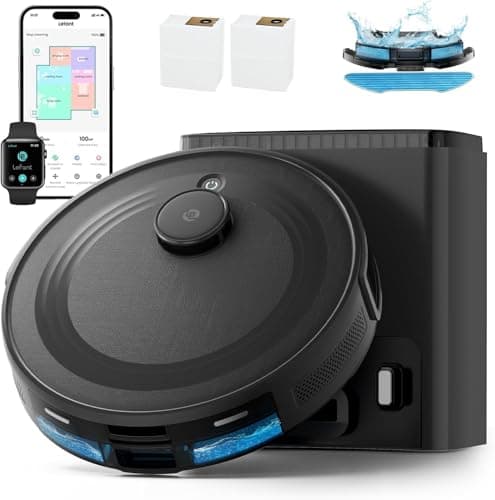
Lefant M2 Plus Robot Vacuum and Mop
6,000 Pa, LiDAR mapping and a 2.5-liter self-empty station rated at 75 days, from the least-known brand here.
2.5 liters, rated up to 75 days hands-free; ships with two bags
Dustbin
250 ml on-robot
Water tank
300 ml, three suction levels
Navigation
360-degree LiDAR with multi-floor mapping and no-go zones
Obstacle detection
190-degree PSD detection, stated to avoid objects from 1.6 inches away
Wi-Fi
Dual-band 2.4 GHz and 5 GHz
Every figure above is the manufacturer's own published number. Where a manufacturer publishes nothing, the row says "Not published" rather than an estimate.
What the numbers say
+Self-empty dock at the bottom of the price band, which is where the genuine saving is in this category
+Carpet detection lifts or avoids depending on whether the mop holder is fitted
+Dual-band Wi-Fi — the only robot here that does not force you onto 2.4 GHz
+Two dock bags in the box
Where it stops
−6,000 Pa is the lowest published suction of the self-empty machines here
−250 ml on-robot bin is tiny, which the dock only partly excuses
−Small brand: app longevity and dock-bag availability in year four are unknowns
Who it is for
Buyers who want self-emptying at the lowest possible entry price and accept the brand risk.
Skip it if
You want the app to still work in 2032. iRobot and Roborock are safer bets on software support, and a self-empty robot is worthless once its dock bags stop being sold.
Our score: 7.7 out of 10
Published suction7.0
Navigation8.5
Runtime8.5
Bin and dock8.5
Running cost6.0
Scored against the published rubric on How We Pick. These are judgments about spec sheets, not measurements.
05 · Longest dock interval
ILIFE A30 Pro Robot Vacuum and Mop
10,000 Pa and a five-bag box that ILIFE rates at up to 280 days of hands-free running — the longest published interval on the site.
2.5 liters, five in the box, rated up to 280 days hands-free in total
Tank
2-in-1 integrated: 200 ml dustbin plus 200 ml water tank
Navigation
LDS LiDAR with SLAM mapping, no-go zones and virtual walls
Weight
10.4 lb
Rated noise
72 dB
Every figure above is the manufacturer's own published number. Where a manufacturer publishes nothing, the row says "Not published" rather than an estimate.
What the numbers say
+Five bags in the box is real money that the competition charges separately for
+Full LiDAR SLAM mapping with virtual walls at a budget price
+10,000 Pa published, matching the dearest robot here
Where it stops
−72 dB is the loudest robot figure on the site
−200 ml dustbin is the smallest here — the 2-in-1 tank splits capacity with the water
−The 150-minute rating is explicitly the gentle-suction number
Who it is for
Buyers optimizing for the longest possible gap between touching the thing.
Skip it if
You want to run it while you are home. At 72 dB it is a run-it-when-you-are-out machine.
Our score: 8.2 out of 10
Published suction9.0
Navigation8.5
Runtime8.0
Bin and dock8.5
Running cost7.0
Scored against the published rubric on How We Pick. These are judgments about spec sheets, not measurements.
06 · Quietest combo
Tikom G8000 Max Robot Vacuum and Mop
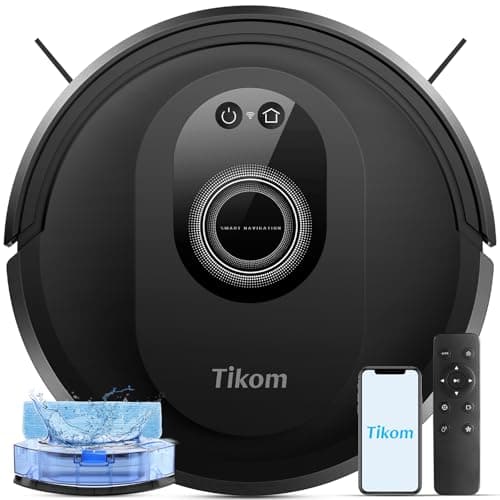
45 dB rated with a 450 ml bin and a 300 ml tank, and no mapping at all — a quiet, cheap, semi-random cleaner.
Anti-collision and anti-fall sensors; four modes — spot, edge, zig-zag, manual. No LiDAR mapping
Control
App, remote, voice, on-device buttons
Every figure above is the manufacturer's own published number. Where a manufacturer publishes nothing, the row says "Not published" rather than an estimate.
What the numbers say
+45 dB rated is the quietest figure published anywhere on this site
+450 ml bin plus a 300 ml tank, both larger than the mapped Roborock Q7 L5's
+Four control methods including a physical remote, which matters in households that will not use an app
Where it stops
−No mapping, so coverage is a zig-zag pattern rather than a plan
−5,000 Pa is the lowest published figure of the mopping robots here
−The 150-minute rating is the quiet-mode number
Who it is for
Small hard-floor homes, light sleepers, and households that want a remote rather than an app.
Skip it if
You need room targeting or no-go zones. Without a map it cannot be told where not to go, and the only fix is a closed door.
Our score: 6.9 out of 10
Published suction6.0
Navigation4.0
Runtime8.5
Bin and dock7.5
Running cost8.5
Scored against the published rubric on How We Pick. These are judgments about spec sheets, not measurements.
The one to skip
Skip the Tikom G8000 Max as a mop if you have any carpet at all. It has no map, which means it has no zones, which means it has no way to be told where not to mop. It is a very good, very quiet, very cheap hard-floor machine — 45 dB, a 450 ml bin — and as a mop in a mixed-surface home it will drag a wet pad onto your rug and there is nothing you can do about it except close doors.
Is a combo worth it at all?
For a hard-floor home with light daily grime, genuinely yes — a robot that vacuums and lays down a damp pass every day keeps floors in a state that manual cleaning only achieves weekly. That is a real quality-of-life gain and it is why this category sells.
For a carpeted home, no. You would be buying a mop that spends its run avoiding your floor, and paying a runtime penalty for the privilege. Buy a vacuum-only robot and put the difference toward a carpet cleaner.
For a home with dried-on kitchen messes, no. Buy a vacuum-only robot for the daily work and a steam mop for the scrubbing. Both together frequently cost less than one flagship combo, and each does its job properly.
What we cannot tell you
How well any carpet-detection system actually works on a specific rug. Detection thresholds are not published, low-pile rugs and thick rugs behave differently, and we have not run any of these machines across a floor. We can report which manufacturers publish automatic detection as a capability and which expect you to draw zones by hand — that distinction is documented, and it is the one that matters.
Common questions
Do robot vacuum and mop combos actually mop?+−
They lay down a damp pad and wipe. That handles dust films and fresh spills. None of them scrub — a flat pad pushed by a 7-pound robot cannot do what a steam mop's rotating pads do at a published 150+ scrubs per minute.
Will a robot mop ruin my carpet?+−
Only if it cannot tell the carpet is there. iRobot's Roomba 105 Combo publishes automatic carpet detection and avoidance; the Lefant M2 Plus avoids carpet when the mop holder is fitted. The rest need manual no-mop zones drawn in the app, and the unmapped Tikom has no way to be told at all.
Why does mopping reduce runtime so much?+−
The pump and the extra weight draw from the same battery. iRobot's own figures show it cleanly: the Roomba 105 Vac rates 200 minutes and the Roomba 105 Combo rates 100, on the same platform.
How big should the water tank be?+−
The tanks in this class run 200 to 300 ml, which covers a light pass over a floor rather than a whole house. If you want a full-house mop on one fill, this category does not publish a machine that does it.
Should I buy a combo or a separate steam mop?+−
If your floors need scrubbing rather than wiping, buy a vacuum-only robot and a steam mop separately — they frequently cost less together than one flagship combo, and each does its job properly. A combo is the right buy for daily light maintenance on hard floors.
Sources
Manufacturer-published specifications — Every runtime, wattage, capacity, weight, filtration and warranty figure quoted on this page is the manufacturer's own published number for that model, retrieved September 1, 2026. Where a manufacturer publishes no figure, the page says 'Not published' rather than estimating one.
Sweep & Suction — How We Pick — Our published method, including the scoring rubric, the three-year running-cost formula and an explicit statement of what published specifications cannot tell you.