Mapping is the only feature that changes what the machine is. Everything else on the box is a matter of degree, and the pascal numbers are not comparable at all.
Everyone in this category says they tested twenty vacuums. We have not tested any, and we say so. What we do instead is read the manuals, compile the published specifications, and work out what each machine costs to run for three years — the method is written out in full.
We earn a commission if you buy through the links on this page, at no extra cost to you. It never changes what we recommend or the order we recommend it in. Full disclosure.
The short answer: the iRobot Roomba 105 Vac. It publishes ClearView LiDAR mapping, keep-out zones, 200 minutes of runtime — the longest on this page — and recharge-and-resume, from the manufacturer whose app is the safest long-term bet in the category. If you want the highest published suction figure instead, the Roborock Q7 L5 states 8,000 Pa.
Mapping is the feature. Everything else is a preference.
A robot with LiDAR builds a floor plan, cleans in efficient rows, remembers where it has been and can be told where not to go. A robot without one bounces off things in a semi-random pattern until the battery runs down. On 400 square feet that is a difference in time taken. On 1,200 square feet it is the difference between the far bedroom being cleaned and not.
Four machines here publish full mapping with no-go zones: the Roomba 105 Vac (ClearView LiDAR), the Roborock Q7 L5 (360-degree LiDAR with multi-floor maps), the Lefant M2 Plus and the ILIFE A30 Pro (LDS LiDAR with SLAM). Two do not: the Lefant M210 and the Tikom G8000 Max — and they are cheaper for precisely that reason, which is a fair trade rather than a con.
The bin trade nobody mentions
It runs backwards from what you would expect. The cheap unmapped robots often have the bigger bins. The Lefant M210 publishes 500 ml. The Tikom G8000 Max publishes 450 ml. The mapped Roborock Q7 L5 publishes 270 ml — barely half the Lefant's — and the ILIFE A30 Pro publishes 200 ml because its 2-in-1 tank splits capacity with the water reservoir.
That is logical once you see it: a mapped robot is often sold expecting a dock to empty into, so the on-board bin is a buffer rather than a container. But if you buy a mapped robot without a dock, you have bought the smaller bin and kept the emptying chore. Worth knowing before you order.
What we looked at
Navigation, weighted heaviest, because it is the only feature that changes the class of machine.
Published runtime, and the mode it was measured in — Tikom's 150 minutes is explicitly the quiet-mode figure, ILIFE's is the gentle-suction figure.
On-board bin volume, which varies more than four-fold across this group.
Dock capacity and whether the dock is bagged, because that is the ongoing cost.
Published noise ratings, which range from 45 dB to 72 dB here — a very large spread.
App and parts longevity, which is not a spec and is the biggest real risk on a cheap connected appliance.
#
Product
Best for
Score
Price
01
iRobot Roomba 105 VacLiDAR mapping, keep-out zones and a 200-minute rating from the brand that will still be supporting the app in five years.
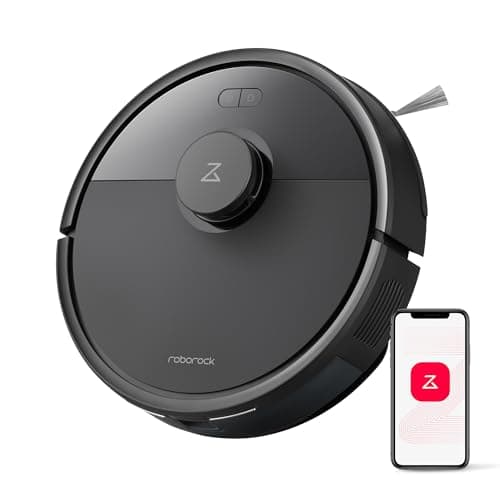
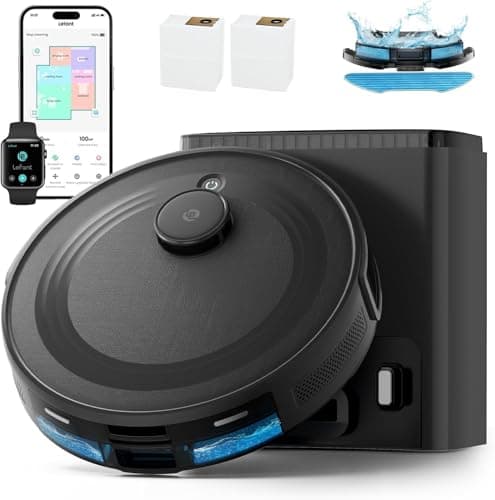
Roborock Q7 L5 Robot Vacuum and Mop8,000 Pa, 360-degree LiDAR and dual anti-tangle brushes — the most specified sheet at this price, with a 270 ml tank that is the catch.
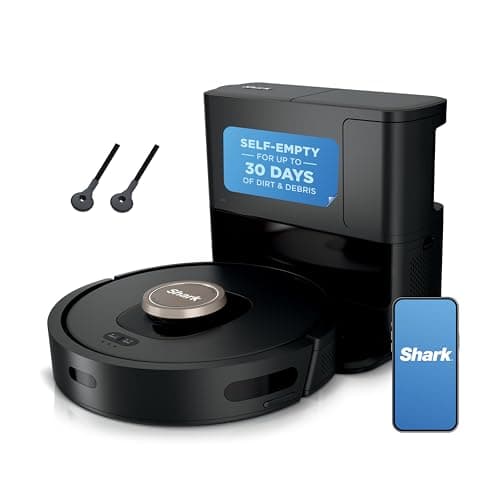
Shark AI Robot with XL HEPA Self-Empty Base (AV2501AE)The only self-empty dock here with no bags to buy — bagless, HEPA-filtered and rated at 60 days, which changes the three-year arithmetic completely.
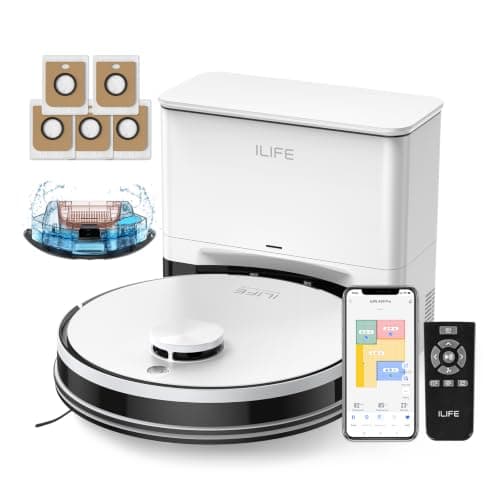
ILIFE A30 Pro Robot Vacuum and Mop10,000 Pa and a five-bag box that ILIFE rates at up to 280 days of hands-free running — the longest published interval on the site.
Scores are ours, from the published rubric on the How We Pick page. They are editorial judgments about published specifications — not test results. We have not handled these machines.
01 · Best mapping under $300
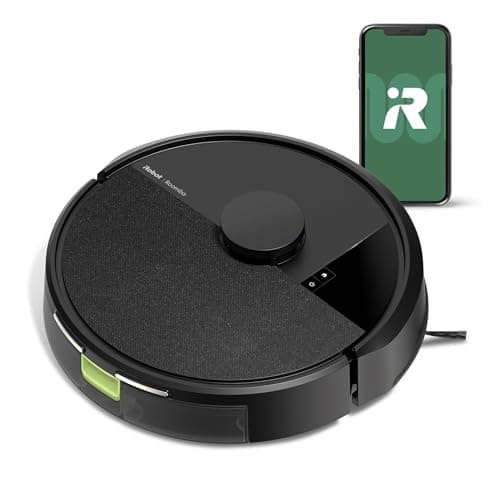
iRobot Roomba 105 Vac
LiDAR mapping, keep-out zones and a 200-minute rating from the brand that will still be supporting the app in five years.
70x more power-lifting suction, compared by the manufacturer against the Roomba 600 series
Control
Roomba Home app, on-device buttons, voice assistants
Wi-Fi
2.4 GHz required for setup and operation
Suction in Pa
Not published
Every figure above is the manufacturer's own published number. Where a manufacturer publishes nothing, the row says "Not published" rather than an estimate.
What the numbers say
+200 minutes rated, the longest published runtime of any robot on this site
+Real LiDAR mapping, keep-out zones and room targeting at a budget price
+Recharge-and-resume, so a large floor completes without you
+iRobot's app and parts supply are the most durable bet in the category
Where it stops
−The 70x suction claim is measured against iRobot's own decade-old 600 series, not against a competitor
−No self-empty dock in this configuration — you empty the on-board bin
−No published bin volume
Who it is for
Multi-room homes that want scheduled, mapped cleaning without a self-empty dock's price.
Skip it if
Nobody in the house will install an app. Half of what you are paying for is mapping, zones and scheduling, and none of that exists without the phone.
Our score: 8.0 out of 10
Published suction6.5
Navigation9.0
Runtime10.0
Bin and dock6.0
Running cost7.5
Scored against the published rubric on How We Pick. These are judgments about spec sheets, not measurements.
02 · Best published suction under $300
Roborock Q7 L5 Robot Vacuum and Mop
8,000 Pa, 360-degree LiDAR and dual anti-tangle brushes — the most specified sheet at this price, with a 270 ml tank that is the catch.
360-degree LiDAR with multi-floor maps and no-go zones
Brushes
Anti-tangle main brush plus zero-tangle side brush
Rated noise
60 dB
Wi-Fi
2.4 GHz only
Every figure above is the manufacturer's own published number. Where a manufacturer publishes nothing, the row says "Not published" rather than an estimate.
What the numbers say
+Publishes a suction figure, unlike most of the field
+Dual anti-tangle brushes — both main and side, which most brands only claim for one
+Multi-floor mapping stored on the robot, so it works in a two-story house
+Vacuums and mops in the same pass
Where it stops
−270 ml dustbin is barely half the Lefant M210's, so it fills fast in a pet home
−Pa figures are not comparable across brands and Roborock does not publish their method
−No self-empty dock in this configuration
Who it is for
Multi-floor homes that want proper mapping and are willing to empty a small bin.
Skip it if
You have shedding pets and no self-empty dock. A 270 ml bin in a dog house is a daily chore, and the Q7 M5+ exists specifically to fix that.
Our score: 7.8 out of 10
Published suction8.5
Navigation9.0
Runtime8.5
Bin and dock5.0
Running cost7.5
Scored against the published rubric on How We Pick. These are judgments about spec sheets, not measurements.
03 · Best bagless self-empty
Shark AI Robot with XL HEPA Self-Empty Base (AV2501AE)
The only self-empty dock here with no bags to buy — bagless, HEPA-filtered and rated at 60 days, which changes the three-year arithmetic completely.
True HEPA, rated to capture 99.97% of dust and allergens down to 0.3 microns
Rated runtime
120 minutes with recharge and resume
Navigation
360-degree LiDAR with Matrix Clean grid coverage
Brushroll
Self-cleaning
Weight
15.3 lb
Suction in Pa
Not published
Every figure above is the manufacturer's own published number. Where a manufacturer publishes nothing, the row says "Not published" rather than an estimate.
What the numbers say
+Bagless dock — no consumable at all, which no other self-empty robot on this site can say
+True HEPA on the dock, so emptying does not re-release what it collected
+Matrix Clean makes multiple passes over dirty areas rather than one
+Self-cleaning brushroll
Where it stops
−Emptying a bagless dock does put you back in contact with the dust, HEPA or not
−No published suction figure in any unit
−15.3 lb with the base is the heaviest robot package here
Who it is for
Anyone who has done the maths on dock bags over five years and did not like the answer.
Skip it if
Allergies are the reason you are buying a self-empty robot at all. A bagged dock is the better answer for that specific problem, even though it costs more to run.
Our score: 8.1 out of 10
Published suction6.0
Navigation8.5
Runtime8.0
Bin and dock9.0
Running cost9.0
Scored against the published rubric on How We Pick. These are judgments about spec sheets, not measurements.
04 · Longest dock interval
ILIFE A30 Pro Robot Vacuum and Mop
10,000 Pa and a five-bag box that ILIFE rates at up to 280 days of hands-free running — the longest published interval on the site.
2.5 liters, five in the box, rated up to 280 days hands-free in total
Tank
2-in-1 integrated: 200 ml dustbin plus 200 ml water tank
Navigation
LDS LiDAR with SLAM mapping, no-go zones and virtual walls
Weight
10.4 lb
Rated noise
72 dB
Every figure above is the manufacturer's own published number. Where a manufacturer publishes nothing, the row says "Not published" rather than an estimate.
What the numbers say
+Five bags in the box is real money that the competition charges separately for
+Full LiDAR SLAM mapping with virtual walls at a budget price
+10,000 Pa published, matching the dearest robot here
Where it stops
−72 dB is the loudest robot figure on the site
−200 ml dustbin is the smallest here — the 2-in-1 tank splits capacity with the water
−The 150-minute rating is explicitly the gentle-suction number
Who it is for
Buyers optimizing for the longest possible gap between touching the thing.
Skip it if
You want to run it while you are home. At 72 dB it is a run-it-when-you-are-out machine.
Our score: 8.2 out of 10
Published suction9.0
Navigation8.5
Runtime8.0
Bin and dock8.5
Running cost7.0
Scored against the published rubric on How We Pick. These are judgments about spec sheets, not measurements.
05 · Cheapest self-empty
Lefant M2 Plus Robot Vacuum and Mop
6,000 Pa, LiDAR mapping and a 2.5-liter self-empty station rated at 75 days, from the least-known brand here.
2.5 liters, rated up to 75 days hands-free; ships with two bags
Dustbin
250 ml on-robot
Water tank
300 ml, three suction levels
Navigation
360-degree LiDAR with multi-floor mapping and no-go zones
Obstacle detection
190-degree PSD detection, stated to avoid objects from 1.6 inches away
Wi-Fi
Dual-band 2.4 GHz and 5 GHz
Every figure above is the manufacturer's own published number. Where a manufacturer publishes nothing, the row says "Not published" rather than an estimate.
What the numbers say
+Self-empty dock at the bottom of the price band, which is where the genuine saving is in this category
+Carpet detection lifts or avoids depending on whether the mop holder is fitted
+Dual-band Wi-Fi — the only robot here that does not force you onto 2.4 GHz
+Two dock bags in the box
Where it stops
−6,000 Pa is the lowest published suction of the self-empty machines here
−250 ml on-robot bin is tiny, which the dock only partly excuses
−Small brand: app longevity and dock-bag availability in year four are unknowns
Who it is for
Buyers who want self-emptying at the lowest possible entry price and accept the brand risk.
Skip it if
You want the app to still work in 2032. iRobot and Roborock are safer bets on software support, and a self-empty robot is worthless once its dock bags stop being sold.
Our score: 7.7 out of 10
Published suction7.0
Navigation8.5
Runtime8.5
Bin and dock8.5
Running cost6.0
Scored against the published rubric on How We Pick. These are judgments about spec sheets, not measurements.
06 · Quietest robot here
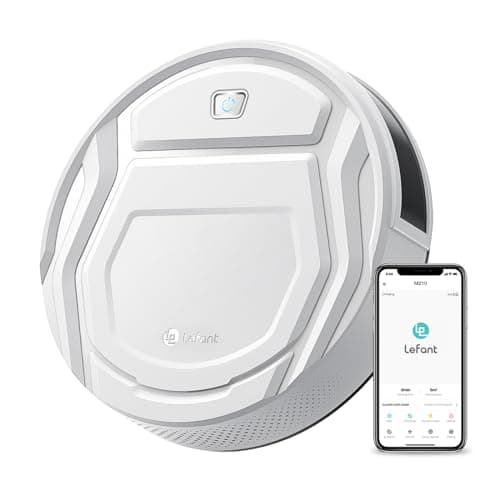
Lefant M210 Robot Vacuum
52 dB and 2.99 inches tall, with a brushless suction port that sidesteps hair tangle by not having a brushroll at all.
Up to 120 minutes in low suction mode, manufacturer-stated
Height
2.99 inches
Diameter
11 inches
Dustbin
500 ml
Rated noise
52 dB
Suction port
Brushless — no roller brush
Navigation
FreeMove 3.0, 6D infrared anti-collision — no LiDAR mapping
Battery
Lithium iron phosphate
Suction in Pa
Not published
Every figure above is the manufacturer's own published number. Where a manufacturer publishes nothing, the row says "Not published" rather than an estimate.
What the numbers say
+Brushless port cannot tangle, because there is nothing to tangle on — the only true fix for long hair
+52 dB is the quietest published figure on this site
+11-inch diameter gets between chair legs a 13-inch robot cannot
+Lithium iron phosphate chemistry is more cycle-durable than standard lithium-ion
Where it stops
−No brushroll also means no agitation, so carpet pickup is weak by design
−The 120-minute figure is explicitly the low-suction number
−No LiDAR mapping
Who it is for
Hard-floor homes with long-haired occupants or pets, and anyone who has cut hair off a robot brushroll once too often.
Skip it if
You have carpet you actually want cleaned. Without a brushroll it lifts surface debris and leaves embedded grit; this is a hard-floor machine.
Our score: 6.6 out of 10
Published suction4.0
Navigation4.0
Runtime9.0
Bin and dock6.5
Running cost9.5
Scored against the published rubric on How We Pick. These are judgments about spec sheets, not measurements.
07 · Quietest combo
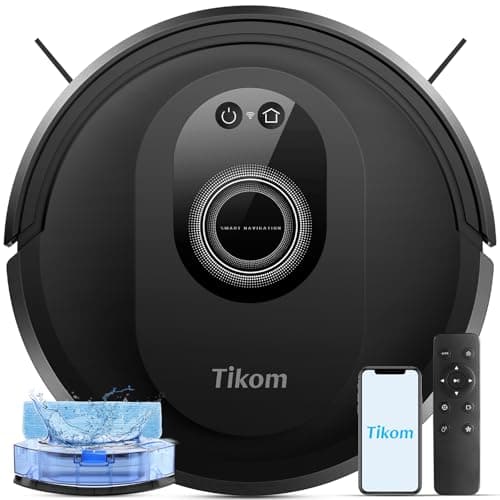
Tikom G8000 Max Robot Vacuum and Mop
45 dB rated with a 450 ml bin and a 300 ml tank, and no mapping at all — a quiet, cheap, semi-random cleaner.
Anti-collision and anti-fall sensors; four modes — spot, edge, zig-zag, manual. No LiDAR mapping
Control
App, remote, voice, on-device buttons
Every figure above is the manufacturer's own published number. Where a manufacturer publishes nothing, the row says "Not published" rather than an estimate.
What the numbers say
+45 dB rated is the quietest figure published anywhere on this site
+450 ml bin plus a 300 ml tank, both larger than the mapped Roborock Q7 L5's
+Four control methods including a physical remote, which matters in households that will not use an app
Where it stops
−No mapping, so coverage is a zig-zag pattern rather than a plan
−5,000 Pa is the lowest published figure of the mopping robots here
−The 150-minute rating is the quiet-mode number
Who it is for
Small hard-floor homes, light sleepers, and households that want a remote rather than an app.
Skip it if
You need room targeting or no-go zones. Without a map it cannot be told where not to go, and the only fix is a closed door.
Our score: 6.9 out of 10
Published suction6.0
Navigation4.0
Runtime8.5
Bin and dock7.5
Running cost8.5
Scored against the published rubric on How We Pick. These are judgments about spec sheets, not measurements.
The one to skip
Skip the Lefant M210 if you have carpet. Its brushless suction port is a genuinely clever answer to hair tangle — there is nothing for hair to wrap around, which is the only complete fix anyone offers — and at 52 dB and 2.99 inches tall it is a lovely little machine on hard floor. But no brushroll also means no agitation, and without agitation a robot lifts surface debris off carpet and leaves the embedded grit exactly where it was. Buying it for a carpeted house is buying the wrong tool.
A second, softer skip: be careful with the very cheap self-emptying robots if you need the app to work in a decade. The Lefant M2 Plus and the ILIFE A30 Pro both publish excellent hardware sheets at low prices. What neither can publish is how long the cloud service behind the app will run, and a self-emptying robot whose dock bags stop being sold is worth nothing.
What you give up against the expensive robots
What the published sheets do and do not include as you move up. All figures manufacturer-published.
Feature
Under $150
$150-$280
$280-$400
LiDAR mapping and no-go zones
No
Yes
Yes
On-board bin
450-500 ml
200-270 ml
200-270 ml plus a dock
Self-emptying dock
No
No
Yes, 60-75 days
Published runtime
120-150 min
150-200 min
120-150 min
Rated noise
45-52 dB
60 dB
65-72 dB
Ongoing cost
None
None
Dock bags, unless the dock is bagless
Note that the cheapest tier is both the quietest and has the biggest on-board bin. It is genuinely better at two things.
Above $400 you are buying higher published pascals, obstacle cameras, mop plumbing and heated dock washing. Those are real features. They are also more parts, more app surface and more to fail, and none of them changes the fundamental limitation covered on our carpet page.
What we cannot tell you
How well any of these actually navigate a real house. Published LiDAR is not the same as good path planning, obstacle avoidance quality varies enormously between implementations, and nobody publishes a coverage-efficiency figure. We also cannot tell you how long the app will be supported — the most important unpublished fact about every connected robot here. Our method page sets out exactly where our evidence ends.
Common questions
What is the best budget robot vacuum?+−
On published specifications, the iRobot Roomba 105 Vac: ClearView LiDAR mapping, keep-out zones, 200 minutes of rated runtime and recharge-and-resume. For the highest published suction figure at a similar price, the Roborock Q7 L5 states 8,000 Pa — though pascal figures are not comparable between brands.
What happened to the eufy 11S MAX?+−
It was our pick under $150 and we have removed it, because its Amazon listing now reads "Currently unavailable" and the only in-stock listings left are a refurbished unit and a marked-up accessory bundle at more than twice the machine's normal price. We will not send you to either. eufy still sells the 11S MAX on its own site, so the machine is not discontinued — but we only recommend what you can actually buy at a fair price from the retailer we link. For a cheap unmapped robot today, the Lefant M210 publishes the biggest on-board bin here at 500 ml, and the Tikom G8000 Max is the quietest on this site at a rated 45 dB.
Do I need LiDAR mapping on a robot vacuum?+−
Above roughly 800 square feet, yes — it is the difference between planned coverage and a random walk. Below that, an unmapped robot with a bigger bin and a lower noise rating is a defensible and cheaper buy.
Are higher Pa numbers better on a robot vacuum?+−
Not across brands. Pa measures sealed static pressure, every manufacturer measures it differently, and none publish the method. It is only useful for ranking models inside one brand's own range.
Which budget robot vacuum is quietest?+−
On published ratings, the Tikom G8000 Max at 45 dB, then the Lefant M210 at 52 dB. Both are unmapped machines — the mapped robots on this page rate 60 to 72 dB.
Can I get a robot vacuum without an app?+−
Not on this page any more, and that is worth saying plainly. The one machine we recommended that published no Wi-Fi and no app at all — the eufy 11S MAX, run from a remote and on-device buttons — is no longer buyable on Amazon, and nothing currently in stock replaces it. Every robot we can still point you at is app-connected. If nobody in the house wants another account, that is now a reason to look outside this shelf rather than inside it.
Do budget robot vacuums work on carpet?+−
On low and medium pile they lift surface debris. Embedded grit in deep pile needs agitation and airflow that no robot on this page publishes figures to support — and a brushless design like the Lefant M210 has no agitation by construction. Our dedicated carpet page covers this properly.
Sources
Manufacturer-published specifications — Every runtime, wattage, capacity, weight, filtration and warranty figure quoted on this page is the manufacturer's own published number for that model, retrieved September 1, 2026. Where a manufacturer publishes no figure, the page says 'Not published' rather than estimating one.
Sweep & Suction — How We Pick — Our published method, including the scoring rubric, the three-year running-cost formula and an explicit statement of what published specifications cannot tell you.