Everyone in this category says they tested twenty vacuums. We have not tested any, and we say so. What we do instead is read the manuals, compile the published specifications, and work out what each machine costs to run for three years — the method is written out in full.
We earn a commission if you buy through the links on this page, at no extra cost to you. It never changes what we recommend or the order we recommend it in. Full disclosure.
Buy a steam mop unless you are moving out within a year. A Swiffer PowerMop costs less on day one and then keeps costing money forever — disposable pads, proprietary solution and batteries, all bought perpetually. Every steam mop here uses washable pads and tap water, so its running cost is effectively the electricity, which is about $15 over three years.
They are not the same kind of machine
This is worth being clear about, because the comparison is usually framed as two mops at different prices. A Swiffer PowerMop applies no heat. It sprays a pre-mixed cleaning solution and you push a pad over it. Procter & Gamble publishes no sanitization claim for it at all.
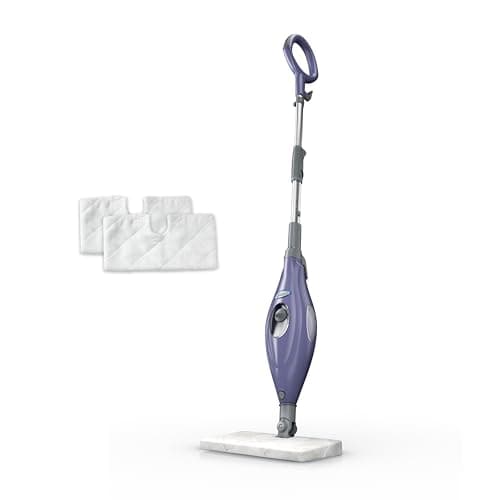
A steam mop heats water to produce vapor, which is where the sanitization claims come from — Bissell publishes 99.9% of germs, bacteria and viruses when used as directed; Shark publishes 99.9% of common household bacteria using water alone, with no chemicals and no residue. Whether you need that is a fair question. But it is a genuine functional difference, not a price tier.
The consumable arithmetic
Here is what each machine costs you after the purchase, at each manufacturer's own published design:
Ongoing costs, from the manufacturers' published product design.
Swiffer PowerMop
Any steam mop here
Pads
Disposable — bought forever
Washable microfiber — bought once
Cleaning fluid
Proprietary pre-mixed solution, bought forever
Tap water
Power
Batteries, bought forever
Mains electricity
Heat
None
1,050-1,500 W, published
Sanitization claim
None published
99.9%, published by both Shark and Bissell
3-year electricity
Not applicable
About $15-21, computed below
The steam mop's entire ongoing cost is that last row. At the U.S. average residential electricity price of 18.34 cents per kWh, running a 1,050 W steam mop for 30 minutes a week for three years uses 81.9 kWh and costs $15.02. A 1,500 W machine on the same schedule costs $21.46. That is the whole bill.
Where the Swiffer genuinely wins
Storage. It is a stick that lives in a cupboard. No tank, no cord, no heat-up.
Zero commitment. Nothing to maintain, nothing to descale, nothing to dry out between uses.
Short tenancies. Under a year, the crossover has not arrived and the low entry price wins outright.
Reach. P&G publishes a large swivel head that locks for baseboards, which is a genuinely good design detail.
Floors a steam mop cannot touch. Its own guidance excludes unfinished, oiled and waxed wood and unsealed tile — but so does every steam mop's, and the Swiffer at least sprays rather than steams.
Where the steam mop wins
Running cost, decisively. Washable pads and tap water against three perpetual consumables.
Heat. The published 99.9% sanitization claims exist because of it, and there is no chemical residue left behind.
Scrubbing. Shark's Steam & Scrub machines publish 150+ scrubs a minute. A Swiffer pad does not scrub.
Control. Three steam settings on the Bissell 1940A and the Shark S2001 versus one spray on the Swiffer.
No proprietary lock-in. A steam mop takes water. A Swiffer takes Swiffer solution.
#
Product
Best for
Score
Price
01
Shark Steam Mop for Sealed Hard Floors (S1000)Under 5 lb, steam in 30 seconds, an 18-foot cord and nothing else — the cheapest way to stop mopping with a bucket.
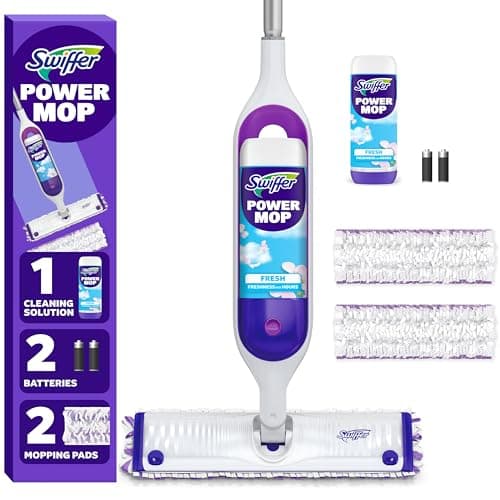
Swiffer PowerMop Mopping KitThe cheapest thing on the shelf and the most expensive over three years — it is here as the comparison, not the recommendation.
Shark Steam Pocket Mop (S3501)Double-sided pads flip mid-clean, which halves how often you stop to change them — a small idea that beats a bigger tank in practice.
Scores are ours, from the published rubric on the How We Pick page. They are editorial judgments about published specifications — not test results. We have not handled these machines.
01 · Best under $60
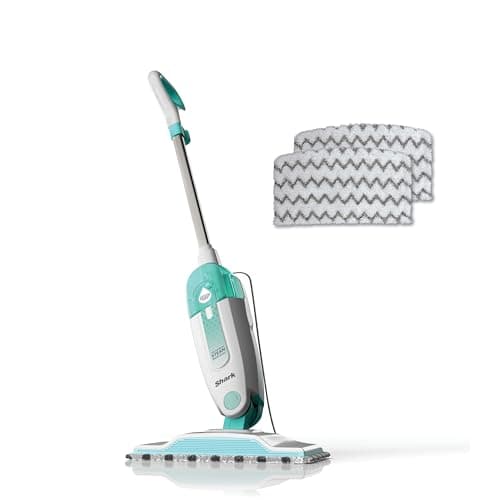
Shark Steam Mop for Sealed Hard Floors (S1000)
Under 5 lb, steam in 30 seconds, an 18-foot cord and nothing else — the cheapest way to stop mopping with a bucket.
Sealed hard floors only — hardwood, marble, tile, stone, laminate, vinyl
Steam modes
Not published — single steam output
Every figure above is the manufacturer's own published number. Where a manufacturer publishes nothing, the row says "Not published" rather than an estimate.
What the numbers say
+4.6 lb and steam in 30 seconds, so it gets used rather than admired in a cupboard
+Removable tank refills at the tap instead of over the sink at an angle
+Washable pads, so the running cost is detergent-free and effectively zero
+18-foot cord is longer than most in this price band
Where it stops
−12.68 fl oz is the smallest tank here — about one floor before a refill
−No steam control: one output, whatever the mess
−1-year warranty, half the Bissell's
Who it is for
Small hard-floor homes doing routine maintenance cleaning, not rescue jobs.
Skip it if
You have dried-on kitchen grime rather than everyday dust. Without variable steam or a scrubber you will go over the same spot repeatedly.
Our score: 6.8 out of 10
Steam control4.0
Tank size4.5
Weight and handling9.0
Pad system7.0
Running cost9.5
Scored against the published rubric on How We Pick. These are judgments about spec sheets, not measurements.
02 · The disposable-pad alternative
Swiffer PowerMop Mopping Kit
The cheapest thing on the shelf and the most expensive over three years — it is here as the comparison, not the recommendation.
All finished floors. Manufacturer states: do NOT use on unfinished, oiled or waxed wood, non-sealed tile, or carpet
Weight
Published as a kit weight only
Every figure above is the manufacturer's own published number. Where a manufacturer publishes nothing, the row says "Not published" rather than an estimate.
What the numbers say
+Lowest possible entry price and it lives in a cupboard taking up nothing
+No cord, no heat-up, no tank to fill
+The swivel head genuinely does reach under furniture
Where it stops
−Pads AND solution are both consumables you buy forever — this is the razor-and-blades model
−No heat and no sanitization claim, so it is not doing what a steam mop does
−Batteries are another consumable
Who it is for
Renters staying under a year, and anyone who genuinely will not maintain a machine.
Skip it if
You will still own the floor in two years. Run the arithmetic on our steam-mop-versus-Swiffer page first; the crossover comes fast.
Our score: 4.3 out of 10
Steam control1.0
Tank size5.0
Weight and handling9.5
Pad system4.0
Running cost2.0
Scored against the published rubric on How We Pick. These are judgments about spec sheets, not measurements.
03 · Best pad value
Shark Steam Pocket Mop (S3501)
Double-sided pads flip mid-clean, which halves how often you stop to change them — a small idea that beats a bigger tank in practice.
2 double-sided washable microfiber Dirt Grip pads, plus a filling flask
Sanitization claim
Removes 99.9% of common household bacteria using water alone
Warranty
1-year limited
Rated surfaces
All sealed hard floors
Every figure above is the manufacturer's own published number. Where a manufacturer publishes nothing, the row says "Not published" rather than an estimate.
What the numbers say
+Double-sided pads: flip the head and keep going instead of walking to the laundry
+15.2 fl oz, 20% more than the S1000
+Filling flask included, which sounds trivial and is not
+Published bacteria-removal claim with the chemical-free qualifier stated
Where it stops
−Still a single steam output with no modes
−Rectangular head is worse in corners than a triangular one
−1-year warranty
Who it is for
Whole-floor cleans where the interruption you actually resent is swapping a dirty pad.
Skip it if
You want variable steam for a mix of delicate laminate and greasy kitchen tile. Buy the SteamSpot or the Bissell for that.
Our score: 7.3 out of 10
Steam control4.0
Tank size5.5
Weight and handling8.5
Pad system9.0
Running cost9.5
Scored against the published rubric on How We Pick. These are judgments about spec sheets, not measurements.
04 · Best big tank under 5 lb
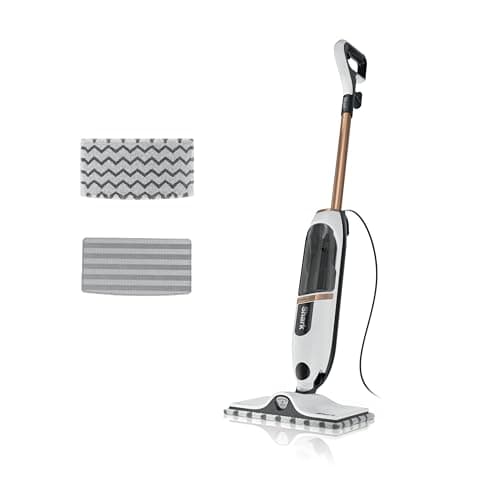
Shark SteamSpot with Steam Blaster (S2001)
A 500 ml tank and three steam modes at under 5 lb — the most usable combination of numbers on this page.
3 — Light, Normal, Deep, plus a targeted Steam Blaster burst
Stain-removal claim
Up to 50% better stuck-on stain removal versus a traditional steam mop
Pads
1 Dirt Grip pad and 1 stiffer scrub pad, both washable
Sanitization claim
Removes 99.9% of common household bacteria using water alone
Rated surfaces
All sealed hard floors
Every figure above is the manufacturer's own published number. Where a manufacturer publishes nothing, the row says "Not published" rather than an estimate.
What the numbers say
+500 ml is the largest tank here and it comes in under 5 lb, which no other machine on this page manages
+Three steam modes plus the targeted blaster
+Two pad types in the box — one for maintenance, one for scrubbing
Where it stops
−Only one of each pad, so you are doing laundry sooner than with the four-pad Steam & Scrub
−No rotating scrub head, so it is 50% better rather than the Steam & Scrub's 2x
−The 50% claim does not name its test standard, unlike the S8001's
Who it is for
Anyone who wants the fewest refills and the least weight, which is most people.
Skip it if
You need mechanical scrubbing. This is steam plus a textured pad; if a flat pad has already failed on your floors, buy the S8001.
Our score: 8.6 out of 10
Steam control9.0
Tank size9.5
Weight and handling9.0
Pad system6.5
Running cost9.0
Scored against the published rubric on How We Pick. These are judgments about spec sheets, not measurements.
The crossover, in plain terms
The Swiffer wins on day one and loses steadily from then on. How fast depends on how often you mop, but the mechanism is not in doubt: one machine's ongoing cost is about five dollars a year of electricity, and the other's is pads plus solution plus batteries. For anyone who expects to be mopping the same floor in two years, the steam mop is the cheaper machine even before you count what it does that the Swiffer does not.
What we cannot tell you
How many square feet a Swiffer pad covers before it needs changing, or how long a solution bottle lasts, because P&G does not publish either. Those two numbers would let us produce an exact crossover date and we are not going to estimate them. The published product design is enough to establish the direction; your own refill prices will settle the magnitude.
Common questions
Is a steam mop better than a Swiffer?+−
On running cost, decisively — washable pads and tap water against disposable pads, proprietary solution and batteries. On function too: a Swiffer applies no heat and P&G publishes no sanitization claim for it, while Shark and Bissell both publish 99.9% claims for their steam mops.
How much does a steam mop cost to run?+−
Almost nothing beyond electricity. At 18.34 cents per kWh, a 1,050 W steam mop run 30 minutes a week costs $15.02 over three years; a 1,500 W machine costs $21.46. The pads are washable, so there is no other ongoing cost.
Does a Swiffer PowerMop sanitize floors?+−
Procter & Gamble publishes no sanitization claim for it. It sprays a pre-mixed cleaning solution and applies no heat, which is a different job from what a steam mop does.
When is a Swiffer the better buy?+−
For a tenancy under about a year, for someone who genuinely will not maintain a machine, or where storage is very tight. Its low entry price wins before the consumable cost has had time to accumulate.
Can I use either on unsealed wood floors?+−
No. Swiffer publishes the exclusion explicitly — do not use on unfinished, oiled or waxed wooden boards or non-sealed tile — and every steam mop here restricts itself to sealed hard floors. On unsealed wood the answer is neither.
Sources
Manufacturer-published specifications — Every runtime, wattage, capacity, weight, filtration and warranty figure quoted on this page is the manufacturer's own published number for that model, retrieved September 1, 2026. Where a manufacturer publishes no figure, the page says 'Not published' rather than estimating one.
Sweep & Suction — How We Pick — Our published method, including the scoring rubric, the three-year running-cost formula and an explicit statement of what published specifications cannot tell you.