The most reliable vacuum brands, judged on what they publish
Across 64 machines on this site, 15 publish a warranty length. That number is the most useful reliability signal in the category, and it is not the one anybody markets.
Everyone in this category says they tested twenty vacuums. We have not tested any, and we say so. What we do instead is read the manuals, compile the published specifications, and work out what each machine costs to run for three years — the method is written out in full.
We earn a commission if you buy through the links on this page, at no extra cost to you. It never changes what we recommend or the order we recommend it in. Full disclosure.
The honest answer: nobody publishes durability, so nobody — including us — can rank these brands on it. Not one manufacturer on this site states an expected lifespan, a battery cycle rating or a mean time to failure. What they do publish is checkable: warranty length, whether a filtration claim names a test standard, and what the machine needs bought for it forever. On those three, the ranking is clear and it is not the one the marketing implies. Dyson publishes a warranty on 3 of 3 machines here. Shark publishes one on 4 of 17. Eureka, Kenmore, Tineco, Levoit, iRobot, Roborock and eight other brands publish one on none.
The number that started this page
This site tracks 64 machines. Fifteen of them publish a warranty length. Not fifteen percent short of all of them — fifteen machines, total. The other forty-nine list capacities, wattages, runtimes, brush names and filtration percentages, and then decline to say for how long the manufacturer will stand behind any of it.
That is worth sitting with, because a warranty is the only durability claim a manufacturer makes that costs them money if it is wrong. Every other reliability signal in this category — a brand's reputation, a decade-old memory of a machine your parents owned, a comment thread — is unfalsifiable. A published warranty term is a commitment with a number on it.
Warranty disclosure across every machine on this site, by brand. Counted from the manufacturers' own published listings.
Brand
Machines here
Publishing a warranty length
Longest published
Dyson
3
3
2 years
Hoover
5
3
5 years, on the SmartWash Pet
Shark
17
4
2 years, on a hand vac
Bissell
12
2
2 years, on the PowerFresh 1940A
Black+Decker
1
1
2 years
DeWalt
1
1
Listing contradicts itself: 3 years and 1 year
ThisWorx
1
1
365 days
Eureka
4
0
None published
iRobot
3
0
None published
Roborock
2
0
None published
Tineco
2
0
None published
Everyone else
13
0
None published
Counted across all 64 products in this site's registry on September 6, 2026. A blank is not a claim that the machine has no warranty — most will have statutory or retailer cover. It is a statement that the manufacturer did not publish a term on the listing a buyer reads.
The three signals that are actually checkable
1. Published warranty length
The strongest single signal, for the reason above: it is the only one that costs the manufacturer money. Dyson publishes 2 years on every machine here, which is a meaningful part of what its price premium buys and one of the few Dyson advantages this site has never argued with. Hoover publishes the longest term on the site — 5 years on the SmartWash Pet — and publishes 2 years on the PowerScrub Deluxe and 1 on the PowerDash Pet. Bissell publishes 2 years on the PowerFresh steam mop and then nothing on its uprights or extractors.
Shark is the interesting case, because Shark is the brand this site recommends most often. It publishes 1-year terms on three steam mops and 2 years on a hand vac — and publishes no warranty length at all on any of its nine vacuums here, including the NV356E, which is otherwise the best-documented machine on the site. A brand can be excellent and still decline to commit in writing. Both things are true and only one of them is checkable.
2. Whether a claim names a standard
A manufacturer willing to name a test standard is a manufacturer willing to be measured against something. It is a proxy for institutional confidence rather than a durability figure, and in this category it is rare enough to be informative. Shark's NV356E names ASTM F1977-22 and IBR Laboratories as the lab that ran it — the most specific filtration disclosure on this site. Shark's ZD201 names ASTM F1977. Levoit names ASTM F1977-22. Shark's S8001 names IEC/TC SC 59F and the model it was tested against. Shark's CarpetXpert names ASTM F2828.
Almost everyone else publishes a bare percentage or a class name. "99.9% of dust and allergens" with nothing behind it and "99.9% per ASTM F1977-22, tested by IBR Laboratories" look identical on a shelf tag and are not the same claim at all.
3. What has to be bought forever
The most under-read reliability signal, because it decides when a working machine becomes scrap. A bagged vacuum lives exactly as long as its bag stays in production. A robot with a bagged dock needs bags at a published interval — 60 to 75 days across the machines here. A cordless machine lives as long as its cell, and not one manufacturer on this site publishes a battery cycle rating, which is why a published removable battery — Shark's IZ362H, Tikom's V500 — is worth more over five years than any suction figure. Bagged versus bagless prices that trade properly.
The corollary is the most reliable machine on this site by construction: a corded vacuum with a washable filter. No battery to fade, no bag to be discontinued, no filter subscription. That is not a brand answer. It is a design answer, and it is available from almost everybody.
#
Product
Best for
Score
Price
01
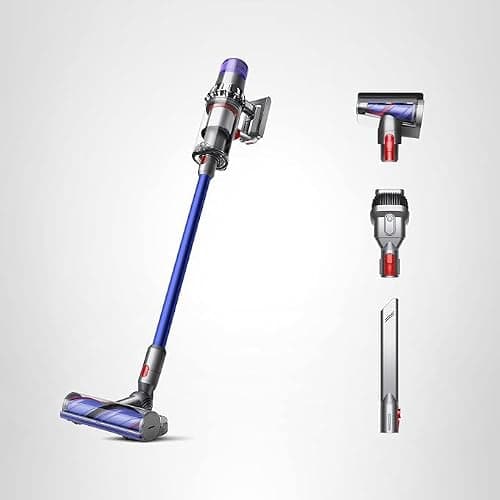
Dyson V11 Origin Cordless Vacuum185 air watts and 60 minutes, published — and the only machine on this site that publishes air watts at all, which is exactly the problem.
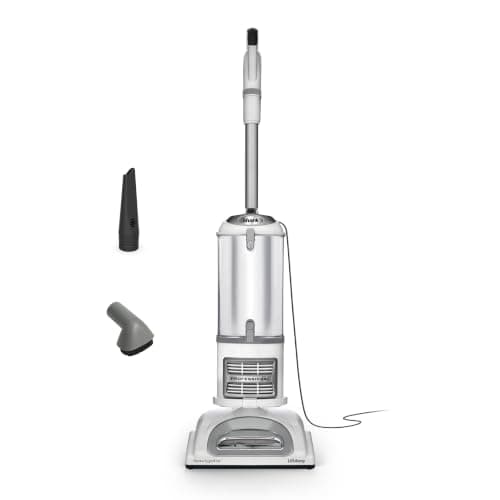
Shark Navigator Lift-Away (NV356E)1,200 W with a genuinely sealed HEPA system and a detachable pod, at a price the cordless machines cannot match on either count.
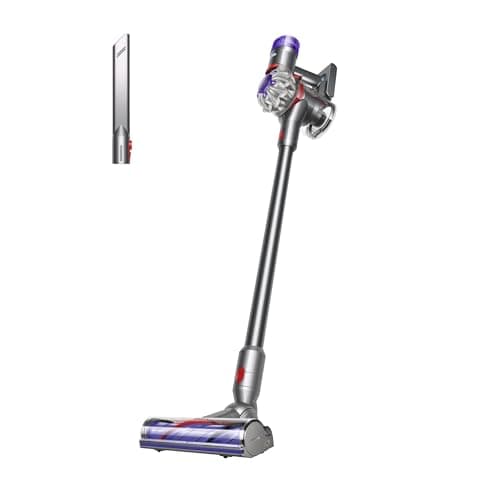
Dyson V8 Cordless VacuumThe cheapest current Dyson, and the honest comparison point: 40 minutes and 5.6 lb, the same rated runtime as a Shark costing far less.
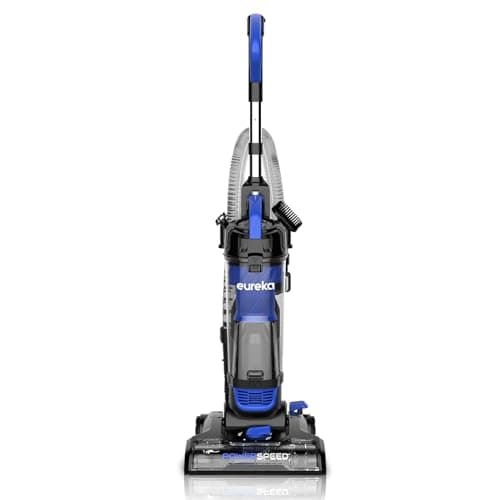
Eureka PowerSpeed Upright (NEU182)A 1.9-liter bin and 960 W for around the price of a decent handheld — and it is loud, which the spec sheet does not hide.
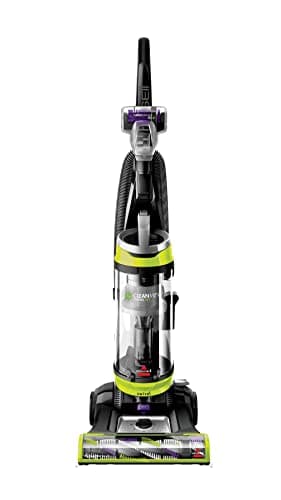
Bissell CleanView Swivel Pet Upright (2252)An 800 W corded upright with a triple-action brushroll: the deep-carpet answer for people whose cordless keeps running out mid-room.
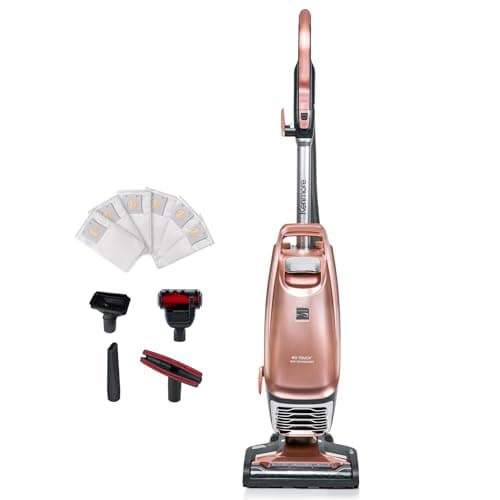
Kenmore Intuition Bagged UprightA two-motor bagged upright with HEPA and a hair-eliminator brushroll: the argument for bags, if you are going to make one.
Scores are ours, from the published rubric on the How We Pick page. They are editorial judgments about published specifications — not test results. We have not handled these machines.
01 · The 60-minute reference
Dyson V11 Origin Cordless Vacuum
185 air watts and 60 minutes, published — and the only machine on this site that publishes air watts at all, which is exactly the problem.
HEPA whole-machine, rated to trap 99.99% of particles down to 0.3 microns
Modes
Eco, Auto, Boost, with an LCD showing remaining runtime to the second
Rated noise
70 dB
Warranty
2-year limited
Every figure above is the manufacturer's own published number. Where a manufacturer publishes nothing, the row says "Not published" rather than an estimate.
What the numbers say
+Publishes air watts — a comparable unit — where the budget field publishes Pa, wattage, or nothing
+60 minutes rated, and the LCD counts down real remaining time rather than showing three bars
+Hair screw tool is the best answer to long hair on any machine here
Where it stops
−The price is the objection and there is no way around it
−0.2 gallons is still a small bin for a whole-house clean
−Replacement batteries are priced like a whole budget vacuum
Who it is for
Large homes where a single uninterrupted clean is worth real money.
Skip it if
You clean a one-bedroom apartment. Sixty minutes of runtime is being sold to houses; a 40-minute machine finishes a flat twice over.
Our score: 8.4 out of 10
Published power9.5
Runtime9.0
Bin and filtration8.5
Weight and handling8.0
Running cost4.5
Scored against the published rubric on How We Pick. These are judgments about spec sheets, not measurements.
02 · Best sealed HEPA under $200
Shark Navigator Lift-Away (NV356E)
1,200 W with a genuinely sealed HEPA system and a detachable pod, at a price the cordless machines cannot match on either count.
Washable HEPA plus foam, Anti-Allergen Complete Seal; rated to trap 99.9% of dust and allergens per ASTM F1977-22, tested by IBR Laboratories
Rated noise
80 dB
Lift-Away
Detachable pod for above-floor cleaning
Runtime
Unlimited — corded
Every figure above is the manufacturer's own published number. Where a manufacturer publishes nothing, the row says "Not published" rather than an estimate.
What the numbers say
+Names its filtration test standard AND the lab that ran it — the most specific filtration claim on this site
+1,200 W on a driven brushroll deep-cleans carpet properly
+Lift-Away pod covers stairs, which is where most uprights fail
Where it stops
−13.7 lb is the heaviest machine we recommend anywhere
−Washable filters need genuine drying time, and people skip it
−Corded, with everything that implies
Who it is for
Allergy households on carpet who want measured filtration rather than a bare percentage.
Skip it if
You have a lot of stairs and no storage. It is heavy, it is bulky, and the Lift-Away pod only partly solves that.
Our score: 8.4 out of 10
Published power9.0
Runtime10.0
Bin and filtration9.5
Weight and handling4.5
Running cost9.0
Scored against the published rubric on How We Pick. These are judgments about spec sheets, not measurements.
03 · The flagship entry point
Dyson V8 Cordless Vacuum
The cheapest current Dyson, and the honest comparison point: 40 minutes and 5.6 lb, the same rated runtime as a Shark costing far less.
Whole-machine, rated to trap 99.99% of particles down to 0.3 microns
Cleaner head
Motorbar, de-tangles hair as it cleans
Warranty
2-year limited
Modes
Two
Every figure above is the manufacturer's own published number. Where a manufacturer publishes nothing, the row says "Not published" rather than an estimate.
What the numbers say
+5.6 lb with a metal-and-polycarbonate build that outlasts the plastic budget machines
+Two-year warranty plus Dyson's own long-term parts support
+Trigger power control genuinely stretches the battery
Where it stops
−0.14 gallons is a small bin — smaller than the Levoit and less than half the Tikom
−40 minutes is the same published figure as a Shark IX141
−Two modes only; the LCD and detection features are on the dearer machines
Who it is for
People who keep vacuums for a decade and want the parts to still exist.
Skip it if
You are buying on the runtime number. It is 40 minutes, the same as machines costing a fraction as much — the money buys build and support, not minutes.
Our score: 7.9 out of 10
Published power8.0
Runtime7.0
Bin and filtration8.0
Weight and handling9.5
Running cost5.0
Scored against the published rubric on How We Pick. These are judgments about spec sheets, not measurements.
04 · Biggest tank under $100
Eureka PowerSpeed Upright (NEU182)
A 1.9-liter bin and 960 W for around the price of a decent handheld — and it is loud, which the spec sheet does not hide.
Foam filter; rated to trap 99.9% of dust, dander and allergens
Rated noise
88 dB
Height settings
5
Brushroll maintenance
Manufacturer recommends clearing hair from the roller and belt every 2 weeks
Every figure above is the manufacturer's own published number. Where a manufacturer publishes nothing, the row says "Not published" rather than an estimate.
What the numbers say
+1.9-liter bin, the largest on the site
+Five height settings, so it works on shag as well as hard floor
+Crevice, dusting and pet tools included
Where it stops
−88 dB is genuinely loud — 8 dB above the Shark uprights
−Manufacturer itself says to clear the brushroll every two weeks, which tells you what it does with hair
−Belt-driven brushroll is a wear part
Who it is for
Big carpeted spaces on the tightest budget, where capacity beats refinement.
Skip it if
You have long-haired pets. The manufacturer's own two-week brushroll maintenance note is the warning; buy an anti-tangle machine instead.
Our score: 7.9 out of 10
Published power8.5
Runtime10.0
Bin and filtration7.0
Weight and handling5.5
Running cost8.5
Scored against the published rubric on How We Pick. These are judgments about spec sheets, not measurements.
05 · Best corded for pet hair
Bissell CleanView Swivel Pet Upright (2252)
An 800 W corded upright with a triple-action brushroll: the deep-carpet answer for people whose cordless keeps running out mid-room.
Every figure above is the manufacturer's own published number. Where a manufacturer publishes nothing, the row says "Not published" rather than an estimate.
What the numbers say
+800 W with a driven brushroll is a different class of carpet cleaning from any 180 W cordless
+Swivel steering, which most cheap uprights still do not have
+Nothing in it degrades with charge cycles
Where it stops
−12.5 lb, and you will feel every pound on a staircase
−80 dB
−Bagless with a disk filter rather than sealed HEPA
Who it is for
Carpeted houses with shedding pets, where a cordless keeps dying before the living room is finished.
Skip it if
Your home is mostly hard floor. A heavy carpet upright on tile is the wrong tool and a stick vacuum will be faster every time.
Our score: 7.9 out of 10
Published power8.5
Runtime10.0
Bin and filtration6.5
Weight and handling5.0
Running cost9.5
Scored against the published rubric on How We Pick. These are judgments about spec sheets, not measurements.
06 · Best bagged option
Kenmore Intuition Bagged Upright
A two-motor bagged upright with HEPA and a hair-eliminator brushroll: the argument for bags, if you are going to make one.
Pet Handi-Mate powered tool, 3-in-1 combination tool
Runtime
Unlimited — corded
Bag cost
Ongoing consumable — see the running-cost table on the bagged-vs-bagless page
Every figure above is the manufacturer's own published number. Where a manufacturer publishes nothing, the row says "Not published" rather than an estimate.
What the numbers say
+Bagged emptying does not put a dust cloud back into the room, which matters for allergies
+Two motors means brushroll speed does not fall away as suction loads up
+HEPA plus a powered pet tool
Where it stops
−Bags are a permanent running cost the bagless machines do not have
−Heavier and bulkier than the bagless uprights here
−Bag availability is the long-term risk with any bagged machine
Who it is for
Allergy households who empty a bagless cup and immediately regret it.
Skip it if
You want the lowest possible cost of ownership. Bags never stop costing money, and over five years that is the whole argument against.
Our score: 7.7 out of 10
Published power8.0
Runtime10.0
Bin and filtration9.0
Weight and handling5.5
Running cost6.0
Scored against the published rubric on How We Pick. These are judgments about spec sheets, not measurements.
What this does NOT let us say
It does not let us tell you which brand's plastics survive being knocked into skirting boards for six years, which motors seize first, or whose customer service answers the phone. Those are the questions people actually mean by "reliable", and answering them requires either a testing operation with a decade of history or a large honest failure dataset. We have neither, and neither does anybody publishing a brand reliability ranking assembled from the same public listings we are reading.
We also will not use owner reviews as a durability proxy. This site publishes no ratings and no review counts anywhere, for the reason set out on our method page: we have no customers and no test data, so quoting somebody else's star average as evidence would be borrowing authority we have not earned.
How to buy for longevity, in practice
Prefer corded if the use case allows it. The battery is the component that ends most modern vacuums and nobody publishes how long it lasts.
Prefer a washable filter over a replaceable one, and a bagless bin over a bag, unless allergies make the sealed bag worth its permanent bill.
If it must be cordless, prefer a published removable battery. It converts a dead machine into a part order.
Read the warranty line before the suction claim. Fifteen machines on this site publish one. If the model you are looking at is one of them, that is a real advantage over the forty-nine that are not.
Prefer a brand with a parts network you can name. This is not a specification and it is the single biggest risk in the budget band — a brushroll or a battery you cannot buy in year three ends the machine regardless of how well it was built.
Treat a named test standard as a tiebreaker. It does not measure durability, but a company willing to be checked on one claim is generally willing to be checked on others.
The uncomfortable conclusion
If you rank these brands strictly on what they are willing to put in writing, Dyson wins — 3 of 3 machines with a published term, a published air-watt figure, and a parts operation that will still sell you a battery in a decade. That is an awkward finding for a value site to publish and it is what the documents say.
It is also not the whole argument, because reliability is one variable and this site exists to weigh it against the others. On bin capacity, runtime and published motor power, the budget machines match or beat the flagship again and again — the arithmetic the Dyson alternatives page runs in full. The honest position is the boring one: Dyson's price buys documentation and support, not cleaning, and whether that is worth it comes down to how long you keep things. Over three years, buy the budget machine. Over ten, the paperwork stops being paperwork.
Common questions
What is the most reliable vacuum brand?+−
No manufacturer publishes durability data, so nobody can answer that from evidence — including anyone who does. On the checkable proxy of published warranty terms, Dyson leads: 3 of 3 machines on this site publish 2 years. Hoover publishes the single longest term here at 5 years on the SmartWash Pet. Shark publishes a warranty on 4 of its 17 machines and on none of its vacuums.
Do vacuum manufacturers publish how long their machines last?+−
Not one, anywhere on this site. No expected lifespan, no mean time to failure, and — critically for cordless machines — no battery cycle rating from any manufacturer in the budget field. The nearest thing to a durability commitment in this category is a published warranty term, and only 15 of the 64 machines here have one.
Are expensive vacuums more reliable than cheap ones?+−
They come with more disclosure, which is not the same claim. Dyson publishes a 2-year warranty on every machine here and most budget brands publish none. What that proves is a willingness to commit in writing, not a measured difference in failure rates — which nobody publishes at any price.
What kind of vacuum lasts longest?+−
On construction rather than brand: a corded machine with a washable filter. It has no battery to fade, no bag that can be discontinued and no filter subscription. Every failure mode that ends modern vacuums early is a component that design does not have.
Is a longer warranty worth paying for?+−
It is the only durability claim that costs the manufacturer money if it is wrong, so it carries more information than any marketing language. Whether the premium is worth it depends on how long you keep appliances: over three years the budget machine usually wins on published figures, over ten the warranty and the parts supply are most of the argument.
Why do you not rank brands by customer reviews?+−
This site publishes no ratings and no review counts anywhere. We have no customers and no test data, so quoting somebody else's star average as durability evidence would be borrowing authority we have not earned. We publish what manufacturers publish, and say plainly where that stops.
Sources
Manufacturer-published specifications — Every runtime, wattage, capacity, weight, filtration and warranty figure quoted on this page is the manufacturer's own published number for that model, retrieved September 1, 2026. Where a manufacturer publishes no figure, the page says 'Not published' rather than estimating one.
ASTM F1977 — standard test method for vacuum cleaner filtration efficiency — Named by Shark (tested by IBR Laboratories, per ASTM F1977-22) and by Levoit (ASTM F1977-22) in their own published filtration claims. Where a brand names this standard we treat the claim as checkable; where a brand states a bare percentage we do not.
Sweep & Suction — How We Pick — Our published method, including the scoring rubric, the three-year running-cost formula and an explicit statement of what published specifications cannot tell you.