Floor type, then power source, then body style. Answer those three in order and the shortlist is usually two machines. Everything else buyers are told to compare is either a tie-breaker or a number nobody can compare.
Everyone in this category says they tested twenty vacuums. We have not tested any, and we say so. What we do instead is read the manuals, compile the published specifications, and work out what each machine costs to run for three years — the method is written out in full.
We earn a commission if you buy through the links on this page, at no extra cost to you. It never changes what we recommend or the order we recommend it in. Full disclosure.
Answer these three in order and you are most of the way there: what are your floors, do you want a cord, and how much do you want to carry. For most homes with both carpet and hard floors, the single safest buy on this site is the [Shark Navigator Lift-Away NV356E](#shark-nv356e) — a corded upright with a detachable pod and the strongest filtration disclosure here. If the floors are hard and the priority is grabbing it without thinking, the [Levoit Anti-Tangle](#levoit-lvac200) is the lightest full-size cordless stick at 6.2 lb. Do not choose on suction figures: no brand on this site publishes air watts or pascals in a form comparable to another brand's, which makes the number most buyers rank on the one number that cannot be ranked.
Question 1 — What are your floors, really?
This is first because it eliminates more machines than everything else combined, and because people routinely answer it wrong by describing the floor they look at rather than the floor they clean most.
What each floor type actually demands of a vacuum.
Your floors
What the machine needs
What this rules out
Mostly carpet, medium to deep pile
A motorized brushroll with real agitation, and enough sustained power to use it
Lightweight cordless sticks running in eco mode; robots with weak or absent brushes
Mostly hard floors
Sealed suction and a head that does not scatter debris. Agitation matters much less
Nothing much — this is the easiest case, and the cheapest machines do well here
A genuine mix of both
A brushroll you can turn off, or a head that handles both without switching
Single-purpose hard-floor sticks
Hard floors that get wet or sticky messes
Washing and recovery, not just suction
Every dry vacuum. This is a floor washer's job
Long hair or pets anywhere
A published anti-tangle or self-cleaning brushroll
Any machine that publishes nothing about tangle
Floor-type requirements, stated as capabilities rather than brands. The hub pages linked below rank machines within each of these answers.
The common mistake is buying a light cordless stick for a carpeted house. It will work, in the mode that drains the battery fastest, for as long as that mode lasts — and the published figures make this visible when a brand is honest about them. Levoit publishes 12 minutes in Turbo, which is the mode deep pile needs. That is not a fault in the machine; it is a mismatch between the machine and the floor. Best vacuums for carpet and best vacuums for hardwood floors take this further.
Question 2 — Cord or no cord?
This is the decision people treat as a preference and should treat as a trade with a price attached. A cordless vacuum's battery is the component that ends it, and here is the part that should carry more weight than it does: not one manufacturer on this site publishes a battery cycle rating. Not one. Every other figure in the category is published by somebody, and the number that tells you how long the machine lasts is published by nobody.
What a cord buys you is visible in the warranty column. The Shark Rocket Pro DLX HV371 publishes a 5-year limited warranty, a term matched on this site only by three other corded Sharks and one carpet cleaner — and it has no battery. Across the site only a handful of machines publish a warranty term at all, and the pattern is consistent: the machines brands will stand behind in writing are disproportionately the corded ones. The full reliability picture is here.
Question 3 — How much are you willing to carry?
Body style is really a question about weight and where that weight sits, and the published numbers mislead unless you read them the right way. What matters is carried weight, not machine weight.
Upright — the most capable on carpet and the heaviest to move. The Shark NV356E publishes 13.7 lb, but the Lift-Away pod detaches so the motor and bin can be carried on their own. That detachment is the single most useful feature on an upright.
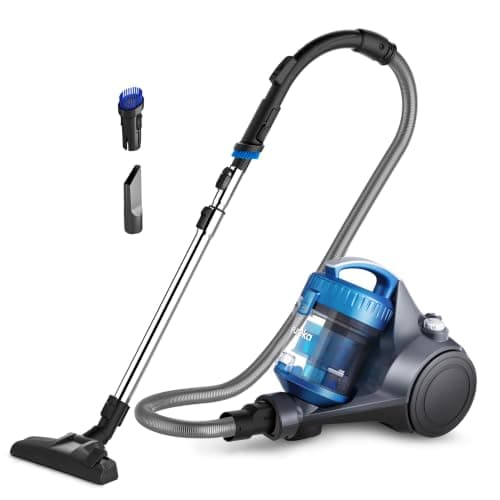
Canister — the body stays on the floor and you hold a wand, so carried weight is a fraction of the published figure. The Eureka Whirlwind publishes 8.2 lb, a 2.5-liter bin and automatic cord rewind, and tucks into a closet. Underrated, and the quiet answer for flats.
Cordless stick — grab-and-go, smallest bins, and the battery question above. Levoit's 6.2 lb is the lightest full-size one here.
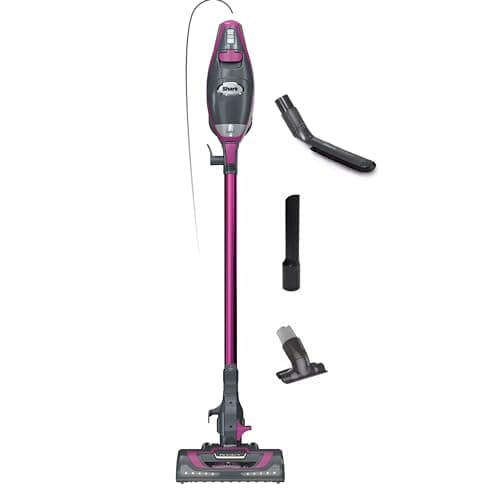
Corded stick — the compromise that few people consider: stick convenience and no battery. The Shark HV371 publishes 8.6 lb, 500 watts, a removable hand vac and that 5-year warranty.
Robot — you carry nothing. It will not do stairs and it does not replace reaching a corner, so in most houses it is a machine plus a hand vac rather than a machine instead of one.
Question 4 — Does anyone in the house have allergies?
If the answer is no, skip this — filtration is a tie-breaker and nothing more. If the answer is yes, it reorders the whole shortlist, and there is one distinction that does almost all the work: a filter claim is not a sealed-body claim.
A vacuum can hold a genuine HEPA element and still leak dust around it, because air follows the easiest path and an unsealed body offers one. So the wording matters. Shark publishes "Anti-Allergen Complete Seal" — a claim about the whole machine — and on several models pairs it with a figure measured to ASTM F1977-22 and attributed to IBR Laboratories by name. Levoit also names ASTM F1977-22. Most other listings on this site publish the word HEPA and stop. The allergy roundup sets out which machines publish what.
The second allergy decision is bagged versus bagless. A bag means no dust cloud when you empty, which is the moment that undoes a lot of filtration. The cost is permanent — bags are a purchase forever, and a discontinued bag ends an otherwise healthy machine. That trade is priced here.
Question 5 — What will it cost after you buy it?
This is the question almost no buying guide asks and the one that most often decides whether a cheap machine was actually cheap. There are only four recurring costs in floor care and all of them are published somewhere:
Filters. A washable filter costs nothing forever. A replaceable one is a subscription — Levoit publishes a three-month replacement interval and is the only brand here that publishes an interval at all, which is four filters a year for the life of the machine.
Bags, if bagged. Permanent, and a discontinuation risk as well as a cost.
Solution, on anything that washes. Every floor washer and carpet cleaner is designed around its own brand's formula and none of them publishes a cost per room.
The battery, on anything cordless — the biggest cost of all, unpublished by everyone, and only avoidable by buying a machine with a replaceable cell or no cell at all.
Electricity is not on that list for a reason: it is negligible on every machine here, and anyone selling you a vacuum on its energy rating is selling you the smallest line on the bill. What a steam mop actually costs to run shows the arithmetic on the one category where it is sometimes argued.
The two numbers to ignore
Suction, in any unit. Pascals, air watts, kPa, "suction power" — no brand on this site publishes the method behind its figure, and the units used are not even consistent within a single listing. One robot here prints "13 meters" in its own maximum-suction field. Compare these numbers within one brand's range if you must, and never between brands. The full argument is here.
Motor wattage. It is power drawn from the wall, not suction delivered at the floor, and a more efficient machine produces more cleaning per watt rather than less. A 1,200-watt upright is not twice the vacuum a 600-watt one is. It is useful only as a rough class indicator — a 180-watt cordless and a 1,200-watt corded upright are different kinds of machine — and useless as a ranking.
#
Product
Best for
Score
Price
01
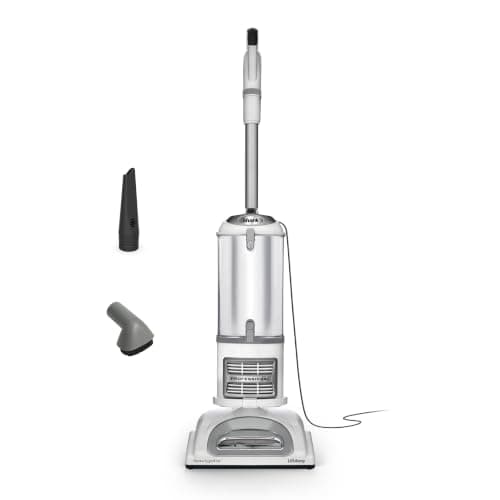
Shark Navigator Lift-Away (NV356E)1,200 W with a genuinely sealed HEPA system and a detachable pod, at a price the cordless machines cannot match on either count.
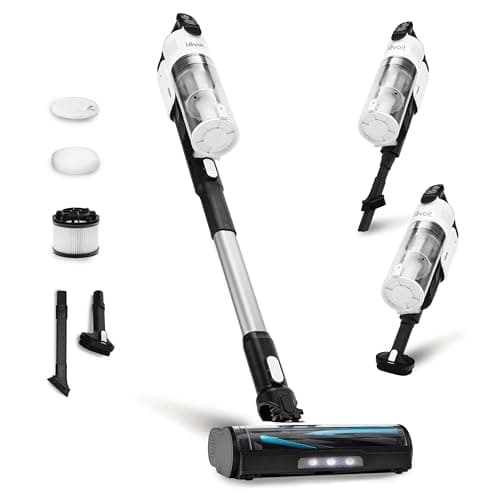
Levoit Anti-Tangle Cordless VacuumThe only listing in this price band that publishes runtime three ways instead of quoting the flattering number and hoping you do not ask.
Eureka Whirlwind Bagless Canister (NEN110A)960 W, a 2.5-liter bin, automatic cord rewind and washable filters — the canister case, made cheaply and made honestly.
Shark Rocket Pro DLX Corded Stick (HV371)A 0.68-quart cup — more than double the Rocket Pet's — on the same 500-watt corded platform, with a five-year warranty and a foot pedal that drops the wand off the nozzle.
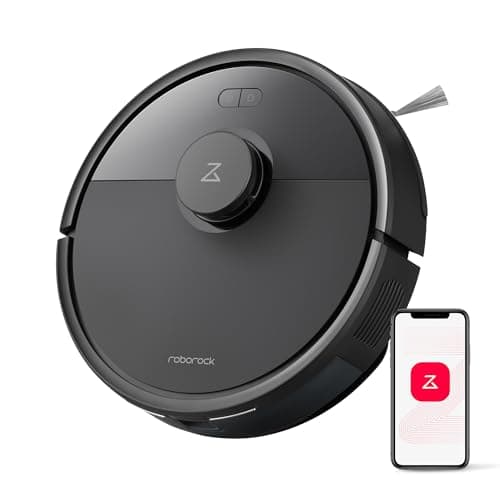
Roborock Q7 L5 Robot Vacuum and Mop8,000 Pa, 360-degree LiDAR and dual anti-tangle brushes — the most specified sheet at this price, with a 270 ml tank that is the catch.
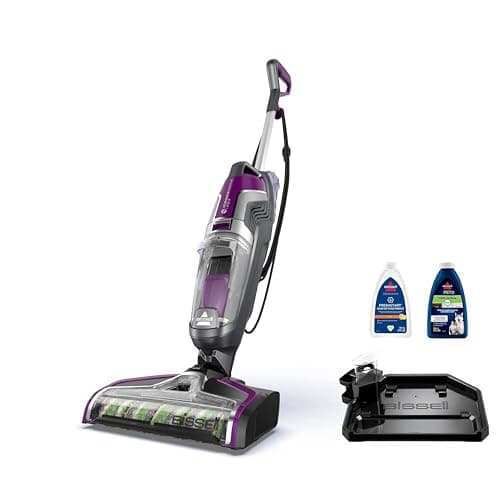
Bissell CrossWave Pet Pro Wet Dry Vacuum Mop (2306A)The only corded machine here: no battery to fade, no runtime to plan around, the widest path and the longest warranty on the page, and it is rated for area rugs too.
One machine for each destination the questions below can lead to, not a ranked list. Scores are our rubric applied to published specifications — we have not used these machines.
01 · Best sealed HEPA under $200
Shark Navigator Lift-Away (NV356E)
1,200 W with a genuinely sealed HEPA system and a detachable pod, at a price the cordless machines cannot match on either count.
Washable HEPA plus foam, Anti-Allergen Complete Seal; rated to trap 99.9% of dust and allergens per ASTM F1977-22, tested by IBR Laboratories
Rated noise
80 dB
Lift-Away
Detachable pod for above-floor cleaning
Runtime
Unlimited — corded
Every figure above is the manufacturer's own published number. Where a manufacturer publishes nothing, the row says "Not published" rather than an estimate.
What the numbers say
+Names its filtration test standard AND the lab that ran it — the most specific filtration claim on this site
+1,200 W on a driven brushroll deep-cleans carpet properly
+Lift-Away pod covers stairs, which is where most uprights fail
Where it stops
−13.7 lb is the heaviest machine we recommend anywhere
−Washable filters need genuine drying time, and people skip it
−Corded, with everything that implies
Who it is for
Allergy households on carpet who want measured filtration rather than a bare percentage.
Skip it if
You have a lot of stairs and no storage. It is heavy, it is bulky, and the Lift-Away pod only partly solves that.
Our score: 8.4 out of 10
Published power9.0
Runtime10.0
Bin and filtration9.5
Weight and handling4.5
Running cost9.0
Scored against the published rubric on How We Pick. These are judgments about spec sheets, not measurements.
02 · Best published runtime detail
Levoit Anti-Tangle Cordless Vacuum
The only listing in this price band that publishes runtime three ways instead of quoting the flattering number and hoping you do not ask.
Up to 50 minutes in Eco with the crevice or pet tool; 30 minutes with the powered floor head; 12 minutes in Turbo
Motor
180 watts
Battery
22.2 V
Weight
6.2 lb
Dust cup
0.75 liters
Filtration
5-stage, rated to capture 99.9% of particles down to 0.3 microns, tested per ASTM F1977-22
Filter replacement interval
Every 3 months, manufacturer-stated
Suction in air watts or Pa
Not published
Every figure above is the manufacturer's own published number. Where a manufacturer publishes nothing, the row says "Not published" rather than an estimate.
What the numbers say
+Publishes runtime by mode and by tool, which is the honest way to state it and almost nobody does
+6.2 lb, the lightest full-size stick here
+Lies flat at 180 degrees to get under furniture
+Names its filtration test standard (ASTM F1977-22) instead of claiming a bare percentage
Where it stops
−12 minutes in Turbo is the real number for deep carpet work and it is short
−Manufacturer-stated 3-month filter interval is the shortest here, and that is a running cost
−Explicitly dry-messes only
Who it is for
Hard floors and rugs, someone who wants the lightest machine and reads the footnotes.
Skip it if
You have deep pile carpet throughout. Twelve minutes of Turbo will not finish a carpeted house, and running it in Eco on pile is not deep cleaning.
Our score: 7.7 out of 10
Published power6.5
Runtime8.0
Bin and filtration8.5
Weight and handling9.0
Running cost6.5
Scored against the published rubric on How We Pick. These are judgments about spec sheets, not measurements.
03 · Best canister under $120
Eureka Whirlwind Bagless Canister (NEN110A)
960 W, a 2.5-liter bin, automatic cord rewind and washable filters — the canister case, made cheaply and made honestly.
Telescoping metal wand with integrated crevice tool
Every figure above is the manufacturer's own published number. Where a manufacturer publishes nothing, the row says "Not published" rather than an estimate.
What the numbers say
+2.5-liter bin and washable HEPA — no bags, no filter bills
+The body stays on the floor, so stairs and above-floor work are far easier than with an upright
+Automatic cord rewind, which is a small luxury that is missing at this price everywhere else
Where it stops
−No powered brushroll, so deep pile carpet is not its job
−Dragging a canister around furniture annoys some people permanently
−82 dB
Who it is for
Hard floors, stairs, cars and upholstery — the classic canister case.
Skip it if
Wall-to-wall carpet is your main floor. Suction alone does not agitate pile; you want a driven brushroll.
Our score: 8.4 out of 10
Published power8.5
Runtime10.0
Bin and filtration8.5
Weight and handling7.0
Running cost9.5
Scored against the published rubric on How We Pick. These are judgments about spec sheets, not measurements.
04 · Biggest cup on a corded stick
Shark Rocket Pro DLX Corded Stick (HV371)
A 0.68-quart cup — more than double the Rocket Pet's — on the same 500-watt corded platform, with a five-year warranty and a foot pedal that drops the wand off the nozzle.
Every figure above is the manufacturer's own published number. Where a manufacturer publishes nothing, the row says "Not published" rather than an estimate.
What the numbers say
+0.68 quarts is double the Rocket Pet HV302 cup in an otherwise near-identical machine, and emptying is the interruption people actually complain about
+A five-year warranty, which is two to five times what most floor-care brands publish
+Converts to a hand vacuum with a foot pedal rather than a two-handed twist
Where it stops
−Washable foam filters and no HEPA claim, on a machine sold for pet households
−No cord length published anywhere on the listing, which is the one figure a corded machine should always state
−500 watts is half what a full-size corded upright draws, and on deep pile that gap shows
Who it is for
A mostly hard-floor home with a shedding pet, where the vacuum gets used in short bursts and a bigger cup means fewer trips to the bin.
Skip it if
Your floors are wall-to-wall deep pile. This is a 500-watt stick with a small head, and a 1,200-watt upright with a full-width brushroll is a different class of machine for the same money.
Our score: 8.0 out of 10
Published power7.0
Runtime10.0
Bin and filtration6.5
Weight and handling7.5
Running cost9.0
Scored against the published rubric on How We Pick. These are judgments about spec sheets, not measurements.
05 · Best published suction under $300
Roborock Q7 L5 Robot Vacuum and Mop
8,000 Pa, 360-degree LiDAR and dual anti-tangle brushes — the most specified sheet at this price, with a 270 ml tank that is the catch.
360-degree LiDAR with multi-floor maps and no-go zones
Brushes
Anti-tangle main brush plus zero-tangle side brush
Rated noise
60 dB
Wi-Fi
2.4 GHz only
Every figure above is the manufacturer's own published number. Where a manufacturer publishes nothing, the row says "Not published" rather than an estimate.
What the numbers say
+Publishes a suction figure, unlike most of the field
+Dual anti-tangle brushes — both main and side, which most brands only claim for one
+Multi-floor mapping stored on the robot, so it works in a two-story house
+Vacuums and mops in the same pass
Where it stops
−270 ml dustbin is barely half the Lefant M210's, so it fills fast in a pet home
−Pa figures are not comparable across brands and Roborock does not publish their method
−No self-empty dock in this configuration
Who it is for
Multi-floor homes that want proper mapping and are willing to empty a small bin.
Skip it if
You have shedding pets and no self-empty dock. A 270 ml bin in a dog house is a daily chore, and the Q7 M5+ exists specifically to fix that.
Our score: 7.8 out of 10
Published suction8.5
Navigation9.0
Runtime8.5
Bin and dock5.0
Running cost7.5
Scored against the published rubric on How We Pick. These are judgments about spec sheets, not measurements.
06 · Best corded wet/dry vac
Bissell CrossWave Pet Pro Wet Dry Vacuum Mop (2306A)
The only corded machine here: no battery to fade, no runtime to plan around, the widest path and the longest warranty on the page, and it is rated for area rugs too.
4.4 amps. The listing prints 528 "watt-hours" in its wattage field; 4.4 A at 120 V is 528 watts, so the unit is simply mislabeled
Listed tank capacity
14.5 fluid ounces
Cleaning path
12 inches
Weight
11 lb as listed
Surfaces
Tile, wood, laminate, vinyl and linoleum, plus area rugs and mats
Brush
Tangle-free brush roll, with a hair guard against clogs
Tanks
Separate clean and dirty water tanks
In the box
Brush roll, two 8 oz bottles of pet solution, self-cleaning tray
Warranty
3 year limited
Rated noise
Not published
Every figure above is the manufacturer's own published number. Where a manufacturer publishes nothing, the row says "Not published" rather than an estimate.
What the numbers say
+No battery at all, so there is no runtime limit and no expensive cell to replace in a few years
+A 3-year limited warranty is the longest published on this page; most of the others publish none
+12 inches is the widest cleaning path published here, and it is rated for area rugs as well as hard floors
Where it stops
−You work around a cord, which is the whole reason the rest of this category exists
−14.5 fluid ounces is one of the smallest listed tanks here
−11 lb before you add the cord, and the listing mislabels its own power figure
Who it is for
A pet household with mixed hard floors and rugs, where one machine that never runs out is worth more than cordless freedom.
Skip it if
The cord is the thing you are trying to get away from. Every other machine on this page is cordless, and that convenience is most of what you are paying for in this category.
Our score: 7.6 out of 10
Published power7.5
Runtime10.0
Bin and filtration6.0
Weight and handling5.5
Running cost9.0
Scored against the published rubric on How We Pick. These are judgments about spec sheets, not measurements.
Where the five questions land
Mixed floors, pets, one machine for the whole house — the Shark Navigator Lift-Away NV356E. A corded upright that detaches, with the strongest filtration disclosure on this site.
Hard floors, grab-and-go, weight matters — the Levoit Anti-Tangle at 6.2 lb, with the honest caveat that its 12-minute Turbo figure rules out a carpeted house.
A flat, a closet to store it in, no stairs — the Eureka Whirlwind canister. 960 watts, a 2.5-liter bin, automatic cord rewind, and the weight stays on the floor.
Stick convenience, no battery to replace — the Shark Rocket Pro DLX HV371. Five-year published warranty and a removable hand vac.
You would rather not do it at all — the Roborock Q7 L5. Read how to choose a robot vacuum first; the decisions there are different from these.
Hard floors that get genuinely messy — the Bissell CrossWave Pet Pro, which washes and recovers rather than just sucking. A different category, and the roundup is here.
How much should you actually spend?
This site exists because the honest answer in this category is less than the marketing implies, and the reason is specific rather than contrarian: the specifications that separate a $120 machine from a $600 one are mostly disclosure, filtration wording and build materials — not cleaning capability anybody can demonstrate from published figures. What you give up buying budget is the honest version of that argument, including the places where the premium is real.
In practice the ceilings that matter are under $100, under $200 and under $300, and the step from the first to the second buys more than the step from the second to the third. Above $300 you are generally buying brand, warranty and finish.
What we cannot tell you
We have not used these machines, and this page does not pretend that a specification sheet substitutes for using one. What it can do is rule out the wrong class of machine before you spend anything, which is where most buying mistakes in this category are actually made — a light cordless stick in a carpeted house, a robot in a home nobody will configure, a dry vacuum for wet messes. Our method page states exactly where our evidence stops and why we publish a score anyway.
Common questions
What should I look for when buying a vacuum?+−
Answer three things in order: what your floors actually are, whether you want a cord, and how much weight you are willing to carry. Floors eliminate more machines than everything else combined — carpet needs a real motorized brushroll and sustained power, hard floors need much less. Then filtration if anyone has allergies, and the recurring costs of filters, bags, solution or a battery. Do not rank on suction figures; no brand publishes a method that makes them comparable.
How much suction do I need in a vacuum?+−
It is not a question any published figure can answer. No manufacturer on this site publishes the method behind its suction claim, the units are inconsistent even within single listings, and one robot here prints "13 meters" in its own maximum-suction field. Compare suction numbers within one brand's range if you must, never between brands. On carpet the brushroll and sustained power matter far more than the headline figure.
Is a cordless or corded vacuum better?+−
It is a trade with an unpublished price. Cordless is more convenient and its battery is the component that ends it — and not one manufacturer on this site publishes a battery cycle rating. Corded machines have no such expiry, which is visible in the warranty column: the Shark Rocket Pro DLX publishes 5 years, and it has no battery. If you buy cordless, prioritize a replaceable battery; very few listings publish one.
What type of vacuum is best for a house with carpet and hard floors?+−
A machine with a brushroll you can turn off, or a head that handles both without switching. A corded upright with a detachable pod is the most capable single answer — the Shark Navigator Lift-Away publishes 13.7 lb but the motor and bin detach so you are not carrying all of it for above-floor work. A light cordless stick will do both floors in principle, but on medium or deep pile it needs the mode that drains the battery fastest.
Does a vacuum need a HEPA filter?+−
Only if someone in the house has allergies or asthma — otherwise it is a tie-breaker. And if it does matter, read the wording rather than the word: a machine can hold a genuine HEPA element and still leak dust around it, because air follows the easiest path through an unsealed body. Shark's Anti-Allergen Complete Seal is a whole-machine claim and on several models names ASTM F1977-22 with IBR Laboratories as the lab. Most listings publish only the word HEPA.
What is the real cost of owning a vacuum?+−
Four things, and electricity is not one of them. Filters, where a washable one costs nothing and a replaceable one is a subscription — Levoit publishes a three-month interval and is the only brand here that publishes one at all. Bags, if bagged, which are permanent and carry a discontinuation risk. Solution, on anything that washes. And the battery on anything cordless, which is the largest cost of all and the one no manufacturer publishes a rating for.
Sources
Manufacturer-published specifications — Every runtime, wattage, capacity, weight, filtration and warranty figure quoted on this page is the manufacturer's own published number for that model, retrieved September 1, 2026. Where a manufacturer publishes no figure, the page says 'Not published' rather than estimating one.
ASTM F1977 — standard test method for vacuum cleaner filtration efficiency — Named by Shark (tested by IBR Laboratories, per ASTM F1977-22) and by Levoit (ASTM F1977-22) in their own published filtration claims. Where a brand names this standard we treat the claim as checkable; where a brand states a bare percentage we do not.
Sweep & Suction — How We Pick — Our published method, including the scoring rubric, the three-year running-cost formula and an explicit statement of what published specifications cannot tell you.