Six decisions, in the order they actually matter. Navigation first, because it is the one thing you cannot add later — and suction last, because no two brands measure it the same way.
Everyone in this category says they tested twenty vacuums. We have not tested any, and we say so. What we do instead is read the manuals, compile the published specifications, and work out what each machine costs to run for three years — the method is written out in full.
We earn a commission if you buy through the links on this page, at no extra cost to you. It never changes what we recommend or the order we recommend it in. Full disclosure.
Decide navigation first, then the dock, then whether you have carpet — the rest is detail. If you want one recommendation without reading further: the [Roborock Q7 L5](#roborock-q7-l5) publishes 8,000 Pa, 150 minutes, 360-degree LiDAR with multi-floor maps and no-go zones, anti-tangle on both brushes and 60 dB, which is the most complete published sheet of any robot on this site. Buy the [Roomba 105 Vac](#roomba-105-vac) instead if long-term app support and parts matter more to you than the spec sheet, and the [Lefant M210](#lefant-m210) if the floors are hard, the budget is tight and nobody will configure an app.
Why these six, and in this order
The order is not arbitrary. It runs from the decisions that are impossible to change after purchase to the ones that are merely annoying. Navigation is fixed in the hardware. A dock can sometimes be added later within a product line but usually not. Carpet performance is set by the brush and the chassis. Runtime, noise and the app are all things you live with but can work around.
Suction is not on the list as a decision, and that is deliberate. It appears at the end as a number to read sceptically, because no two brands on this site measure pascals the same way and none of them publishes a method. More on that below.
1. Navigation: LiDAR mapping, or bump-and-turn
This is the first decision because it decides everything else about living with the machine. There are two real categories and the gap between them is wider than the price difference suggests.
LiDAR mapping means a spinning laser builds a floor plan, the robot cleans in rows, knows where it has been, and lets you draw no-go zones and send it to a named room. Non-mapping robots use infrared and bump sensors and clean in a pattern — zig-zag, spiral, edge-follow — covering a room eventually by repetition rather than by plan. Both end up cleaning a small room. Only one of them finishes a large one reliably, and only one can be told to stay out of the dog's bowl.
What each navigation type gets you, on the machines here.
Capability
LiDAR mapping
Non-mapping
Cleans in rows with known coverage
Yes
No — pattern-based
No-go zones and virtual walls
Yes
No. The only fix is a closed door
Send it to one room
Yes
No
Multi-floor maps
On the Roborock Q7 L5, Dreame D20 Plus and ILIFE A30 Pro
Navigation capability as each manufacturer publishes it. The mapping machines here all publish LiDAR by name; the non-mapping ones publish sensor types rather than a map.
Buy mapping if you have more than a couple of rooms, pets with bowls, or anything on the floor you need the robot to avoid. Buy non-mapping only if the space is small and hard-floored and the budget is the binding constraint — in which case the Lefant M210's 52 dB and 11-inch diameter make it a sensible machine rather than a compromise.
2. The dock: do you want to empty a bin every few days?
A robot's on-board bin is small — 270 ml on the Roborock Q7 L5, 500 ml on the Lefant M210 and the Dreame D20 Plus. In a pet household that is a bin you empty every run or two. A self-emptying dock takes that job away by pulling the robot's bin into a much larger bag in the base.
The published intervals are substantial and worth knowing before you dismiss the price difference: the Dreame D20 Plus publishes a 5-liter bag rated up to 150 days, and the ILIFE A30 Pro publishes 2.5-liter bags, five in the box, rated up to 280 days in total. That is most of a year of not touching it. The cost is permanent and it is the thing to weigh: bags are a purchase for as long as you own the machine, and a self-emptying robot becomes worthless the day its dock bags stop being manufactured. The full self-empty argument is here, and the running-cost arithmetic is here.
3. Carpet: this is where budget robots actually fail
If your floors are hard, almost any robot here will do. If you have carpet, this is the decision that separates them, and it is not primarily about suction. It is about the brush and the chassis.
The clearest illustration on this page is the Lefant M210, which has no roller brush at all — a brushless suction port that cannot tangle because there is nothing to tangle on. That is a genuine fix for long hair and it is also, unavoidably, no agitation: it lifts surface debris off carpet and leaves embedded grit. Lefant's own skip-if is that this is a hard-floor machine. That honesty is the right way to read the whole category: a robot with a weak brush is a hard-floor robot whatever its pascal claim says.
The second carpet question is what happens when the robot mops. A combo dragging a wet pad across carpet is making things worse, so the machine needs to detect carpet and either lift the pad or avoid the area. That capability is published by some machines and not others, and it is covered properly on do budget robot vacuums work on carpet.
4. Tangle: the published feature that saves the most annoyance
Long hair wrapping a brushroll is the single most common robot complaint, and there are only three real answers to it, all of them published.
No brush at all. The Lefant M210's brushless port. Perfect against tangle, useless on carpet.
An anti-tangle brush design. The Roborock Q7 L5 publishes anti-tangle on the main brush and a zero-tangle side brush, which matters because the side brush is where long hair usually wraps first. The Dreame D20 Plus publishes an anti-tangle DuoBrush specifically for long hair and pet fur.
Nothing, and you cut hair off it. The default, and the thing a published anti-tangle claim is worth avoiding.
If anyone in the house has long hair, treat a published anti-tangle claim as close to a requirement. It is one of the few features in this category where the published claim maps onto a specific, frequent, physical annoyance.
5. Runtime, read against your floor area
Published runtimes on this page run from 120 minutes on the Lefant M210 up to 200 on the Roomba 105 Vac, which is the longest rating of any robot on this site. Two things to know about those figures. First, almost all of them are the quiet or low-suction mode number — Lefant's 120 minutes and Tikom's 150 both say so explicitly, and the figures would be lower in a stronger mode.
Second, recharge-and-resume makes runtime much less important than it looks. A robot that returns to its dock, charges and picks up where it left off will finish a large floor whatever its runtime. That capability is worth checking for on a big floor and is far more decisive than the headline minutes. On a small floor, runtime is close to irrelevant — any of these finishes before the battery matters.
6. The app, and whether anyone will use it
On a mapping robot the app is not an accessory, it is most of the product. Keep-out zones, room targeting, scheduling and map editing all live in the phone, and iRobot publishes that 2.4 GHz Wi-Fi is required for setup and operation on the Roomba 105 — on a mesh network broadcasting only 5 GHz it will not complete setup at all.
So the honest question is not which app is best, it is whether anyone in the household will install one. If the answer is no, do not buy a mapping robot: you would be paying for capability that never switches on. The Tikom G8000 Max publishes four control methods including a physical remote, which is the machine for exactly that household. Whether a robot vacuum needs Wi-Fi works this through in full.
The two numbers to read sceptically
Pascals. Every robot brand publishes a Pa figure and not one of them publishes the method behind it, so the numbers are not comparable between brands. On this page they run from 5,000 Pa (Tikom) to 13,000 Pa (Dreame), and the Dreame listing's own "maximum suction" field reads "13 meters", which is not a suction unit at all. Use Pa to compare two models within one brand and nowhere else. The long version is here.
Comparison claims with no comparator. iRobot publishes "70x more power-lifting suction" for the Roomba 105 — measured against iRobot's own decade-old 600 series, not against any competitor and not in any standard unit. That makes it unfalsifiable rather than false. A claim you cannot set beside another brand's number is not a specification.
#
Product
Best for
Score
Price
01
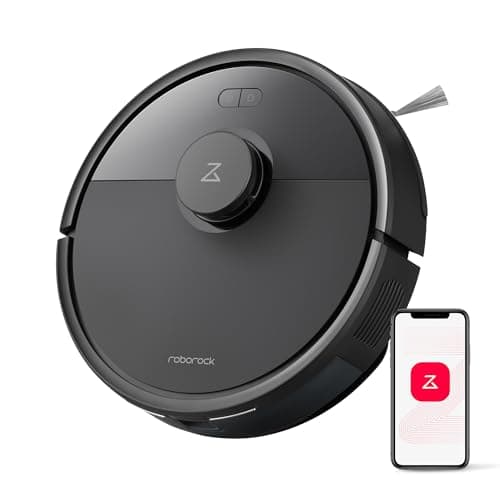
Roborock Q7 L5 Robot Vacuum and Mop8,000 Pa, 360-degree LiDAR and dual anti-tangle brushes — the most specified sheet at this price, with a 270 ml tank that is the catch.
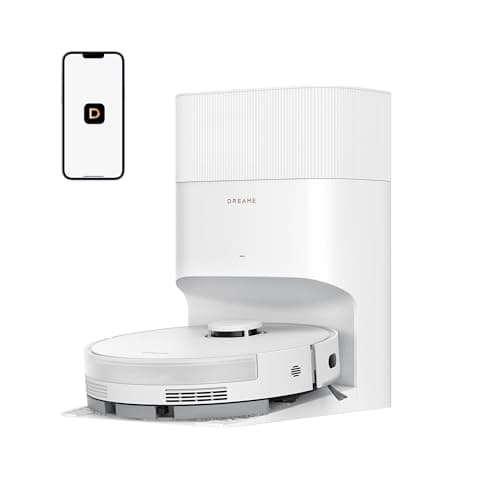
Dreame D20 Plus Robot Vacuum and Mop (RLD35GD)A 5-liter dock bag rated 150 days, 180 minutes of runtime and editable multi-floor maps — the most complete published spec sheet of any robot on this site under $300.
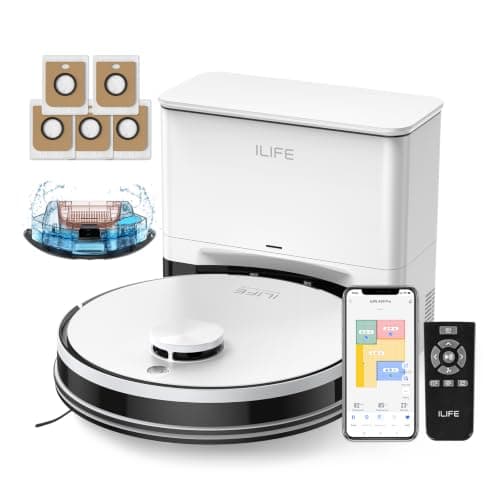
ILIFE A30 Pro Robot Vacuum and Mop10,000 Pa and a five-bag box that ILIFE rates at up to 280 days of hands-free running — the longest published interval on the site.
One machine for each answer the decisions below can lead to, rather than a ranked list. Scores are our rubric applied to published specifications — we have not used these machines.
01 · Best published suction under $300
Roborock Q7 L5 Robot Vacuum and Mop
8,000 Pa, 360-degree LiDAR and dual anti-tangle brushes — the most specified sheet at this price, with a 270 ml tank that is the catch.
360-degree LiDAR with multi-floor maps and no-go zones
Brushes
Anti-tangle main brush plus zero-tangle side brush
Rated noise
60 dB
Wi-Fi
2.4 GHz only
Every figure above is the manufacturer's own published number. Where a manufacturer publishes nothing, the row says "Not published" rather than an estimate.
What the numbers say
+Publishes a suction figure, unlike most of the field
+Dual anti-tangle brushes — both main and side, which most brands only claim for one
+Multi-floor mapping stored on the robot, so it works in a two-story house
+Vacuums and mops in the same pass
Where it stops
−270 ml dustbin is barely half the Lefant M210's, so it fills fast in a pet home
−Pa figures are not comparable across brands and Roborock does not publish their method
−No self-empty dock in this configuration
Who it is for
Multi-floor homes that want proper mapping and are willing to empty a small bin.
Skip it if
You have shedding pets and no self-empty dock. A 270 ml bin in a dog house is a daily chore, and the Q7 M5+ exists specifically to fix that.
Our score: 7.8 out of 10
Published suction8.5
Navigation9.0
Runtime8.5
Bin and dock5.0
Running cost7.5
Scored against the published rubric on How We Pick. These are judgments about spec sheets, not measurements.
02 · Best mapping under $300
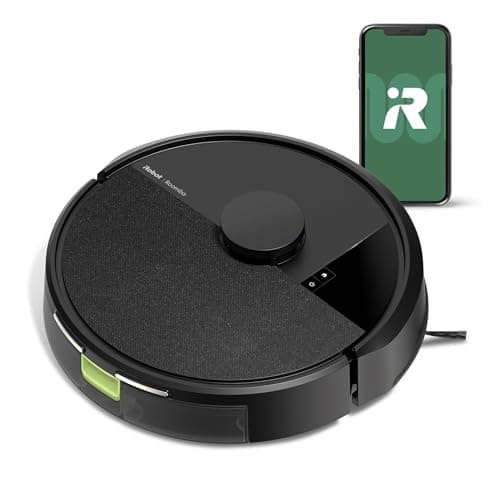
iRobot Roomba 105 Vac
LiDAR mapping, keep-out zones and a 200-minute rating from the brand that will still be supporting the app in five years.
70x more power-lifting suction, compared by the manufacturer against the Roomba 600 series
Control
Roomba Home app, on-device buttons, voice assistants
Wi-Fi
2.4 GHz required for setup and operation
Suction in Pa
Not published
Every figure above is the manufacturer's own published number. Where a manufacturer publishes nothing, the row says "Not published" rather than an estimate.
What the numbers say
+200 minutes rated, the longest published runtime of any robot on this site
+Real LiDAR mapping, keep-out zones and room targeting at a budget price
+Recharge-and-resume, so a large floor completes without you
+iRobot's app and parts supply are the most durable bet in the category
Where it stops
−The 70x suction claim is measured against iRobot's own decade-old 600 series, not against a competitor
−No self-empty dock in this configuration — you empty the on-board bin
−No published bin volume
Who it is for
Multi-room homes that want scheduled, mapped cleaning without a self-empty dock's price.
Skip it if
Nobody in the house will install an app. Half of what you are paying for is mapping, zones and scheduling, and none of that exists without the phone.
Our score: 8.0 out of 10
Published suction6.5
Navigation9.0
Runtime10.0
Bin and dock6.0
Running cost7.5
Scored against the published rubric on How We Pick. These are judgments about spec sheets, not measurements.
03 · Quietest robot here
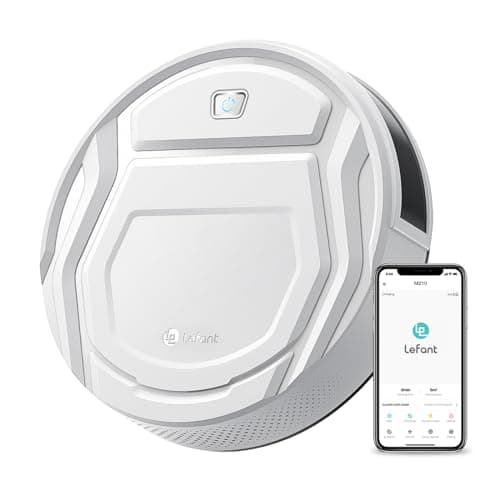
Lefant M210 Robot Vacuum
52 dB and 2.99 inches tall, with a brushless suction port that sidesteps hair tangle by not having a brushroll at all.
Up to 120 minutes in low suction mode, manufacturer-stated
Height
2.99 inches
Diameter
11 inches
Dustbin
500 ml
Rated noise
52 dB
Suction port
Brushless — no roller brush
Navigation
FreeMove 3.0, 6D infrared anti-collision — no LiDAR mapping
Battery
Lithium iron phosphate
Suction in Pa
Not published
Every figure above is the manufacturer's own published number. Where a manufacturer publishes nothing, the row says "Not published" rather than an estimate.
What the numbers say
+Brushless port cannot tangle, because there is nothing to tangle on — the only true fix for long hair
+52 dB is the quietest published figure on this site
+11-inch diameter gets between chair legs a 13-inch robot cannot
+Lithium iron phosphate chemistry is more cycle-durable than standard lithium-ion
Where it stops
−No brushroll also means no agitation, so carpet pickup is weak by design
−The 120-minute figure is explicitly the low-suction number
−No LiDAR mapping
Who it is for
Hard-floor homes with long-haired occupants or pets, and anyone who has cut hair off a robot brushroll once too often.
Skip it if
You have carpet you actually want cleaned. Without a brushroll it lifts surface debris and leaves embedded grit; this is a hard-floor machine.
Our score: 6.6 out of 10
Published suction4.0
Navigation4.0
Runtime9.0
Bin and dock6.5
Running cost9.5
Scored against the published rubric on How We Pick. These are judgments about spec sheets, not measurements.
04 · Quietest combo
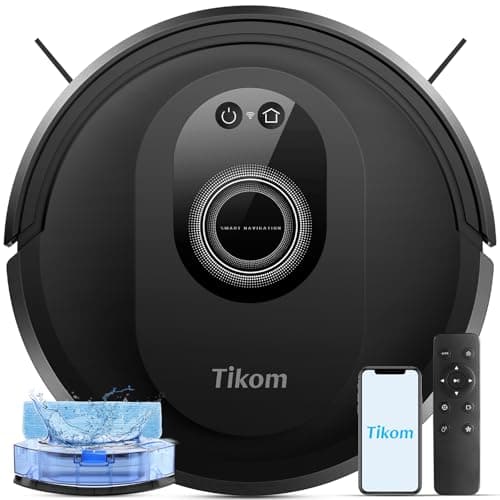
Tikom G8000 Max Robot Vacuum and Mop
45 dB rated with a 450 ml bin and a 300 ml tank, and no mapping at all — a quiet, cheap, semi-random cleaner.
Anti-collision and anti-fall sensors; four modes — spot, edge, zig-zag, manual. No LiDAR mapping
Control
App, remote, voice, on-device buttons
Every figure above is the manufacturer's own published number. Where a manufacturer publishes nothing, the row says "Not published" rather than an estimate.
What the numbers say
+45 dB rated is the quietest figure published anywhere on this site
+450 ml bin plus a 300 ml tank, both larger than the mapped Roborock Q7 L5's
+Four control methods including a physical remote, which matters in households that will not use an app
Where it stops
−No mapping, so coverage is a zig-zag pattern rather than a plan
−5,000 Pa is the lowest published figure of the mopping robots here
−The 150-minute rating is the quiet-mode number
Who it is for
Small hard-floor homes, light sleepers, and households that want a remote rather than an app.
Skip it if
You need room targeting or no-go zones. Without a map it cannot be told where not to go, and the only fix is a closed door.
Our score: 6.9 out of 10
Published suction6.0
Navigation4.0
Runtime8.5
Bin and dock7.5
Running cost8.5
Scored against the published rubric on How We Pick. These are judgments about spec sheets, not measurements.
05 · Biggest dock bag here
Dreame D20 Plus Robot Vacuum and Mop (RLD35GD)
A 5-liter dock bag rated 150 days, 180 minutes of runtime and editable multi-floor maps — the most complete published spec sheet of any robot on this site under $300.
13,000 Pa Vormax, manufacturer-stated with no published method. The listing's own "maximum suction" field reads "13 meters", which is not a suction unit
Rated runtime
180 minutes
Dock bag
5 liters, rated up to 150 days hands-free
Dustbin
500 ml
Water tank
350 ml, with 32 water levels
Navigation
LDS LiDAR with Pathfinder path planning, editable maps, multi-floor maps and no-go zones
Brushes
Anti-tangle DuoBrush, published for long hair and pet fur
Filtration
Cartridge filter. No HEPA claim and no test standard published
Voice control
Alexa, Siri and Google Home
Wi-Fi
2.4 GHz only, and the listing states US use only
Rated noise
Not published
Weight
Not published
Warranty
Not published on the listing
Every figure above is the manufacturer's own published number. Where a manufacturer publishes nothing, the row says "Not published" rather than an estimate.
What the numbers say
+A 5-liter dock bag is the largest published on this site, and 150 days is roughly four times a Roborock Q7 M5+ dock interval
+180 minutes of rated runtime, beaten on this site only by the Roomba 105's 200
+A 500 ml dustbin and a 350 ml tank are both large for this price, and editable multi-floor maps are published rather than implied
Where it stops
−13,000 Pa is a pascal claim with no method, and the listing's own suction field prints a distance in meters
−No noise rating, no weight and no warranty term published anywhere on the listing
−Cartridge filtration with no HEPA claim, on a machine sold partly on pet hair
Who it is for
A multi-floor home with pets that wants the dock emptied as rarely as possible, and is content to judge suction on outcome rather than on a number nobody can verify.
Skip it if
You want a filtration figure. This is a bagged-dock robot with no published HEPA claim at all, and an allergy household is the one case where that gap actually decides the purchase.
Our score: 8.0 out of 10
Published suction6.0
Navigation9.0
Runtime9.5
Bin and dock9.0
Running cost6.5
Scored against the published rubric on How We Pick. These are judgments about spec sheets, not measurements.
06 · Longest dock interval
ILIFE A30 Pro Robot Vacuum and Mop
10,000 Pa and a five-bag box that ILIFE rates at up to 280 days of hands-free running — the longest published interval on the site.
2.5 liters, five in the box, rated up to 280 days hands-free in total
Tank
2-in-1 integrated: 200 ml dustbin plus 200 ml water tank
Navigation
LDS LiDAR with SLAM mapping, no-go zones and virtual walls
Weight
10.4 lb
Rated noise
72 dB
Every figure above is the manufacturer's own published number. Where a manufacturer publishes nothing, the row says "Not published" rather than an estimate.
What the numbers say
+Five bags in the box is real money that the competition charges separately for
+Full LiDAR SLAM mapping with virtual walls at a budget price
+10,000 Pa published, matching the dearest robot here
Where it stops
−72 dB is the loudest robot figure on the site
−200 ml dustbin is the smallest here — the 2-in-1 tank splits capacity with the water
−The 150-minute rating is explicitly the gentle-suction number
Who it is for
Buyers optimizing for the longest possible gap between touching the thing.
Skip it if
You want to run it while you are home. At 72 dB it is a run-it-when-you-are-out machine.
Our score: 8.2 out of 10
Published suction9.0
Navigation8.5
Runtime8.0
Bin and dock8.5
Running cost7.0
Scored against the published rubric on How We Pick. These are judgments about spec sheets, not measurements.
The decision, as a short list
Multi-room home, carpet and hard floors, one machine — the Roborock Q7 L5. The most complete published sheet of any robot here: 8,000 Pa, 150 minutes, LiDAR with multi-floor maps and no-go zones, anti-tangle on both brushes, 60 dB.
You want the brand to still support it in 2032 — the Roomba 105 Vac. The longest published runtime on this site at 200 minutes, and the most durable app and parts supply in the category.
Hard floors, long hair, small budget — the Lefant M210. A brushless port that cannot tangle, 52 dB, and 11 inches across to get between chair legs. Not for carpet, by Lefant's own statement.
Nobody will install an app — the Tikom G8000 Max. Four control methods including a physical remote, and 45 dB, the quietest figure published anywhere on this site.
You want to stop thinking about it for months — the Dreame D20 Plus (5-liter bag, 150 days) or the ILIFE A30 Pro (2.5-liter bags, five in the box, 280 days total). Accept the permanent bag bill and the brand-longevity bet.
You are choosing on pascals — stop. Pick on navigation, brush design and dock, then read the Pa figure as a tie-breaker within a single brand.
What we cannot tell you
We have not used any of these machines. No robot brand on this site publishes a suction method, a battery cycle rating or a measured coverage result, so nothing here ranks these machines on how clean a floor actually ends up. What a published sheet can do is tell you which capabilities exist in the hardware and which do not — and in this category that genuinely is most of the decision, because navigation, brush design and dock type are all fixed at purchase. Our method page sets out the rest.
Common questions
What should I look for in a robot vacuum?+−
In order: navigation, dock, carpet handling, tangle resistance, runtime and the app. Navigation first because it is fixed in the hardware and decides everything else — LiDAR mapping gives you row-by-row coverage, no-go zones and room targeting, while a non-mapping robot cleans by pattern and can only be kept out of a room with a closed door. Leave suction until last: no robot brand publishes its measurement method, so pascal figures are not comparable between brands.
Is LiDAR mapping worth it on a robot vacuum?+−
In anything larger than a couple of rooms, yes. Mapping buys row-by-row coverage with a known finish, no-go zones so the robot stays away from pet bowls and cables, the ability to send it to one named room, and on several machines multi-floor maps. A non-mapping robot will still clean a small hard-floored space adequately by repetition. It cannot be told where not to go.
Do I need a self-emptying robot vacuum?+−
It depends on your bin and your pets. On-board bins here run 270 to 500 ml, which in a pet household is an empty every run or two. A dock removes that — the Dreame D20 Plus publishes a 5-liter bag rated up to 150 days and the ILIFE A30 Pro publishes 2.5-liter bags rated up to 280 days in total. The cost is permanent, because bags are a purchase for as long as you own the machine, and the robot becomes worthless if its bag stops being sold.
How much suction does a robot vacuum need?+−
Not a question any published figure can answer, because no robot brand on this site publishes the method behind its pascal claim, which makes the numbers incomparable between brands. Pa is useful for comparing two models within one brand and nowhere else. On carpet the brush and chassis matter far more than the headline figure — a robot with a weak or absent brush is a hard-floor machine whatever its Pa claim says.
Do robot vacuums work on carpet?+−
Some do and some are explicitly not built for it. The deciding factor is the brush, not the suction: the Lefant M210 has no roller brush at all, which means it cannot tangle and also cannot agitate, so it lifts surface debris from carpet and leaves embedded grit — Lefant says as much in its own listing. If you have carpet, look for a published brush design and, on a mop combo, published carpet detection so the machine does not drag a wet pad across it.
Can you use a robot vacuum without a smartphone?+−
You can run one, but on a mapping robot you lose most of what you paid for — keep-out zones, room targeting, scheduling and map editing all live in the app, and iRobot publishes that 2.4 GHz Wi-Fi is required for setup on the Roomba 105. If nobody in the household will install an app, buy a machine built for that: the Tikom G8000 Max publishes four control methods including a physical remote.
Sources
Manufacturer-published specifications — Every runtime, wattage, capacity, weight, filtration and warranty figure quoted on this page is the manufacturer's own published number for that model, retrieved September 1, 2026. Where a manufacturer publishes no figure, the page says 'Not published' rather than estimating one.
Sweep & Suction — How We Pick — Our published method, including the scoring rubric, the three-year running-cost formula and an explicit statement of what published specifications cannot tell you.