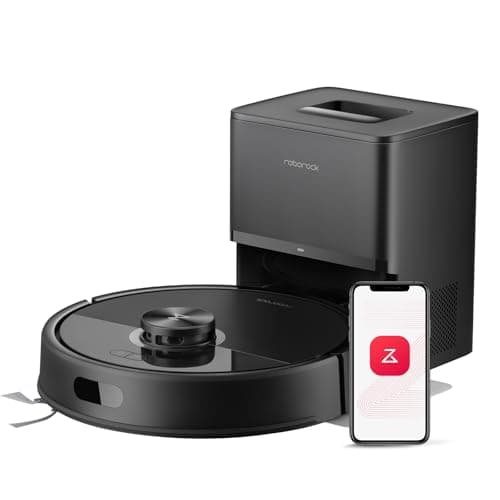
Dreame publishes 20,000 pascals. Roborock publishes 10,000 for more money. If that comparison looks like it settles the question, this page is about why it does not.
Everyone in this category says they tested twenty vacuums. We have not tested any, and we say so. What we do instead is read the manuals, compile the published specifications, and work out what each machine costs to run for three years — the method is written out in full.
We earn a commission if you buy through the links on this page, at no extra cost to you. It never changes what we recommend or the order we recommend it in. Full disclosure.
Buy Dreame for the dock, buy Roborock for the disclosure. On published figures, Dreame wins the two specifications you can actually use: a 5-liter dock bag rated 150 days against Roborock's 2.7 liters and 7-9 weeks, and 180 minutes of runtime against 150. Roborock publishes more about its machines — noise ratings, weights, dustbin volumes — and names its navigation and brush systems consistently across models. What should not decide it is the suction claim. Dreame publishes 13,000 and 20,000 pascals, Roborock publishes 8,000 and 10,000, and neither brand publishes a measurement method. Those are four numbers from two labs you cannot see, and the honest use for them is none.
The pascal problem, stated plainly
This comparison exists mostly because of one number. Dreame's D20 Air Plus publishes 20,000 Pa and costs less than Roborock's Q7 M5+, which publishes 10,000 Pa. Read as a specification, that is twice the suction for less money, and it is why the comparison gets searched at all.
Here is what a pascal figure actually measures: sealed static pressure at the motor inlet with the airway blocked — the one condition a vacuum never operates in. Every manufacturer measures it differently, none of the four machines here publishes its method, and nothing forces two brands to use the same test. A 20,000 Pa claim and a 10,000 Pa claim from two different companies are not a ratio, a ranking, or a fact you can act on. The full argument is here, and it applies to every robot on this site.
The published figures side by side
Manufacturer-published figures for the four machines on this page. "Not published" means the listing gives no figure.
Roborock Q7 M5+
Dreame D20 Plus
Roborock Q7 L5
Dreame D20 Air Plus
Stated suction
10,000 Pa HyperForce
13,000 Pa Vormax
8,000 Pa HyperForce
20,000 Pa
Rated runtime
150 min
180 min
150 min
150 min
Dock bag
2.7 L sealed, 7-9 weeks
5 L, up to 150 days
No dock
4 L self-sealing, up to 120 days
Dustbin
Not published
500 ml
270 ml
Not published
Water tank
Three water levels
350 ml, 32 water levels
270 ml, three levels
Electronic, adjustable flow
Navigation
PreciSense LiDAR, real-time mapping
LDS LiDAR, Pathfinder, editable multi-floor maps, no-go zones
360-degree LiDAR, multi-floor maps, no-go zones
LiDAR, app no-go zones
Anti-tangle
JawScrapers main brush, zero-tangle side brush
DuoBrush, main and side
Anti-tangle main, zero-tangle side
Dual anti-tangle, main and side
Rated noise
65 dB
Not published
60 dB
Not published
Weight
10.6 lb
Not published
7.3 lb
13.2 lb as listed, dock included
Warranty
Not published
Not published
Not published
Not published
Compiled from each machine's own retail listing. The Roborock figures were read on September 1, 2026 and the Dreame figures on September 22, 2026. Pascal claims carry no published measurement method from either brand.
Where Dreame genuinely wins
1. The dock, by a wide margin
This is the real difference and it is not close. Dreame's D20 Plus publishes a 5-liter bag rated up to 150 days; the D20 Air Plus publishes 4 liters and 120 days. Roborock's Q7 M5+ publishes 2.7 liters and 7 to 9 weeks. On the published numbers, a Dreame dock is emptied two or three times a year and a Roborock dock is emptied every couple of months.
That matters more than it sounds, because the entire point of a dock is not touching the machine. We priced the dock question out here, and the conclusion was that a dock is worth paying for if the interval is long enough to change your habits. Five liters is long enough.
2. Runtime and bin size
The D20 Plus publishes 180 minutes, which on this site is beaten only by the Roomba 105's 200. It also publishes a 500 ml dustbin where Roborock's Q7 M5+ publishes none at all and the Q7 L5 publishes 270 ml. For a large single-floor home, a longer run and a bigger bin is a more useful pair of numbers than any suction claim.
3. Mapping detail, on the D20 Plus specifically
Dreame's D20 Plus publishes editable maps, multi-floor maps and no-go zones by name. Roborock's Q7 L5 publishes multi-floor maps and no-go zones too; the more expensive Q7 M5+ publishes "real-time mapping" and leaves the rest unstated. That is a disclosure gap rather than proof of a capability gap, and we rank on what is published — which is why the mapping roundup ranks these machines the way it does.
Where Roborock genuinely wins
1. It tells you more about its own machines
Both Roborocks publish a noise rating (65 dB and 60 dB) and a weight. Neither Dreame publishes either. For a site that ranks on what manufacturers are willing to put in writing, that pattern is the strongest argument Roborock has here. It is worth saying what neither brand does, though: not one of these four listings publishes a warranty term at all, which puts both of them in the majority we counted across every brand on this site.
2. Naming that stays consistent
HyperForce, PreciSense, JawScrapers — Roborock uses the same names for the same systems across models, which makes two Roborocks comparable with each other. Dreame's D20 Plus publishes "Vormax" suction and "Pathfinder" navigation while the D20 Air Plus publishes neither name, so two machines in the same model family cannot be lined up on the same terms.
3. The entry price
The Q7 L5 is the cheapest machine on this page by a clear margin and still publishes LiDAR with multi-floor maps, a 270 ml bin and a 60 dB rating. If you do not want a dock — and the dock is genuinely optional — nothing from Dreame on this page competes with it on price.
#
Product
Best for
Score
Price
01
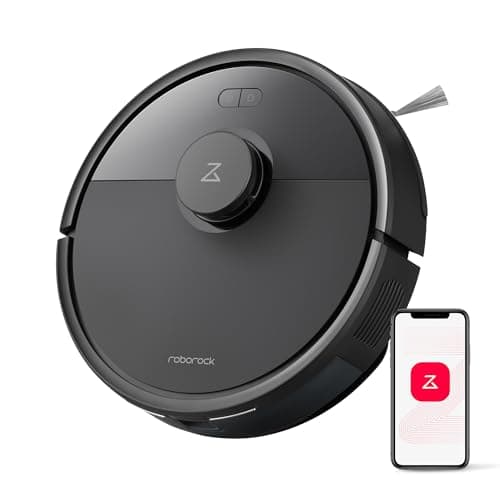
Roborock Q7 M5+ Robot Vacuum and Mop10,000 Pa published and a 2.7-liter sealed dock bag rated at seven to nine weeks: the pet-hair answer, at a real price.
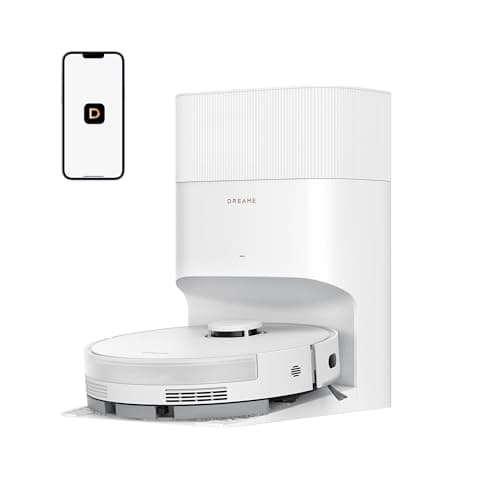
Dreame D20 Plus Robot Vacuum and Mop (RLD35GD)A 5-liter dock bag rated 150 days, 180 minutes of runtime and editable multi-floor maps — the most complete published spec sheet of any robot on this site under $300.
Roborock Q7 L5 Robot Vacuum and Mop8,000 Pa, 360-degree LiDAR and dual anti-tangle brushes — the most specified sheet at this price, with a 270 ml tank that is the catch.
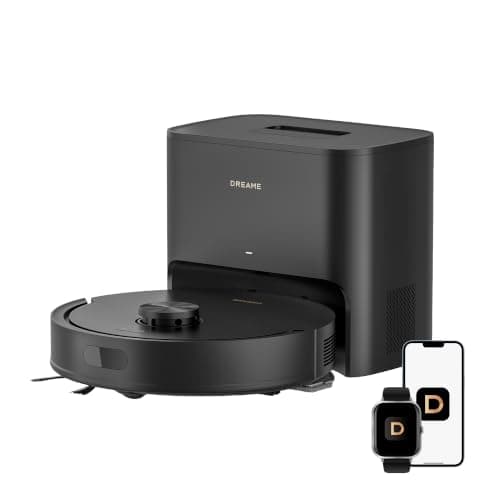
Dreame D20 Air Plus Robot Vacuum and Mop (RLF41GD)The cheapest way on this site into a 4-liter sealed dock bag and LiDAR mapping together, carrying the biggest pascal claim of any robot here and the least evidence for it.
Two machines from each brand, ranked by our published rubric. Read the dock and mapping rows before the suction column — the pascal figures on this page are not comparable between the two brands.
01 · Best self-empty for pet hair
Roborock Q7 M5+ Robot Vacuum and Mop
10,000 Pa published and a 2.7-liter sealed dock bag rated at seven to nine weeks: the pet-hair answer, at a real price.
JawScrapers main brush plus zero-tangle side brush
Mopping
Three adjustable water levels, simultaneous with vacuuming
Rated noise
65 dB
Every figure above is the manufacturer's own published number. Where a manufacturer publishes nothing, the row says "Not published" rather than an estimate.
What the numbers say
+Highest published suction figure on the site, at 10,000 Pa
+2.7-liter dock bag is larger than the iRobot's and rated for a comparable interval
+Anti-tangle on both brushes, which is the pet-hair spec that matters
+150 minutes plus recharge-and-resume covers a large floor
Where it stops
−Dock bags are a permanent consumable
−The dock is large and 65 dB when emptying is genuinely startling the first time
−Pa figures remain incomparable between brands, however impressive 10,000 sounds
Who it is for
Pet households with real square footage, where the on-board bin is the daily annoyance.
Skip it if
You live in a studio. This is a whole-floor machine with a dock the size of a wastebasket and you will resent the footprint.
Our score: 8.5 out of 10
Published suction9.5
Navigation9.0
Runtime8.5
Bin and dock9.5
Running cost6.0
Scored against the published rubric on How We Pick. These are judgments about spec sheets, not measurements.
02 · Biggest dock bag here
Dreame D20 Plus Robot Vacuum and Mop (RLD35GD)
A 5-liter dock bag rated 150 days, 180 minutes of runtime and editable multi-floor maps — the most complete published spec sheet of any robot on this site under $300.
13,000 Pa Vormax, manufacturer-stated with no published method. The listing's own "maximum suction" field reads "13 meters", which is not a suction unit
Rated runtime
180 minutes
Dock bag
5 liters, rated up to 150 days hands-free
Dustbin
500 ml
Water tank
350 ml, with 32 water levels
Navigation
LDS LiDAR with Pathfinder path planning, editable maps, multi-floor maps and no-go zones
Brushes
Anti-tangle DuoBrush, published for long hair and pet fur
Filtration
Cartridge filter. No HEPA claim and no test standard published
Voice control
Alexa, Siri and Google Home
Wi-Fi
2.4 GHz only, and the listing states US use only
Rated noise
Not published
Weight
Not published
Warranty
Not published on the listing
Every figure above is the manufacturer's own published number. Where a manufacturer publishes nothing, the row says "Not published" rather than an estimate.
What the numbers say
+A 5-liter dock bag is the largest published on this site, and 150 days is roughly four times a Roborock Q7 M5+ dock interval
+180 minutes of rated runtime, beaten on this site only by the Roomba 105's 200
+A 500 ml dustbin and a 350 ml tank are both large for this price, and editable multi-floor maps are published rather than implied
Where it stops
−13,000 Pa is a pascal claim with no method, and the listing's own suction field prints a distance in meters
−No noise rating, no weight and no warranty term published anywhere on the listing
−Cartridge filtration with no HEPA claim, on a machine sold partly on pet hair
Who it is for
A multi-floor home with pets that wants the dock emptied as rarely as possible, and is content to judge suction on outcome rather than on a number nobody can verify.
Skip it if
You want a filtration figure. This is a bagged-dock robot with no published HEPA claim at all, and an allergy household is the one case where that gap actually decides the purchase.
Our score: 8.0 out of 10
Published suction6.0
Navigation9.0
Runtime9.5
Bin and dock9.0
Running cost6.5
Scored against the published rubric on How We Pick. These are judgments about spec sheets, not measurements.
03 · Best published suction under $300
Roborock Q7 L5 Robot Vacuum and Mop
8,000 Pa, 360-degree LiDAR and dual anti-tangle brushes — the most specified sheet at this price, with a 270 ml tank that is the catch.
360-degree LiDAR with multi-floor maps and no-go zones
Brushes
Anti-tangle main brush plus zero-tangle side brush
Rated noise
60 dB
Wi-Fi
2.4 GHz only
Every figure above is the manufacturer's own published number. Where a manufacturer publishes nothing, the row says "Not published" rather than an estimate.
What the numbers say
+Publishes a suction figure, unlike most of the field
+Dual anti-tangle brushes — both main and side, which most brands only claim for one
+Multi-floor mapping stored on the robot, so it works in a two-story house
+Vacuums and mops in the same pass
Where it stops
−270 ml dustbin is barely half the Lefant M210's, so it fills fast in a pet home
−Pa figures are not comparable across brands and Roborock does not publish their method
−No self-empty dock in this configuration
Who it is for
Multi-floor homes that want proper mapping and are willing to empty a small bin.
Skip it if
You have shedding pets and no self-empty dock. A 270 ml bin in a dog house is a daily chore, and the Q7 M5+ exists specifically to fix that.
Our score: 7.8 out of 10
Published suction8.5
Navigation9.0
Runtime8.5
Bin and dock5.0
Running cost7.5
Scored against the published rubric on How We Pick. These are judgments about spec sheets, not measurements.
04 · 4-liter dock under $250
Dreame D20 Air Plus Robot Vacuum and Mop (RLF41GD)
The cheapest way on this site into a 4-liter sealed dock bag and LiDAR mapping together, carrying the biggest pascal claim of any robot here and the least evidence for it.
20,000 Pa, manufacturer-stated with no published method — the largest pascal claim of any robot on this site
Rated runtime
150 minutes
Dock bag
4 liters, self-sealing, rated up to 120 days hands-free
Dock claim
Self-sealing bag published as locking in 99.9% of allergens with no dust cloud on emptying. No test standard named
Navigation
LiDAR mapping with app no-go zones, room-specific scheduling and adjustable suction
Brushes
Dual anti-tangle: main brush cuts hair as it cleans, side brush published as tangle-resistant
Mopping
Electronic water tank with adjustable flow, simultaneous with vacuuming
Filtration
Cloth filter. No HEPA claim and no test standard published
Weight
13.2 lb as listed, which appears to include the dock
Wi-Fi
2.4 GHz only, and the listing states US use only
Dustbin capacity
Not published. The listing's capacity field describes the 4-liter dock bag
Rated noise
Not published
Warranty
Not published on the listing
Every figure above is the manufacturer's own published number. Where a manufacturer publishes nothing, the row says "Not published" rather than an estimate.
What the numbers say
+A 4-liter sealed dock bag and LiDAR mapping together, at a price where most robots publish one or the other
+150 minutes of rated runtime matches both Roborocks on this site
+Dual anti-tangle brushes published for both the main brush and the side brush, which is more than most listings specify
Where it stops
−20,000 Pa is the biggest suction claim on this site and the least checkable: no method, no standard, no independent unit
−The robot's own dustbin capacity is not published — only the dock bag's — so how often it fills mid-clean is unknowable
−No noise rating and no warranty term published anywhere on the listing
Who it is for
A single-floor home that wants a self-emptying LiDAR robot for the least money, and understands it is buying a dock and a map rather than a verified suction figure.
Skip it if
You are buying on the pascal figure. That number is the reason this machine looks like a bargain and it is the one specification on the listing that cannot be compared with any other brand.
Our score: 7.8 out of 10
Published suction6.5
Navigation8.5
Runtime9.0
Bin and dock8.5
Running cost6.5
Scored against the published rubric on How We Pick. These are judgments about spec sheets, not measurements.
What both brands leave out
Neither publishes a filtration test standard. The Dreames publish a cloth and a cartridge filter with no HEPA claim at all; the Roborocks publish no named standard either. If somebody in the house reacts to dust, that is a real gap on all four machines, and the Shark AV2501AE elsewhere on this site is the robot that publishes a HEPA base.
Neither publishes a battery cycle rating, which is true of every robot on this site and is the figure that decides how long the machine lasts. Neither publishes obstacle avoidance in the camera-recognition sense — both are LiDAR machines that map the room and will still drive into a sock, which is the distinction the obstacle-avoidance page sets out.
And both Dreame listings state 2.4 GHz Wi-Fi only and US use only, which is worth reading before you buy if your router is 5 GHz-only or you are shipping the machine abroad.
Running costs, which is where a dock stops being free
Every machine on this page with a dock needs bags, forever. That is the trade the dock makes, and the bigger bag is also the more expensive one to replace — though it is replaced far less often, which is the point. The full robot running-cost arithmetic is here, including filters, side brushes and the battery nobody rates.
The Q7 L5 is the only machine on this page with no dock and therefore no bag bill at all. Over five years that is a genuine saving, set against emptying a 270 ml bin by hand every few cleans.
The verdict
For most houses, the Dreame D20 Plus is the better robot of the four, and not for the reason its box argues: the 5-liter dock, the 180-minute runtime and the 500 ml bin are all real, comparable figures, and they beat Roborock's on the same terms. Buy the Roborock Q7 M5+ instead if you want the brand that documents its machines, including a noise rating and a weight that Dreame simply does not publish. Buy the Q7 L5 if you do not want a dock, because it is the cheapest genuine LiDAR robot here. And buy the Dreame D20 Air Plus only if the dock is the whole point and you are content to ignore the 20,000 Pa claim on the box — which, having read this far, you now are.
We have not used any of these machines. Everything above is read off the manufacturers' own published listings and compared on units that mean the same thing on both sides. A spec sheet cannot tell you how a map survives furniture being moved, how a dock behaves after a year, or whether an app is still supported in 2029. Our method page states exactly where our evidence stops.
Common questions
Is Dreame better than Roborock?+−
On the figures that are genuinely comparable, Dreame wins the dock and the runtime: a 5-liter bag rated 150 days against Roborock's 2.7 liters and 7-9 weeks, and 180 minutes against 150. Roborock wins on disclosure — both its machines publish a noise rating and a weight, and neither Dreame publishes either. Neither brand publishes a filtration test standard, and none of the four publishes a warranty term.
Does Dreame really have more suction than Roborock?+−
Dreame publishes bigger pascal numbers — 13,000 and 20,000 against Roborock's 8,000 and 10,000. But a pascal figure measures sealed static pressure with the airway blocked, every manufacturer measures it differently, and none of these four listings publishes a method. Two brands' pascal claims are not comparable, so the honest answer is that the numbers do not establish it either way.
Which Dreame robot vacuum is best?+−
Of the two ranked here, the D20 Plus: a 5-liter dock bag rated 150 days, 180 minutes of runtime, a 500 ml dustbin and editable multi-floor maps with no-go zones. The cheaper D20 Air Plus has the bigger suction claim and the smaller published spec sheet — no dustbin volume, no noise rating and no weight for the robot itself.
Which is better for pet hair, Dreame or Roborock?+−
Both publish anti-tangle brushes on the main brush and the side brush, which is the specification that matters for hair. The difference is what happens after pickup: Dreame's larger dock bags mean far fewer emptyings in a shedding household, while Roborock's Q7 M5+ publishes a sealed 2.7-liter bag and a 65 dB noise rating. Neither publishes a HEPA claim.
Do Dreame robot vacuums work with 5 GHz wifi?+−
Both Dreame listings on this page state 2.4 GHz only, and both state US use only. If your router broadcasts a single combined band or 5 GHz alone, that is worth checking before you order rather than after. Roborock's Q7 L5 listing also states 2.4 GHz only.
Is a self-emptying dock worth it on either brand?+−
It depends entirely on the interval. A dock you empty every few weeks does not change your habits; one rated for months does. On published figures that is the clearest gap between these brands — Dreame publishes 120 and 150 days, Roborock publishes 7 to 9 weeks. The cost is bags, forever, on any docked machine.
Sources
Manufacturer-published specifications — Every runtime, wattage, capacity, weight, filtration and warranty figure quoted on this page is the manufacturer's own published number for that model, retrieved September 1, 2026. Where a manufacturer publishes no figure, the page says 'Not published' rather than estimating one.
Sweep & Suction — How We Pick — Our published method, including the scoring rubric, the three-year running-cost formula and an explicit statement of what published specifications cannot tell you.