Seven brands and fourteen machines on this site. The cleaning claims cluster. What actually separates the brands is what each is willing to print and what the dock costs you forever.
Everyone in this category says they tested twenty vacuums. We have not tested any, and we say so. What we do instead is read the manuals, compile the published specifications, and work out what each machine costs to run for three years — the method is written out in full.
We earn a commission if you buy through the links on this page, at no extra cost to you. It never changes what we recommend or the order we recommend it in. Full disclosure.
There is no best robot vacuum brand, but there is a best brand per house, and the split is cleaner than the marketing suggests. Across the fourteen robots on this site: Roborock publishes the most checkable numbers for the least money and is the sensible default first robot. Shark is the only brand here whose dock needs no bags at all, and the only one that names a test method anywhere. iRobot publishes the least of anyone and still has the app and accessory supply nobody else can match. Dreame publishes the biggest suction claim and the longest dock interval and explains neither. ILIFE ships more dock bags in the box than anyone. Lefant and Tikom are who you buy from under $150, once you have accepted the machine will not map.
Why the brand matters more on a robot than on any other vacuum
An upright is one purchase. You take it home, and nothing about it changes afterwards. A robot is three purchases wearing one price tag: the machine, the consumable its dock needs for as long as you own it, and the cloud service that holds the map. Two of those three are decided at brand level rather than model level. You can change your mind about a model; the bag that fits the dock and the app that stores the floor plan are the brand's decision and you inherit it.
Which is why the useful brand questions are not about cleaning power. Nobody in this category publishes a suction figure you can compare across brands — is a Roomba worth it takes that apart on the American brands and Dreame versus Roborock does it on the pascal claims. The questions that survive are: does the dock need bags, how long does the brand say a bag lasts, and is there anything in writing at all. Robot vacuum running costs runs the bag arithmetic in full, and makes the point about app dependency that applies to every mapped machine here.
The seven brands, as they publish themselves
Every figure manufacturer-published, transcribed from the listings a buyer reads, across the 14 robots in this site's registry on October 3, 2026.
Brand
Machines here
Price band here
Absolute suction figure
Dock
Named test method
Map editing published
Roborock
2
Under $250
Yes — 8,000 Pa and 10,000 Pa
Bagged on the M5+, 2.7 L, 7-9 weeks
None
Multi-floor maps and no-go zones
Shark
3
Up to about $450
No — a relative claim against an unnamed competitor
Bagless base, 60-day capacity, no bags to buy
Modified IEC 62885-6, on one stain claim
None published
iRobot
3
Under $300
No — 70x, measured against its own 600 series
Bagged on the AutoEmpty models, 75 days stated
None
None published
Dreame
2
Under $320
Yes — 13,000 Pa and 20,000 Pa
Bagged, 4 L and 5 L, 120 and 150 days
None
Editable multi-floor maps and no-go zones
ILIFE
1
About $200
Yes — up to 10,000 Pa
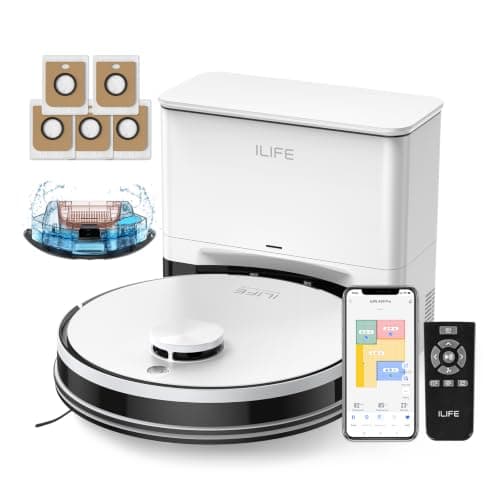
Bagged, 2.5 L, five in the box, 280 days total
None
No-go zones and virtual walls
Lefant
2
Under $250
On one of two — 6,000 Pa on the M2 Plus
Bagged on the M2 Plus, 2.5 L, up to 75 days
None
Multi-floor maps and no-go zones on the M2 Plus
Tikom
1
Under $150
Yes — 5,000 Pa
No dock
None
None — the listing states no LiDAR mapping
A blank is not a claim that the machine lacks the feature. It is a statement that the manufacturer did not publish it on the listing a buyer reads, which is the only document most people will ever see. Price bands are where these machines have sat in this site's own price layer, not quotes.
The brand-level number worth checking before any other: does the dock need bags?
Five of the seven brands here ship bagged docks. One ships a bagless base. One ships no dock at all. That is the largest difference in cost of ownership anywhere in this category and it is settled by the badge, because no brand here sells both.
Shark is the brand that removed the line from the bill. Its self-empty base is bagless, published at a 60-day capacity with true HEPA filtration rated to capture 99.97% of dust and allergens down to 0.3 microns, and the listing states plainly that no replacement bags are required. Of the bagged brands, Dreame publishes the longest single interval — 150 days on a 5 L bag, 120 days on a 4 L self-sealing one. ILIFE front-loads instead, shipping five 2.5 L bags rated to 280 days in total, which works out at roughly eight weeks each. iRobot publishes 75 days, Lefant up to 75, and Roborock 7 to 9 weeks, the shortest interval published here for a single bag.
None of those numbers is a measurement — they are manufacturer statements about an average home, and a shedding dog will beat every one of them. They are still the only published basis for the comparison, and the ranking they produce does not change much: the brand with no bag beats the brand with a long bag, which beats the brand with a short one. Is self-emptying worth it prices the dock itself.
The brands, one at a time
Roborock — the default first robot
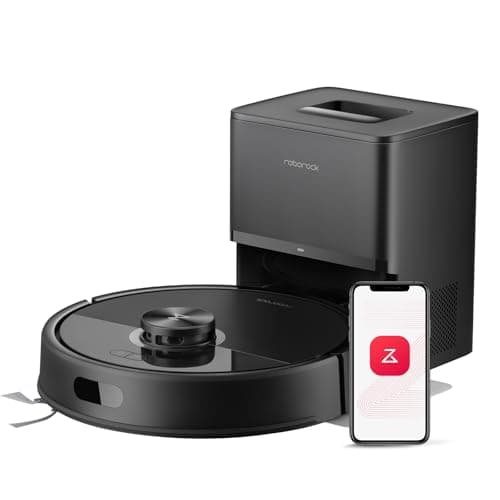
The brand that publishes the most checkable specification sheet in the budget field. Both machines here print an absolute suction figure — 8,000 and 10,000 pascals — a 150-minute runtime, a decibel rating, and LiDAR navigation; the cheaper Q7 L5 publishes multi-floor maps and no-go zones, which makes it the least expensive machine on this site that can hold a plan of a second floor. Nothing about the brand is exotic and that is the recommendation: if you have no particular constraint, this is the brand whose claims you can line up against a rival's without translating.
Skip Roborock if you want the dock out of your running costs — the only Roborock here that has one is bagged, at the shortest single-bag interval published on this site — or if you need a filtration standard, which neither listing names.
Shark — the brand with no consumable
Shark publishes no suction figure on any of its three robots; the cheapest one claims up to 50% more suction than an unnamed competitor robot vacuum, with no model and no method. What Shark publishes instead is the thing nobody else here does: a bagless self-empty base with true HEPA filtration, a 60-day capacity and no bags to buy, plus one stain claim tested to a modified IEC 62885-6 — the only named test method on any robot listing on this site. It is also the only brand here with a published warranty term on a robot, 1 year limited on the Matrix Plus.
Skip Shark if weight or price matter: its dock machines are the heaviest robots here at 15.3 and 17 lb as listed, both figures including the base, and the brand reaches higher up the price band than any other on this page. Treat the cheapest Shark robot with particular care — the AV2120's title says 60-day self-emptying base while the same listing's included-items line mentions only a charging base. Confirm which base ships before you buy.
iRobot — the least disclosure, the deepest supply
iRobot publishes no pascal figure on any machine here, and its one suction claim — 70x more power-lifting suction — is measured against the Roomba 600 series, a line iRobot no longer sells. That is a comparison, not a measurement. It also publishes the longest runtime of any robot on this site at 200 minutes, a dock bag rated to 75 days whose filtration is stated to trap 99% of allergens as small as 0.7 microns, ClearView LiDAR, and a 6.2 lb machine that is among the lightest here. The brand-level argument for iRobot is the one the spec sheet cannot carry: it has supported its app across many product generations, and the accessory supply is the one this site can actually name — Roomba alternatives sets out what you give up by leaving.
Skip iRobot if you intend to compare machines on paper, or if map editing is why you are buying — no iRobot listing here publishes no-go zones or multi-floor maps, where four rival listings do.
Dreame — the biggest numbers, the longest bag, the thinnest explanation
Dreame prints the two largest suction claims on this site, 20,000 and 13,000 pascals, with no published method for either — and the 13,000 Pa listing's own maximum-suction field reads 13 meters, which is not a unit of suction. Read past that and the brand has a real case: the longest single dock interval here at 150 days on a 5 L bag, 180 minutes of rated runtime, editable multi-floor maps with no-go zones and room-level scheduling, 32 water levels on the mop, and an anti-tangle brush published for long hair. It is the most capable paper specification in this price band, from the brand that documents it worst.
Skip Dreame if you need a filtration standard or a warranty — both machines here use a cartridge or cloth filter with no HEPA claim and no test standard, and neither listing publishes a warranty term, a weight, or a noise rating. Both also state 2.4 GHz only and US use only.
ILIFE — mapping and most of a year of bags, for about $200
One machine, and an unusually complete sheet for the money: up to 10,000 pascals, 150 minutes, LDS LiDAR with SLAM mapping, no-go zones and virtual walls, and five 2.5 L dock bags in the box rated to 280 days of hands-free use in total — more dock supply than any other robot here ships with. For a buyer who wants mapping and a dock and does not want to think about consumables until next year, no other brand on this page offers that combination at this price.
Skip ILIFE if noise matters. It publishes 72 dB, the loudest rated figure of any robot on this site, and it is a 10.4 lb machine with a 200 ml dustbin — the smallest on-robot bin here, which is the trade the dock is meant to cover.
Lefant — one badge, two unrelated machines
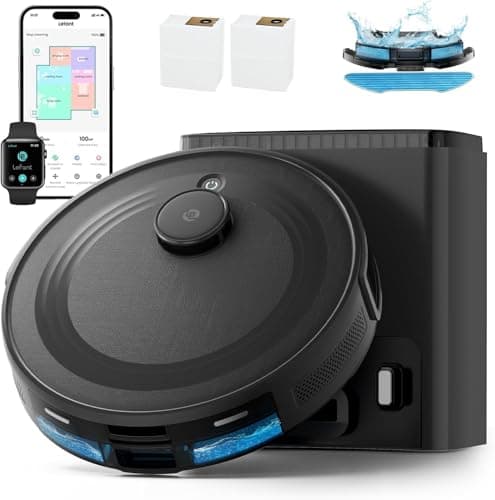
Lefant is the hardest brand here to generalize about, because its two machines publish almost opposite things. The M2 Plus prints 6,000 pascals, 140 minutes, 360-degree LiDAR with multi-floor mapping and no-go zones, a 2.5 L dock bag rated up to 75 days with two bags in the box, and dual-band Wi-Fi — the only robot here that publishes 5 GHz support. The M210 prints no suction figure and no LiDAR at all, navigating by infrared anti-collision, and in exchange gives you 52 dB, a lithium iron phosphate battery, a 2.99-inch body and a 500 ml bin that ties the biggest on-robot bin here. One is a mapped robot with a dock; the other is a quiet brushless puck for a small flat.
Skip Lefant if you are shopping the brand rather than the model — the badge tells you very little about which machine you are getting, and no Lefant listing here states a warranty term.
Tikom — the cheapest honest sheet
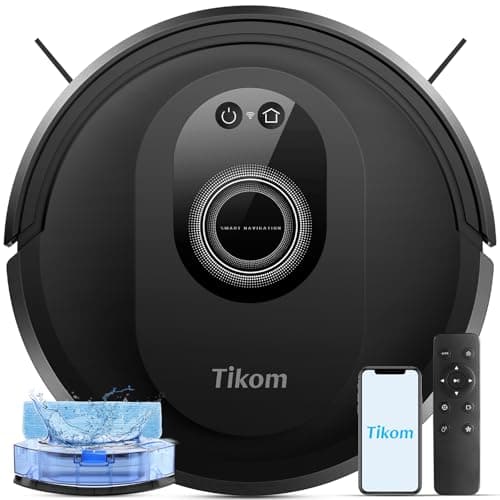
One machine, and the only brand here whose smallest claim is also its most credible: 5,000 pascals, published rather than implied, on a robot under $150. It also publishes 45 dB — the quietest rated figure of any robot on this site — a 450 ml bin, a 300 ml tank, up to 150 minutes in quiet mode, a 2.99-inch body, and control by app, remote, voice or the buttons on the machine. Most usefully, it says in print that it does not map: anti-collision and anti-fall sensors, four fixed patterns, no LiDAR. A brand that tells you what it is not is doing something the two largest brands on this page do not.
Skip Tikom if the floor plan is larger than about 800 square feet or runs across several rooms. Without mapping the coverage is a random walk, and the mapping roundup explains what you are giving up.
#
Product
Best for
Score
Price
01
Roborock Q7 M5+ Robot Vacuum and Mop10,000 Pa published and a 2.7-liter sealed dock bag rated at seven to nine weeks: the pet-hair answer, at a real price.
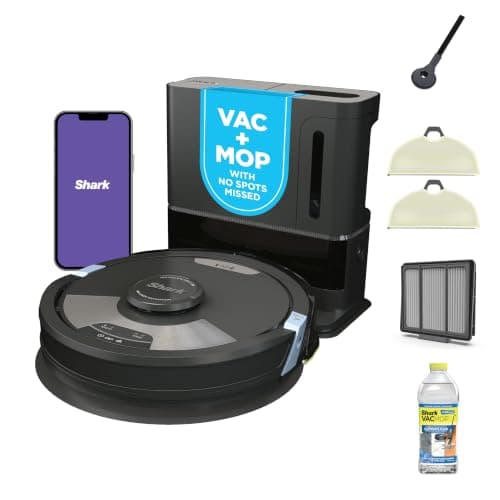
Shark Matrix Plus 2-in-1 Robot Vacuum and Mop (AV2610WA)A 60-day bagless base with True HEPA, sonic mopping and the only percentage claims on this shelf that name both a comparator model and a test method.
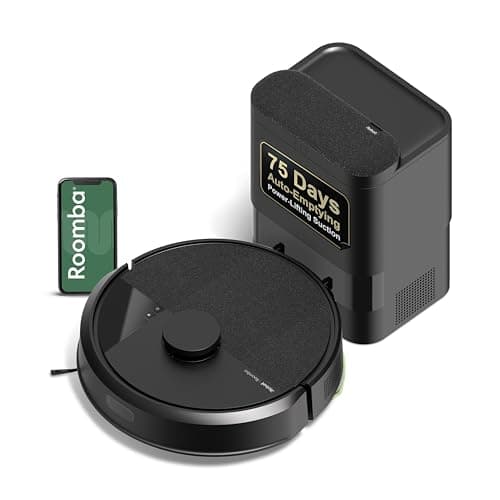
iRobot Roomba 105 Vac with AutoEmpty DockThe same robot as the 105 Vac with the dock that changes how you live with it: 75 days between bag changes instead of an emptying chore every run.
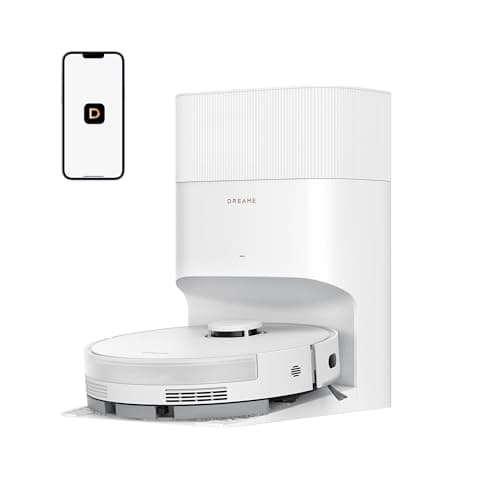
Dreame D20 Plus Robot Vacuum and Mop (RLD35GD)A 5-liter dock bag rated 150 days, 180 minutes of runtime and editable multi-floor maps — the most complete published spec sheet of any robot on this site under $300.
ILIFE A30 Pro Robot Vacuum and Mop10,000 Pa and a five-bag box that ILIFE rates at up to 280 days of hands-free running — the longest published interval on the site.
JawScrapers main brush plus zero-tangle side brush
Mopping
Three adjustable water levels, simultaneous with vacuuming
Rated noise
65 dB
Every figure above is the manufacturer's own published number. Where a manufacturer publishes nothing, the row says "Not published" rather than an estimate.
What the numbers say
+Highest published suction figure on the site, at 10,000 Pa
+2.7-liter dock bag is larger than the iRobot's and rated for a comparable interval
+Anti-tangle on both brushes, which is the pet-hair spec that matters
+150 minutes plus recharge-and-resume covers a large floor
Where it stops
−Dock bags are a permanent consumable
−The dock is large and 65 dB when emptying is genuinely startling the first time
−Pa figures remain incomparable between brands, however impressive 10,000 sounds
Who it is for
Pet households with real square footage, where the on-board bin is the daily annoyance.
Skip it if
You live in a studio. This is a whole-floor machine with a dock the size of a wastebasket and you will resent the footprint.
Our score: 8.5 out of 10
Published suction9.5
Navigation9.0
Runtime8.5
Bin and dock9.5
Running cost6.0
Scored against the published rubric on How We Pick. These are judgments about spec sheets, not measurements.
02 · Sonic mopping with no bags
Shark Matrix Plus 2-in-1 Robot Vacuum and Mop (AV2610WA)
A 60-day bagless base with True HEPA, sonic mopping and the only percentage claims on this shelf that name both a comparator model and a test method.
Bagless self-empty base, 60-day capacity, no replacement bags required
Dock filtration
True HEPA in the base, rated to capture 99.97% of dust and allergens down to 0.3 microns
Navigation
360-degree LiDAR with Matrix Clean grid coverage and object detection
Rated runtime
110 minutes, with recharge and resume
Mopping
Sonic mopping, published as scrubbing 100 times per minute
Edge cleaning
CleanEdge Detect, published as 50% better edge cleaning against the same model with the feature off
Carpet claim
30% better carpet cleaning against the RV2610WD single pass, tested on level loop sand
Stain claim
50% better stain cleaning against the RV2001WD, tested to a modified IEC 62885-6 — the only named test method on this page
Brushroll
Self-cleaning, published as preventing hair wrap
Tank
350 ml
Weight
17 lb as listed, which includes the base
Warranty
1 year limited
Suction in Pa
Not published
Every figure above is the manufacturer's own published number. Where a manufacturer publishes nothing, the row says "Not published" rather than an estimate.
What the numbers say
+A bagless 60-day base means the dock costs nothing to run, where every Roomba AutoEmpty dock needs bags for as long as you own it
+True HEPA at 99.97% down to 0.3 microns in the base, against iRobot's 99% at 0.7 microns
+Its percentage claims name the comparator model and, for the stain claim, a modified IEC 62885-6 test — almost nothing in this category does either
Where it stops
−No suction figure in any unit, so it cannot be compared numerically with the pascal-publishing brands
−110 minutes is the shortest rated runtime of any machine on this page
−17 lb listed and a physically large base, which is a real consideration in a small apartment
Who it is for
A mixed-floor home with pets that wants vacuum and mop in one pass, and does not want to buy dock bags for the rest of the machine's life.
Skip it if
You want the mop to be more than a damp pad on hard floors. Sonic scrubbing is a genuine step up from dragging a cloth, but it is still a pad — a stuck-on kitchen spill wants a wet/dry machine, not a robot.
Our score: 8.1 out of 10
Published suction6.0
Navigation9.0
Runtime7.5
Bin and dock9.0
Running cost9.0
Scored against the published rubric on How We Pick. These are judgments about spec sheets, not measurements.
03 · Best self-empty under $400
iRobot Roomba 105 Vac with AutoEmpty Dock
The same robot as the 105 Vac with the dock that changes how you live with it: 75 days between bag changes instead of an emptying chore every run.
Ongoing consumable — roughly five bag changes a year at the stated 75-day interval
Suction in Pa
Not published
Every figure above is the manufacturer's own published number. Where a manufacturer publishes nothing, the row says "Not published" rather than an estimate.
What the numbers say
+75 days between interactions is the single biggest quality-of-life feature in this category
+Bagged dock means emptying does not put dust back in the room, which matters for allergies
+Identical mapping and runtime to the cheaper 105 Vac — you are paying only for the dock
Where it stops
−Dock bags are a permanent running cost that the dockless version does not have
−The dock is bulky and needs clear floor space either side
−0.1-gallon on-board bin is small, which is fine only because the dock exists
Who it is for
Pet households and larger homes, where the on-board bin fills every single run.
Skip it if
Your floor is mostly hard surface and lightly used. At that dirt load the on-board bin lasts a week anyway, and the dock is solving a problem you do not have.
Our score: 8.4 out of 10
Published suction6.5
Navigation9.0
Runtime10.0
Bin and dock9.5
Running cost6.0
Scored against the published rubric on How We Pick. These are judgments about spec sheets, not measurements.
04 · Biggest dock bag here
Dreame D20 Plus Robot Vacuum and Mop (RLD35GD)
A 5-liter dock bag rated 150 days, 180 minutes of runtime and editable multi-floor maps — the most complete published spec sheet of any robot on this site under $300.
13,000 Pa Vormax, manufacturer-stated with no published method. The listing's own "maximum suction" field reads "13 meters", which is not a suction unit
Rated runtime
180 minutes
Dock bag
5 liters, rated up to 150 days hands-free
Dustbin
500 ml
Water tank
350 ml, with 32 water levels
Navigation
LDS LiDAR with Pathfinder path planning, editable maps, multi-floor maps and no-go zones
Brushes
Anti-tangle DuoBrush, published for long hair and pet fur
Filtration
Cartridge filter. No HEPA claim and no test standard published
Voice control
Alexa, Siri and Google Home
Wi-Fi
2.4 GHz only, and the listing states US use only
Rated noise
Not published
Weight
Not published
Warranty
Not published on the listing
Every figure above is the manufacturer's own published number. Where a manufacturer publishes nothing, the row says "Not published" rather than an estimate.
What the numbers say
+A 5-liter dock bag is the largest published on this site, and 150 days is roughly four times a Roborock Q7 M5+ dock interval
+180 minutes of rated runtime, beaten on this site only by the Roomba 105's 200
+A 500 ml dustbin and a 350 ml tank are both large for this price, and editable multi-floor maps are published rather than implied
Where it stops
−13,000 Pa is a pascal claim with no method, and the listing's own suction field prints a distance in meters
−No noise rating, no weight and no warranty term published anywhere on the listing
−Cartridge filtration with no HEPA claim, on a machine sold partly on pet hair
Who it is for
A multi-floor home with pets that wants the dock emptied as rarely as possible, and is content to judge suction on outcome rather than on a number nobody can verify.
Skip it if
You want a filtration figure. This is a bagged-dock robot with no published HEPA claim at all, and an allergy household is the one case where that gap actually decides the purchase.
Our score: 8.0 out of 10
Published suction6.0
Navigation9.0
Runtime9.5
Bin and dock9.0
Running cost6.5
Scored against the published rubric on How We Pick. These are judgments about spec sheets, not measurements.
05 · Longest dock interval
ILIFE A30 Pro Robot Vacuum and Mop
10,000 Pa and a five-bag box that ILIFE rates at up to 280 days of hands-free running — the longest published interval on the site.
2.5 liters, five in the box, rated up to 280 days hands-free in total
Tank
2-in-1 integrated: 200 ml dustbin plus 200 ml water tank
Navigation
LDS LiDAR with SLAM mapping, no-go zones and virtual walls
Weight
10.4 lb
Rated noise
72 dB
Every figure above is the manufacturer's own published number. Where a manufacturer publishes nothing, the row says "Not published" rather than an estimate.
What the numbers say
+Five bags in the box is real money that the competition charges separately for
+Full LiDAR SLAM mapping with virtual walls at a budget price
+10,000 Pa published, matching the dearest robot here
Where it stops
−72 dB is the loudest robot figure on the site
−200 ml dustbin is the smallest here — the 2-in-1 tank splits capacity with the water
−The 150-minute rating is explicitly the gentle-suction number
Who it is for
Buyers optimizing for the longest possible gap between touching the thing.
Skip it if
You want to run it while you are home. At 72 dB it is a run-it-when-you-are-out machine.
Our score: 8.2 out of 10
Published suction9.0
Navigation8.5
Runtime8.0
Bin and dock8.5
Running cost7.0
Scored against the published rubric on How We Pick. These are judgments about spec sheets, not measurements.
06 · Cheapest self-empty
Lefant M2 Plus Robot Vacuum and Mop
6,000 Pa, LiDAR mapping and a 2.5-liter self-empty station rated at 75 days, from the least-known brand here.
2.5 liters, rated up to 75 days hands-free; ships with two bags
Dustbin
250 ml on-robot
Water tank
300 ml, three suction levels
Navigation
360-degree LiDAR with multi-floor mapping and no-go zones
Obstacle detection
190-degree PSD detection, stated to avoid objects from 1.6 inches away
Wi-Fi
Dual-band 2.4 GHz and 5 GHz
Every figure above is the manufacturer's own published number. Where a manufacturer publishes nothing, the row says "Not published" rather than an estimate.
What the numbers say
+Self-empty dock at the bottom of the price band, which is where the genuine saving is in this category
+Carpet detection lifts or avoids depending on whether the mop holder is fitted
+Dual-band Wi-Fi — the only robot here that does not force you onto 2.4 GHz
+Two dock bags in the box
Where it stops
−6,000 Pa is the lowest published suction of the self-empty machines here
−250 ml on-robot bin is tiny, which the dock only partly excuses
−Small brand: app longevity and dock-bag availability in year four are unknowns
Who it is for
Buyers who want self-emptying at the lowest possible entry price and accept the brand risk.
Skip it if
You want the app to still work in 2032. iRobot and Roborock are safer bets on software support, and a self-empty robot is worthless once its dock bags stop being sold.
Our score: 7.7 out of 10
Published suction7.0
Navigation8.5
Runtime8.5
Bin and dock8.5
Running cost6.0
Scored against the published rubric on How We Pick. These are judgments about spec sheets, not measurements.
07 · Quietest combo
Tikom G8000 Max Robot Vacuum and Mop
45 dB rated with a 450 ml bin and a 300 ml tank, and no mapping at all — a quiet, cheap, semi-random cleaner.
Anti-collision and anti-fall sensors; four modes — spot, edge, zig-zag, manual. No LiDAR mapping
Control
App, remote, voice, on-device buttons
Every figure above is the manufacturer's own published number. Where a manufacturer publishes nothing, the row says "Not published" rather than an estimate.
What the numbers say
+45 dB rated is the quietest figure published anywhere on this site
+450 ml bin plus a 300 ml tank, both larger than the mapped Roborock Q7 L5's
+Four control methods including a physical remote, which matters in households that will not use an app
Where it stops
−No mapping, so coverage is a zig-zag pattern rather than a plan
−5,000 Pa is the lowest published figure of the mopping robots here
−The 150-minute rating is the quiet-mode number
Who it is for
Small hard-floor homes, light sleepers, and households that want a remote rather than an app.
Skip it if
You need room targeting or no-go zones. Without a map it cannot be told where not to go, and the only fix is a closed door.
Our score: 6.9 out of 10
Published suction6.0
Navigation4.0
Runtime8.5
Bin and dock7.5
Running cost8.5
Scored against the published rubric on How We Pick. These are judgments about spec sheets, not measurements.
What cannot be ranked at brand level
Durability. No manufacturer on this page publishes an expected lifespan, a mean time to failure or a battery cycle rating, and exactly one of the fourteen robot listings here states a warranty term — Shark's Matrix Plus, at 1 year limited. The most reliable vacuum brands runs that same test across every machine on this site, full-size vacuums included, and judges brands on published warranty length; this page is the robot-specific version, where the deciding facts are the dock, the map and the app rather than the warranty. The robot shelf is the worst-documented part of the site on that measure.
App lifespan is the other one, and it is the risk unique to this category: a mapped robot whose cloud service is retired does not become a dumb robot with the same hardware, it becomes a bump-and-run machine that has lost the feature you paid most for. There is no published figure for that and there never will be. What can be observed is a track record, which is most of the honest case for iRobot and the main reason to be careful with any brand you have not heard of.
We also will not rank these brands by owner reviews. This site publishes no ratings and no review counts anywhere, for the reason set out on our method page: we have no test lab and no customers, so quoting someone else's star average as brand evidence would be borrowing authority we have not earned.
The brands that are not on this page
eufy was here. The 11S MAX — the one robot this site has covered that published no Wi-Fi and no app at all, and therefore had no cloud service to lose — is no longer buyable, and nothing in stock replaced it. Ecovacs, Narwal, SwitchBot and Wyze get no verdict here for a duller reason: we have not read their listings against this rubric, and a brand ranking that includes brands the writer has not checked is a list of logos. When a machine from one of them lands in this site's price band and we have read the sheet, it will appear with the same seven columns as everyone else.
Which brand for which house
No strong constraint, first robot, want mapping — Roborock. The most comparable sheet in the category and the cheapest multi-floor map here.
Allergies, or a refusal to buy consumables forever — Shark. The only bagless self-empty base on this page, with the only HEPA-rated dock and the only named test method.
You want the app and the parts to still exist in five years — iRobot. You are buying a track record rather than a specification, and the specification is genuinely the weakest here.
Shedding pets, and the longest stretch of not touching it — Dreame. 150 days on one bag is twice what most of this field publishes. Accept that the pascal number means nothing.
Mapping and a dock on the tightest budget that still maps — ILIFE. Most bags in the box of anything here, if you can live with 72 dB.
Small hard-floor flat, light sleeper, under $150 — Tikom, or Lefant's M210. Both publish low noise and neither pretends to map.
Common questions
What is the best robot vacuum brand?+−
No brand wins outright, because the brands here are good at different things. Roborock publishes the most checkable specification sheet and the cheapest multi-floor mapping, which makes it the sensible default. Shark is the only brand whose self-empty base needs no bags and the only one that names a test method. iRobot publishes the least but has the deepest accessory supply and the longest app track record. Dreame publishes the longest dock interval here at 150 days.
Which robot vacuum brand is the most reliable?+−
Nobody can answer that from evidence, including anyone who does. No manufacturer on this site publishes an expected lifespan, a failure rate or a battery cycle rating for a robot. On the one checkable proxy — a published warranty term — exactly one of the fourteen robot listings here has one, Shark's Matrix Plus at 1 year limited. The robot shelf is the worst-documented part of this site on that measure.
Are cheap robot vacuum brands like Lefant, ILIFE and Tikom any good?+−
They are, with your eyes open, and they tend to publish more than the expensive brands rather than less. ILIFE prints up to 10,000 pascals, LiDAR with no-go zones and five dock bags in the box. Tikom prints 5,000 pascals and 45 dB and says outright that it does not map. Lefant's M2 Plus prints multi-floor mapping and dual-band Wi-Fi. What you are accepting is a shorter track record on the app, which is the one risk none of them can publish away.
Which robot vacuum brand is cheapest to own after you buy it?+−
Shark, because its self-empty base is bagless and the listing states no replacement bags are required — the whole consumable line disappears. Among the bagged brands, Dreame publishes the longest single interval at 150 days on a 5 L bag, and ILIFE ships five bags rated to 280 days in total. Roborock publishes the shortest single-bag interval here at 7 to 9 weeks.
Which robot vacuum brands publish an actual suction figure?+−
Roborock, Dreame, ILIFE and Tikom publish an absolute figure in pascals on every machine they have here, and Lefant publishes one on one of its two. iRobot and Shark publish none at all — iRobot offers a 70x comparison against its own discontinued 600 series, and Shark claims up to 50% more than an unnamed competitor. Seven of the fourteen robots on this site print a pascal figure, and no manufacturer publishes the method behind it.
Why is eufy, Ecovacs or Narwal not on this list?+−
eufy was covered here: the 11S MAX, which published no Wi-Fi and no app at all, is no longer buyable and nothing in stock replaced it. Ecovacs, Narwal, SwitchBot and Wyze have not had their listings read against this rubric, so they get no verdict rather than a guessed one. A brand ranking that includes brands the writer has not checked is a list of logos.
Sources
Manufacturer-published specifications — Every runtime, wattage, capacity, weight, filtration and warranty figure quoted on this page is the manufacturer's own published number for that model, retrieved September 1, 2026. Where a manufacturer publishes no figure, the page says 'Not published' rather than estimating one.
Sweep & Suction — How We Pick — Our published method, including the scoring rubric, the three-year running-cost formula and an explicit statement of what published specifications cannot tell you.